
Recent from talks
Miranda (The Tempest)
Knowledge base stats:
Talk channels stats:
Members stats:
Miranda (The Tempest)
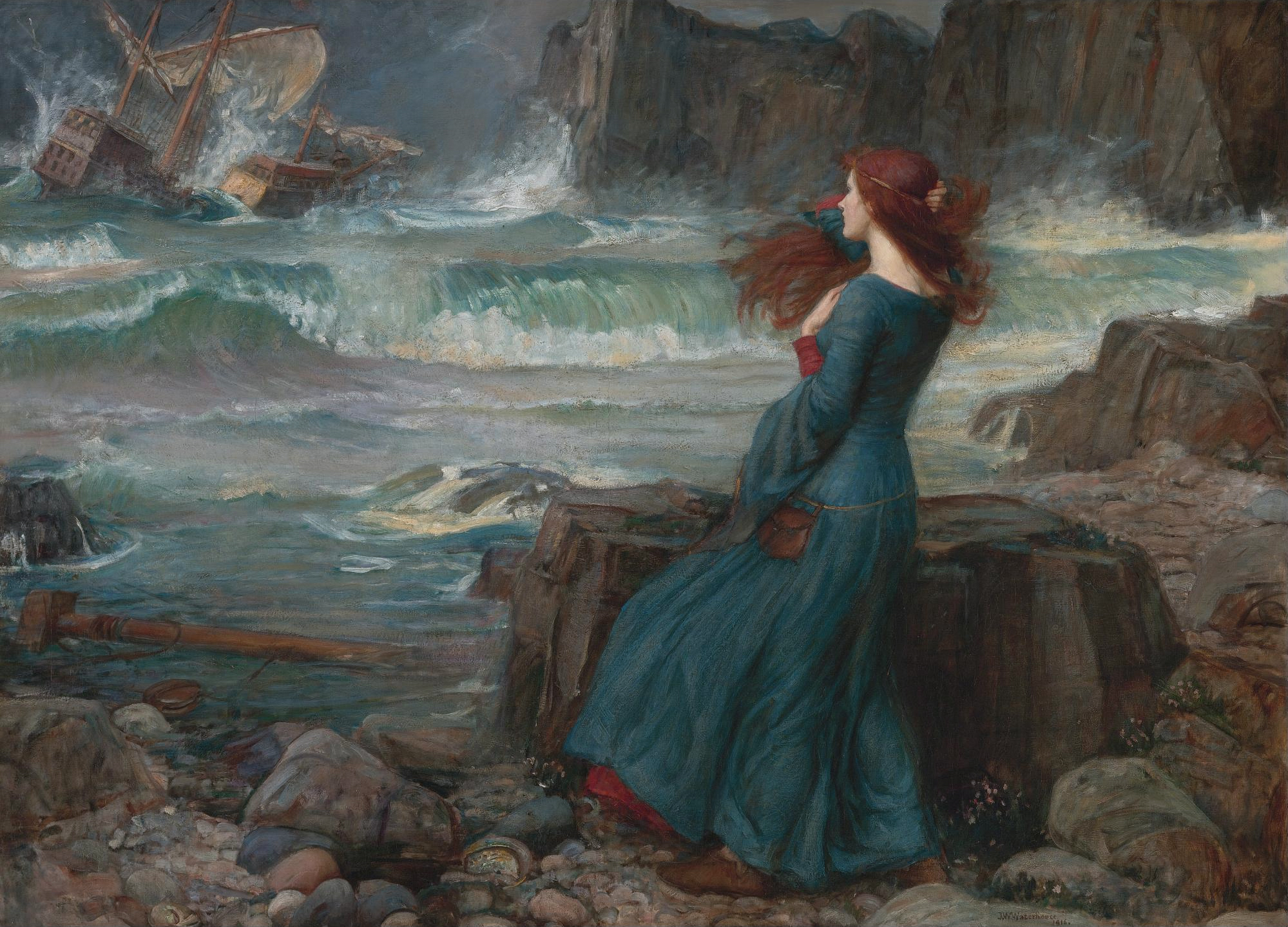
Miranda is one of the principal characters of William Shakespeare's The Tempest. She is the only female character to appear on stage.
Miranda is the daughter of Prospero, another of the main characters of The Tempest. She was banished to the Island along with her father at age three, and in the subsequent twelve years has lived with her father and their slave, Caliban, as her only company. She is openly compassionate and unaware of the evils of the world that surrounds her, learning of her father's fate only as the play begins.
There is some speculation that Miranda, along with her husband, Ferdinand, may be intended to represent Elizabeth Stuart and her new spouse, Elector Frederick V, as The Tempest was originally performed for the court of Elizabeth's father, King James, in celebration of the Wedding of Princess Elizabeth and Frederick V of the Palatinate.
The Tempest's second scene begins with Miranda, begging her father to spare the lives of the men at sea. She's fully aware of the powers Prospero possesses and begs him to cease the storm. In an act of bravery she challenges her father's wisdom, arguing that: "Had I been any god of power, I would / Have sunk the sea within the earth or ere / It should the good ship so have swallow'd and / The fraughting souls within her." As the scene progresses it is revealed to her that she is, in fact, the high ranking daughter of the Duke of Milan.
When Prospero's servant appears, Miranda is placed into a magically induced sleep. She awakes when she is summoned and it is quickly shown that the two have a contentious relationship, most probably due to Caliban's failed attempt to rape her, she refers to him as "a villain, sir, I do not love to look on." (I, ii).
As the moment with Caliban progresses, Miranda rebukes Caliban for the hatred he expresses towards her father:
Abhorred slave,
Which any print of goodness wilt not take,
Being capable of all ill! I pitied thee,
Took pains to make thee speak, taught thee each hour
One thing or other: when thou didst not, savage,
Know thine own meaning, but wouldst gabble like
A thing most brutish, I endow'd thy purposes
With words that made them known. But thy vile race,
Though thou didst learn, had that in't which
good natures
Could not abide to be with; therefore wast thou
Deservedly confined into this rock,
Who hadst deserved more than a prison.
Hub AI
Miranda (The Tempest) AI simulator
(@Miranda (The Tempest)_simulator)
Miranda (The Tempest)
Miranda is one of the principal characters of William Shakespeare's The Tempest. She is the only female character to appear on stage.
Miranda is the daughter of Prospero, another of the main characters of The Tempest. She was banished to the Island along with her father at age three, and in the subsequent twelve years has lived with her father and their slave, Caliban, as her only company. She is openly compassionate and unaware of the evils of the world that surrounds her, learning of her father's fate only as the play begins.
There is some speculation that Miranda, along with her husband, Ferdinand, may be intended to represent Elizabeth Stuart and her new spouse, Elector Frederick V, as The Tempest was originally performed for the court of Elizabeth's father, King James, in celebration of the Wedding of Princess Elizabeth and Frederick V of the Palatinate.
The Tempest's second scene begins with Miranda, begging her father to spare the lives of the men at sea. She's fully aware of the powers Prospero possesses and begs him to cease the storm. In an act of bravery she challenges her father's wisdom, arguing that: "Had I been any god of power, I would / Have sunk the sea within the earth or ere / It should the good ship so have swallow'd and / The fraughting souls within her." As the scene progresses it is revealed to her that she is, in fact, the high ranking daughter of the Duke of Milan.
When Prospero's servant appears, Miranda is placed into a magically induced sleep. She awakes when she is summoned and it is quickly shown that the two have a contentious relationship, most probably due to Caliban's failed attempt to rape her, she refers to him as "a villain, sir, I do not love to look on." (I, ii).
As the moment with Caliban progresses, Miranda rebukes Caliban for the hatred he expresses towards her father:
Abhorred slave,
Which any print of goodness wilt not take,
Being capable of all ill! I pitied thee,
Took pains to make thee speak, taught thee each hour
One thing or other: when thou didst not, savage,
Know thine own meaning, but wouldst gabble like
A thing most brutish, I endow'd thy purposes
With words that made them known. But thy vile race,
Though thou didst learn, had that in't which
good natures
Could not abide to be with; therefore wast thou
Deservedly confined into this rock,
Who hadst deserved more than a prison.
Recent media