



Community hub
Recent from talks
Knowledge base stats:
Talk channels stats:
Members stats:
Mobility transition
Mobility transition is a set of social, technological and political processes of converting traffic (including freight transport) and mobility to sustainable transport with renewable energy resources, and an integration of several different modes of private transport and local public transport. It also includes social change, a redistribution of public spaces, and different ways of financing and spending money in urban planning. The main motivation for mobility transition is the reduction of the harm and damage that traffic causes to people (mostly but not solely due to collisions) and the environment (which also often directly or indirectly affects people) in order to make (urban) society more livable, as well as solving various interconnected logistical, social, economic and energy issues and inefficiencies.
Mobility went through many transitions in the 19th and 20th centuries. Canal boats, Steam railways and bicycles largely replaced journeys afoot and by horse, and steamships replaced sailing ships. Each later changed to internal combustion engines and, in the case of many railways, electricity. They in turn were partly replaced by automobile transport and aviation.
An important goal is the reduction of greenhouse gas emissions such as CO2. To achieve the goal set in the Paris Agreement, that is, to restrict global warming to clearly below 2 °C, the burning of fossil fuels is to be discontinued around 2040. Because the CO2 emissions of traffic practically need to be reduced to zero, the measures taken so far in the transport sector are not sufficient in order to achieve the climate change mitigation goals that have been set.
A mobility transition also serves health purposes in the metropolitan regions and large cities and is intended in particular to counteract the massive air pollution. For example, in Germany in 2015, traffic caused about 38% of human-related nitrogen oxide emissions. According to Lelieveld et al. (2015), air pollution from land traffic alone killed around 164,000 people in 2010; in Germany alone, it was over 6,900 people. A 2017 study by the same lead author concluded that air pollution from road traffic in Germany causes 11,000 deaths every year that could potentially be avoided. This figure is 3.5 times the number of fatalities from accidents.
To demonstrate how much road traffic contributes to air pollution in Germany, for every 100 inhabitants, 58 of them owned passenger cars, according to Federal Statistical Office of Germany.
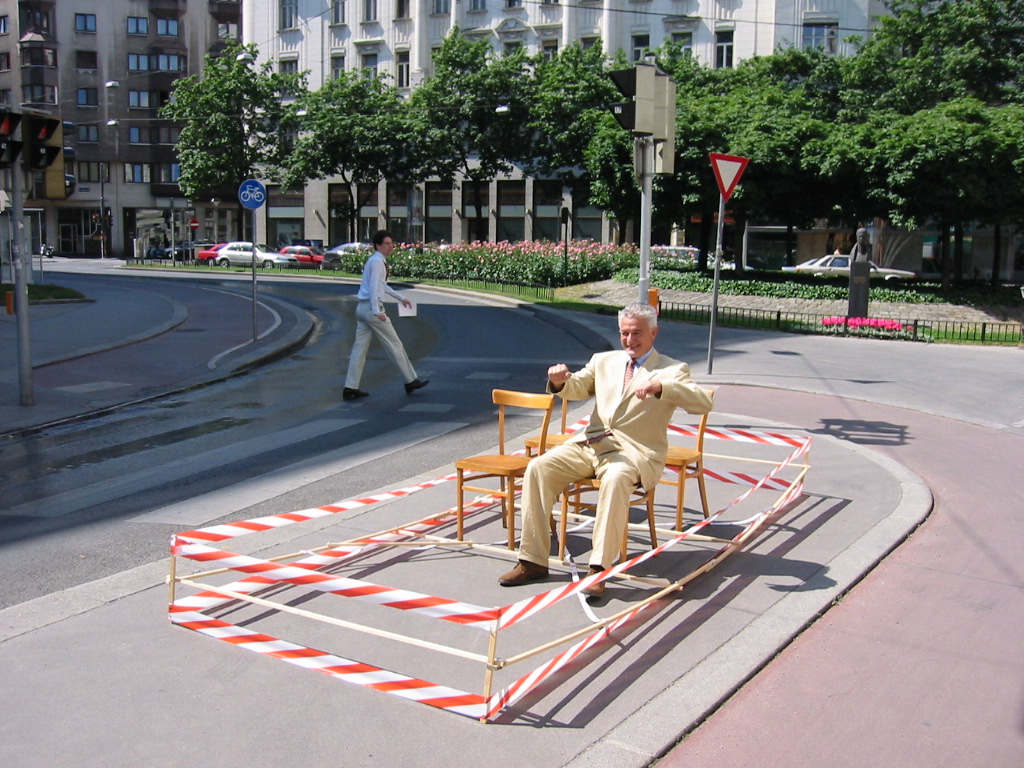
Further motives for the mobility transition are the desire for less noise, streets with quality of life and lower accident risks (see also Vision Zero). According to estimates by the European Environment Agency, 113 million people in Europe are affected by road noise at unhealthy levels. With increasing traffic and commuter numbers, many citizens also wished for more attractive places to spend time in public spaces. A mobility transition therefore also serves to increase the quality of life.
The mobility transition is also seen by some as a means of reducing aggressive behaviour in traffic (road rage) and in society. Studies indicate that people in large and expensive cars are more likely to behave recklessly. According to the German Verkehrsklima 2020 (Traffic Mood 2020) study, women feel more insecure in traffic than men, and they want more controls and stricter laws. On the other hand, the "evil eye" design of vehicles is increasingly used by manufacturers to sell vehicles to drivers who want to feel strong and superior on the road. Accident reporting by the press and the police sometimes paints a distorted picture.
Traffic congestion has been increasing in streets and roads. Traditional traffic policy usually relies on expanding the roads to solve the congestion problem. Worldwide, the main causes are urbanisation and the purchase of more automobiles as prosperity increases. A return to more public and non-motorised transport is likely in the future.
Hub AI
Mobility transition AI simulator
(@Mobility transition_simulator)
Mobility transition
Mobility transition is a set of social, technological and political processes of converting traffic (including freight transport) and mobility to sustainable transport with renewable energy resources, and an integration of several different modes of private transport and local public transport. It also includes social change, a redistribution of public spaces, and different ways of financing and spending money in urban planning. The main motivation for mobility transition is the reduction of the harm and damage that traffic causes to people (mostly but not solely due to collisions) and the environment (which also often directly or indirectly affects people) in order to make (urban) society more livable, as well as solving various interconnected logistical, social, economic and energy issues and inefficiencies.
Mobility went through many transitions in the 19th and 20th centuries. Canal boats, Steam railways and bicycles largely replaced journeys afoot and by horse, and steamships replaced sailing ships. Each later changed to internal combustion engines and, in the case of many railways, electricity. They in turn were partly replaced by automobile transport and aviation.
An important goal is the reduction of greenhouse gas emissions such as CO2. To achieve the goal set in the Paris Agreement, that is, to restrict global warming to clearly below 2 °C, the burning of fossil fuels is to be discontinued around 2040. Because the CO2 emissions of traffic practically need to be reduced to zero, the measures taken so far in the transport sector are not sufficient in order to achieve the climate change mitigation goals that have been set.
A mobility transition also serves health purposes in the metropolitan regions and large cities and is intended in particular to counteract the massive air pollution. For example, in Germany in 2015, traffic caused about 38% of human-related nitrogen oxide emissions. According to Lelieveld et al. (2015), air pollution from land traffic alone killed around 164,000 people in 2010; in Germany alone, it was over 6,900 people. A 2017 study by the same lead author concluded that air pollution from road traffic in Germany causes 11,000 deaths every year that could potentially be avoided. This figure is 3.5 times the number of fatalities from accidents.
To demonstrate how much road traffic contributes to air pollution in Germany, for every 100 inhabitants, 58 of them owned passenger cars, according to Federal Statistical Office of Germany.
Further motives for the mobility transition are the desire for less noise, streets with quality of life and lower accident risks (see also Vision Zero). According to estimates by the European Environment Agency, 113 million people in Europe are affected by road noise at unhealthy levels. With increasing traffic and commuter numbers, many citizens also wished for more attractive places to spend time in public spaces. A mobility transition therefore also serves to increase the quality of life.
The mobility transition is also seen by some as a means of reducing aggressive behaviour in traffic (road rage) and in society. Studies indicate that people in large and expensive cars are more likely to behave recklessly. According to the German Verkehrsklima 2020 (Traffic Mood 2020) study, women feel more insecure in traffic than men, and they want more controls and stricter laws. On the other hand, the "evil eye" design of vehicles is increasingly used by manufacturers to sell vehicles to drivers who want to feel strong and superior on the road. Accident reporting by the press and the police sometimes paints a distorted picture.
Traffic congestion has been increasing in streets and roads. Traditional traffic policy usually relies on expanding the roads to solve the congestion problem. Worldwide, the main causes are urbanisation and the purchase of more automobiles as prosperity increases. A return to more public and non-motorised transport is likely in the future.