
Recent from talks
Monastery of the Holy Archangels
Knowledge base stats:
Talk channels stats:
Members stats:
Monastery of the Holy Archangels
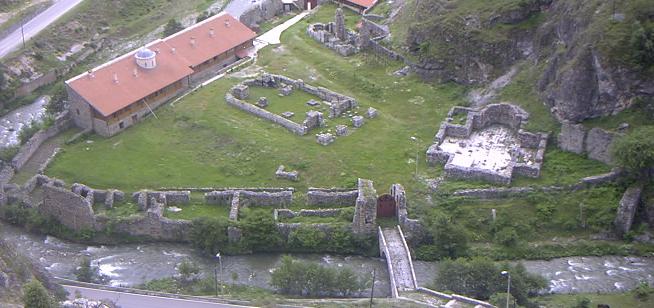
The Monastery of the Holy Archangels (Serbian: Манастир Светих Архангела, romanized: Manastir Svetih Arhangela; Albanian: Manastiri i Arkangjelit të Shenjtë) is a Serbian Orthodox monastery located in Prizren, Kosovo. The monastery was founded by the Serbian Emperor Stefan Dušan (reigned 1331–1355) between 1343 and 1352 on the site of an earlier church, part of the Višegrad fortress complex. It was the burial church for Emperor Dušan, and represented the culmination of the Serbian ecclesiastical architectural style, that led to the birth of the Morava school style.
The complex, which ranges over 6,500 m², includes two churches, the main one is dedicated to the Holy Archangels (where Dušan's tomb lied), and the second one is dedicated to St. Nicholas, both built in the Rascian architectural style. The monastery was looted and destroyed after the Ottomans arrived in 1455, and in 1615 it was razed to the ground and its material was used for the construction of the Sinan Pasha Mosque, Prizren.
The entire complex was archeologically explored in 1927, and its remains were conserved after the Second World War. During the last decade of the 20th century, work on the reconstruction was continued, and in 1998 it again became an active male monastery. After the 1999 NATO bombing of Yugoslavia and retreat of the Yugoslav army forces, reconstructed objects were burned and looted in June 1999, by members of the Kosovo Liberation Army (KLA), after the Kosovo Force (KFOR) arrived. During the 2004 unrest in Kosovo, the monastery was burned and looted again. The entire monastery complex is under protection of the Republic of Serbia, as a Monument of Culture of Great Importance. One priest lives in the monastery which is under constant protection of Kosovo police in a special protection zone.[citation needed]
The monastery complex is built in the smaller plateau in the Prizrens Bistrica canyon, approximately 2.5 km southeast of Prizren. The plateau is in a peninsula, surrounded by the river from the three sides, while on the fourth southeastern side it is surrounded by sharp rocks, on top of which is the fortified citadel of Višegrad. At the time of its construction there was a caravan road nearby the Prizren Bistrica, which connected Skopje with Prizren (then capital of Serbia), over Kaçanik, Sirinićka Župa and Sredačka Župa, and it is likely that the road was passing right through the monastery.
During archeological excavation of the monastery complex, the oldest findings are dated from the Eneolithic age, while it is evident that in the early Iron Age there was a settlement. During classical period, settlement was disbanded, and later during the 4th, 5th and 6th centuries was again founded and it was late classical period or early Byzantine village, which was surrounded by a late antique wall, but that still has not been scientifically confirmed.
After this period, there are findings from the 10th, 11th and 12th centuries, when it is considered that the original medieval fortress (which then included only the five-cornered citadel on the hill above the monastery) was built in the 12th century. Dušan's grandfather, King Milutin (1282–1321), donated a small fort of Višegrad with a church dedicated to Saint Nicholas, Bishop of Prizren. It was donated as a refuge in case of war, as, later, Maglič was a shelter of the Serbian archbishop from Žiča. Later, Dušan gave three villages to a bishop of Prizren in return from the fortress of Višegrad, which was subsequently submitted to a monastery, connecting them into a whole with a defensive wall.
The Monastery was the pious endowment of Emperor Dušan, built at the site of an older church dedicated to the Holy Archangels, that had been known for its miraculous powers. Metropolitan Jacob (Jakov Serski) was responsible for the construction of the monastery, which began planning in 1343, according to Dušan's St. Peter of Koriša-charter dated 19 May the same year. After Dušan's recovery from a serious illness, he decided to raise the Monastery on this site, as a place of healing and in gratitude to Christ and the Archangels Michael and Gabriel. It was consecrated in the fall of 1347, as Dušan prepared a trip on 1 August to attend the consecration, and in December he was at Mount Athos. The church construction began in 1348, supervised by Metropolitan Jacob, who later became a bishop in Serres. The main work was finished early in 1348, as known from a letter from a Venetian merchant from Trepča, dated 24 March 1348, where he complained that he could not sell the lead from the Trepča mine, since the head of the mine received direct order that he, by the cost of his life, could not sell lead to anyone, except the abbot of the Monastery to cover the roof. The founding charter accompanied the Dušan's Code, upon its promulgation at a state council on May 21, 1349, in Skopje. It is believed that the construction of the monastery church, supporting facilities and protective walls ended in 1352, and at the time of its establishment, it housed some 200 monks and the Metropolitan.
In the founding charter, Dushan gave to the monastery tax farming rights over 93 villages, 7 churches and their congregation and property (fertile land, vineyards, and oil-lamps), an iron mine in Toplica, 467 Vlach households (shepherds), 8 Albanian katund, and a number of craftsmen, including goldsmiths. The households and communities which were to pay taxes to the monastery lived in an area that stretched from the Šar Mountains to the Adriatic Sea. Although the number of granted villages were less than those of King Milutin to his endowment at Banjska, the Archangels' Monastery had a territory that was richer and more advanced. The Prizren customs and market's revenue belonged to the Monastery, and cooking oil arrived from Bar and fish from Skadar and Plav, as well as salt, silk, wine, honey and wax. Master builders such as Petros, Vojislav, Srđan, Noš and Vojihna were given to the Monastery, and are believed to have participated in the building of the Monastery.
Hub AI
Monastery of the Holy Archangels AI simulator
(@Monastery of the Holy Archangels_simulator)
Monastery of the Holy Archangels
The Monastery of the Holy Archangels (Serbian: Манастир Светих Архангела, romanized: Manastir Svetih Arhangela; Albanian: Manastiri i Arkangjelit të Shenjtë) is a Serbian Orthodox monastery located in Prizren, Kosovo. The monastery was founded by the Serbian Emperor Stefan Dušan (reigned 1331–1355) between 1343 and 1352 on the site of an earlier church, part of the Višegrad fortress complex. It was the burial church for Emperor Dušan, and represented the culmination of the Serbian ecclesiastical architectural style, that led to the birth of the Morava school style.
The complex, which ranges over 6,500 m², includes two churches, the main one is dedicated to the Holy Archangels (where Dušan's tomb lied), and the second one is dedicated to St. Nicholas, both built in the Rascian architectural style. The monastery was looted and destroyed after the Ottomans arrived in 1455, and in 1615 it was razed to the ground and its material was used for the construction of the Sinan Pasha Mosque, Prizren.
The entire complex was archeologically explored in 1927, and its remains were conserved after the Second World War. During the last decade of the 20th century, work on the reconstruction was continued, and in 1998 it again became an active male monastery. After the 1999 NATO bombing of Yugoslavia and retreat of the Yugoslav army forces, reconstructed objects were burned and looted in June 1999, by members of the Kosovo Liberation Army (KLA), after the Kosovo Force (KFOR) arrived. During the 2004 unrest in Kosovo, the monastery was burned and looted again. The entire monastery complex is under protection of the Republic of Serbia, as a Monument of Culture of Great Importance. One priest lives in the monastery which is under constant protection of Kosovo police in a special protection zone.[citation needed]
The monastery complex is built in the smaller plateau in the Prizrens Bistrica canyon, approximately 2.5 km southeast of Prizren. The plateau is in a peninsula, surrounded by the river from the three sides, while on the fourth southeastern side it is surrounded by sharp rocks, on top of which is the fortified citadel of Višegrad. At the time of its construction there was a caravan road nearby the Prizren Bistrica, which connected Skopje with Prizren (then capital of Serbia), over Kaçanik, Sirinićka Župa and Sredačka Župa, and it is likely that the road was passing right through the monastery.
During archeological excavation of the monastery complex, the oldest findings are dated from the Eneolithic age, while it is evident that in the early Iron Age there was a settlement. During classical period, settlement was disbanded, and later during the 4th, 5th and 6th centuries was again founded and it was late classical period or early Byzantine village, which was surrounded by a late antique wall, but that still has not been scientifically confirmed.
After this period, there are findings from the 10th, 11th and 12th centuries, when it is considered that the original medieval fortress (which then included only the five-cornered citadel on the hill above the monastery) was built in the 12th century. Dušan's grandfather, King Milutin (1282–1321), donated a small fort of Višegrad with a church dedicated to Saint Nicholas, Bishop of Prizren. It was donated as a refuge in case of war, as, later, Maglič was a shelter of the Serbian archbishop from Žiča. Later, Dušan gave three villages to a bishop of Prizren in return from the fortress of Višegrad, which was subsequently submitted to a monastery, connecting them into a whole with a defensive wall.
The Monastery was the pious endowment of Emperor Dušan, built at the site of an older church dedicated to the Holy Archangels, that had been known for its miraculous powers. Metropolitan Jacob (Jakov Serski) was responsible for the construction of the monastery, which began planning in 1343, according to Dušan's St. Peter of Koriša-charter dated 19 May the same year. After Dušan's recovery from a serious illness, he decided to raise the Monastery on this site, as a place of healing and in gratitude to Christ and the Archangels Michael and Gabriel. It was consecrated in the fall of 1347, as Dušan prepared a trip on 1 August to attend the consecration, and in December he was at Mount Athos. The church construction began in 1348, supervised by Metropolitan Jacob, who later became a bishop in Serres. The main work was finished early in 1348, as known from a letter from a Venetian merchant from Trepča, dated 24 March 1348, where he complained that he could not sell the lead from the Trepča mine, since the head of the mine received direct order that he, by the cost of his life, could not sell lead to anyone, except the abbot of the Monastery to cover the roof. The founding charter accompanied the Dušan's Code, upon its promulgation at a state council on May 21, 1349, in Skopje. It is believed that the construction of the monastery church, supporting facilities and protective walls ended in 1352, and at the time of its establishment, it housed some 200 monks and the Metropolitan.
In the founding charter, Dushan gave to the monastery tax farming rights over 93 villages, 7 churches and their congregation and property (fertile land, vineyards, and oil-lamps), an iron mine in Toplica, 467 Vlach households (shepherds), 8 Albanian katund, and a number of craftsmen, including goldsmiths. The households and communities which were to pay taxes to the monastery lived in an area that stretched from the Šar Mountains to the Adriatic Sea. Although the number of granted villages were less than those of King Milutin to his endowment at Banjska, the Archangels' Monastery had a territory that was richer and more advanced. The Prizren customs and market's revenue belonged to the Monastery, and cooking oil arrived from Bar and fish from Skadar and Plav, as well as salt, silk, wine, honey and wax. Master builders such as Petros, Vojislav, Srđan, Noš and Vojihna were given to the Monastery, and are believed to have participated in the building of the Monastery.
Recent media