
Recent from talks
Montfort Hall
Knowledge base stats:
Talk channels stats:
Members stats:
Montfort Hall
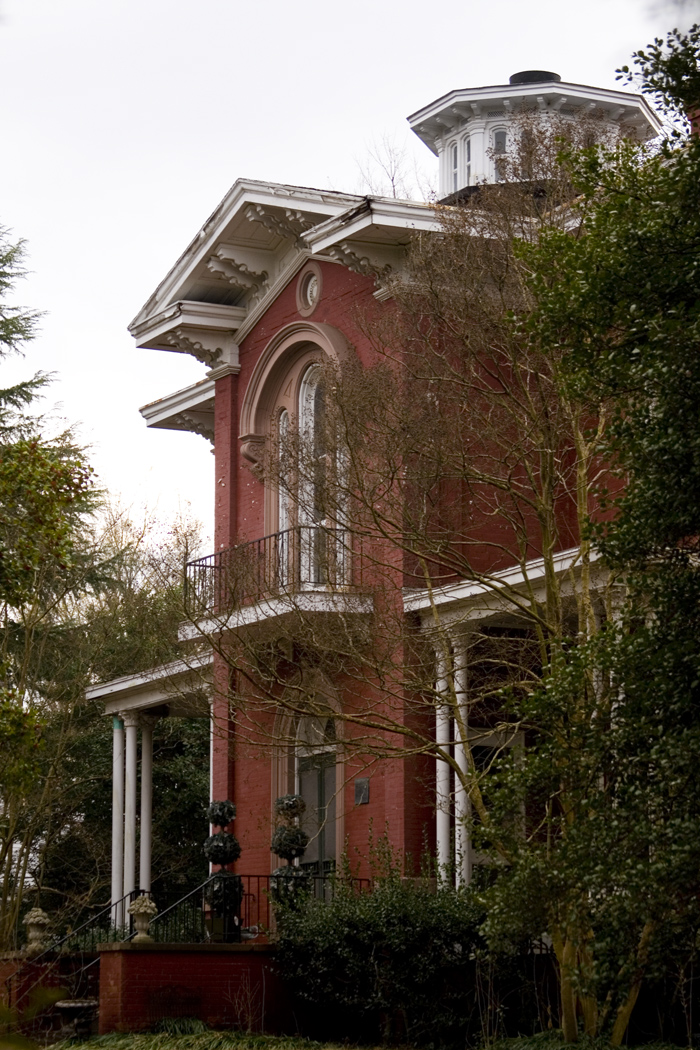
Montfort Hall is a registered historic landmark in the Boylan Heights neighborhood of Raleigh, North Carolina. It is one of the few mansions in the state's Capital that survived the American Civil War.
An example of Italianate architecture, it was listed on the National Register of Historic Places in 1978 as Montford Hall, and was designated as a Raleigh Historic Landmark in 1968 as Boylan Manson. It now operates as Heights House a 9-room boutique inn.
English architect Williams Percival came to Raleigh in 1857 to work on the First Baptist Church, completed in 1859. Over three years he drew plans for 11 different sites around the state. Including North Carolina's State Capital, Caswell County Courthouse, and The Barracks in Tarboro, North Carolina.
Montfort Hall's interior centerpiece is a rotunda supported by four Corinthian columns and lit by a stained glass window located on the roof. Percival took inspiration from the State Capitol rotunda when designing the home.
William Boylan purchased 197 acres of land for $3,000 in 1818, including the main house of Wakefield Plantation, originally built for Raleigh and Wake County founding father Joel Lane. Boylan was a prominent and influential businessman, active in early Raleigh newspapers and railroads, and operated plantations in Wake, Johnston, Chatham counties, and in Mississippi.
In 1855, Boylan deeded 100 acres of the Wakefield property to his son, William Montfort Boylan. Soon afterward, William Montfort Boylan commissioned English architect William Percival to design a residence. Construction of Montfort Hall was completed in 1858, and the house became one of Raleigh’s most prominent examples of Italianate architecture.
After William Montfort Boylan's death in 1899, Montfort Hall passed to his wife, Mary Kinsey Boylan, and their son William. Mary hoped that her son would retain the mansion, but William sold the property to the Greater Raleigh Land Company in 1907. The estate was subdivided to create the Boylan Heights neighborhood, leaving the mansion and its immediate surroundings as the only remaining elements of the original plantation.
During the 1910s, Montfort Hall changed hands multiple times and was rented to traveling salesmen and merchants. In 1918, North Carolina Supreme Court Associate Justice George H. Brown sold the house to Rufus T. Coburn, whose family occupied the mansion until 1953. Geraldine Coburn Cox, Coburn's daughter, later described Montfort Hall in the 1920s as largely intact from the Boylan era, featuring a rotunda, stained glass dome, Corinthian columns, niches for statues, and early indoor plumbing.
Hub AI
Montfort Hall AI simulator
(@Montfort Hall_simulator)
Montfort Hall
Montfort Hall is a registered historic landmark in the Boylan Heights neighborhood of Raleigh, North Carolina. It is one of the few mansions in the state's Capital that survived the American Civil War.
An example of Italianate architecture, it was listed on the National Register of Historic Places in 1978 as Montford Hall, and was designated as a Raleigh Historic Landmark in 1968 as Boylan Manson. It now operates as Heights House a 9-room boutique inn.
English architect Williams Percival came to Raleigh in 1857 to work on the First Baptist Church, completed in 1859. Over three years he drew plans for 11 different sites around the state. Including North Carolina's State Capital, Caswell County Courthouse, and The Barracks in Tarboro, North Carolina.
Montfort Hall's interior centerpiece is a rotunda supported by four Corinthian columns and lit by a stained glass window located on the roof. Percival took inspiration from the State Capitol rotunda when designing the home.
William Boylan purchased 197 acres of land for $3,000 in 1818, including the main house of Wakefield Plantation, originally built for Raleigh and Wake County founding father Joel Lane. Boylan was a prominent and influential businessman, active in early Raleigh newspapers and railroads, and operated plantations in Wake, Johnston, Chatham counties, and in Mississippi.
In 1855, Boylan deeded 100 acres of the Wakefield property to his son, William Montfort Boylan. Soon afterward, William Montfort Boylan commissioned English architect William Percival to design a residence. Construction of Montfort Hall was completed in 1858, and the house became one of Raleigh’s most prominent examples of Italianate architecture.
After William Montfort Boylan's death in 1899, Montfort Hall passed to his wife, Mary Kinsey Boylan, and their son William. Mary hoped that her son would retain the mansion, but William sold the property to the Greater Raleigh Land Company in 1907. The estate was subdivided to create the Boylan Heights neighborhood, leaving the mansion and its immediate surroundings as the only remaining elements of the original plantation.
During the 1910s, Montfort Hall changed hands multiple times and was rented to traveling salesmen and merchants. In 1918, North Carolina Supreme Court Associate Justice George H. Brown sold the house to Rufus T. Coburn, whose family occupied the mansion until 1953. Geraldine Coburn Cox, Coburn's daughter, later described Montfort Hall in the 1920s as largely intact from the Boylan era, featuring a rotunda, stained glass dome, Corinthian columns, niches for statues, and early indoor plumbing.
Recent media