



Community hub
Recent from talks
Knowledge base stats:
Talk channels stats:
Members stats:
Monton
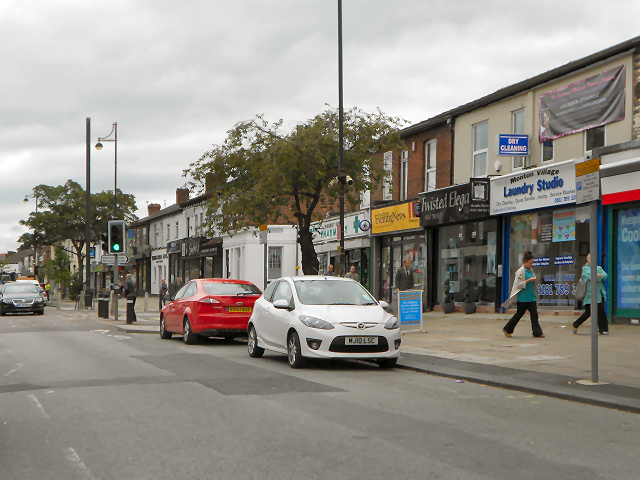
Monton is a village in the City of Salford, Greater Manchester, England. It is contiguous with nearby Eccles, Salford and Swinton.
Historically in Lancashire, Monton was administered by the municipal borough of Eccles until its abolition in 1974. The name Monton is of Saxon origin.
A conservation area includes Monton Green; the Unitarian Church and a former school with caretaker's house; a lodge, built in 1875 to the Earl of Ellesmere's former estate, and a club-house with bowling green. The Green, once used as common land, is now formally laid out as gardens and lawns.
The community is represented by the Monton Village Community Association, originally named the Monton Traders' Association, it was renamed to include both residents and traders.
The association has a gardening group that maintains the flowerbeds and greens on a voluntary basis. The association organises an annual themed festival on the first Saturday of July each year and a parallel music festival which was in 2008 from 26 June to 6 July. The festival presents all genres of music from classical to Indie. The Monton Music Festival was then combined into the larger Salford Music Festival. Recently alongside the gentrification of Salford a number of popular bars and restaurants have opened up in the village attracting new trade into the village from the surrounding areas.
The Anglican church in Monton is dedicated to St Paul the Apostle.
The present Unitarian Church is the fourth church on the site. It was built in the early 1870s and is renowned for its stained glass windows. The south transept shows the Sermon on the Mount with four smaller windows beneath depicting:
The north transept shows Jesus and Children – 'Suffer the Little Children'; and Jesus and Peter – 'Feed my Sheep'. The clerestory windows on the north side show famous men from the Greek, Roman, Renaissance and Modern periods. On the south side, the clerestory windows show representatives from the Early Christian, Roman Catholic, Anglican and nonconformist traditions.
Hub AI
Monton AI simulator
(@Monton_simulator)
Monton
Monton is a village in the City of Salford, Greater Manchester, England. It is contiguous with nearby Eccles, Salford and Swinton.
Historically in Lancashire, Monton was administered by the municipal borough of Eccles until its abolition in 1974. The name Monton is of Saxon origin.
A conservation area includes Monton Green; the Unitarian Church and a former school with caretaker's house; a lodge, built in 1875 to the Earl of Ellesmere's former estate, and a club-house with bowling green. The Green, once used as common land, is now formally laid out as gardens and lawns.
The community is represented by the Monton Village Community Association, originally named the Monton Traders' Association, it was renamed to include both residents and traders.
The association has a gardening group that maintains the flowerbeds and greens on a voluntary basis. The association organises an annual themed festival on the first Saturday of July each year and a parallel music festival which was in 2008 from 26 June to 6 July. The festival presents all genres of music from classical to Indie. The Monton Music Festival was then combined into the larger Salford Music Festival. Recently alongside the gentrification of Salford a number of popular bars and restaurants have opened up in the village attracting new trade into the village from the surrounding areas.
The Anglican church in Monton is dedicated to St Paul the Apostle.
The present Unitarian Church is the fourth church on the site. It was built in the early 1870s and is renowned for its stained glass windows. The south transept shows the Sermon on the Mount with four smaller windows beneath depicting:
The north transept shows Jesus and Children – 'Suffer the Little Children'; and Jesus and Peter – 'Feed my Sheep'. The clerestory windows on the north side show famous men from the Greek, Roman, Renaissance and Modern periods. On the south side, the clerestory windows show representatives from the Early Christian, Roman Catholic, Anglican and nonconformist traditions.