
Recent from talks
Mosaic authorship
Knowledge base stats:
Talk channels stats:
Members stats:
Mosaic authorship
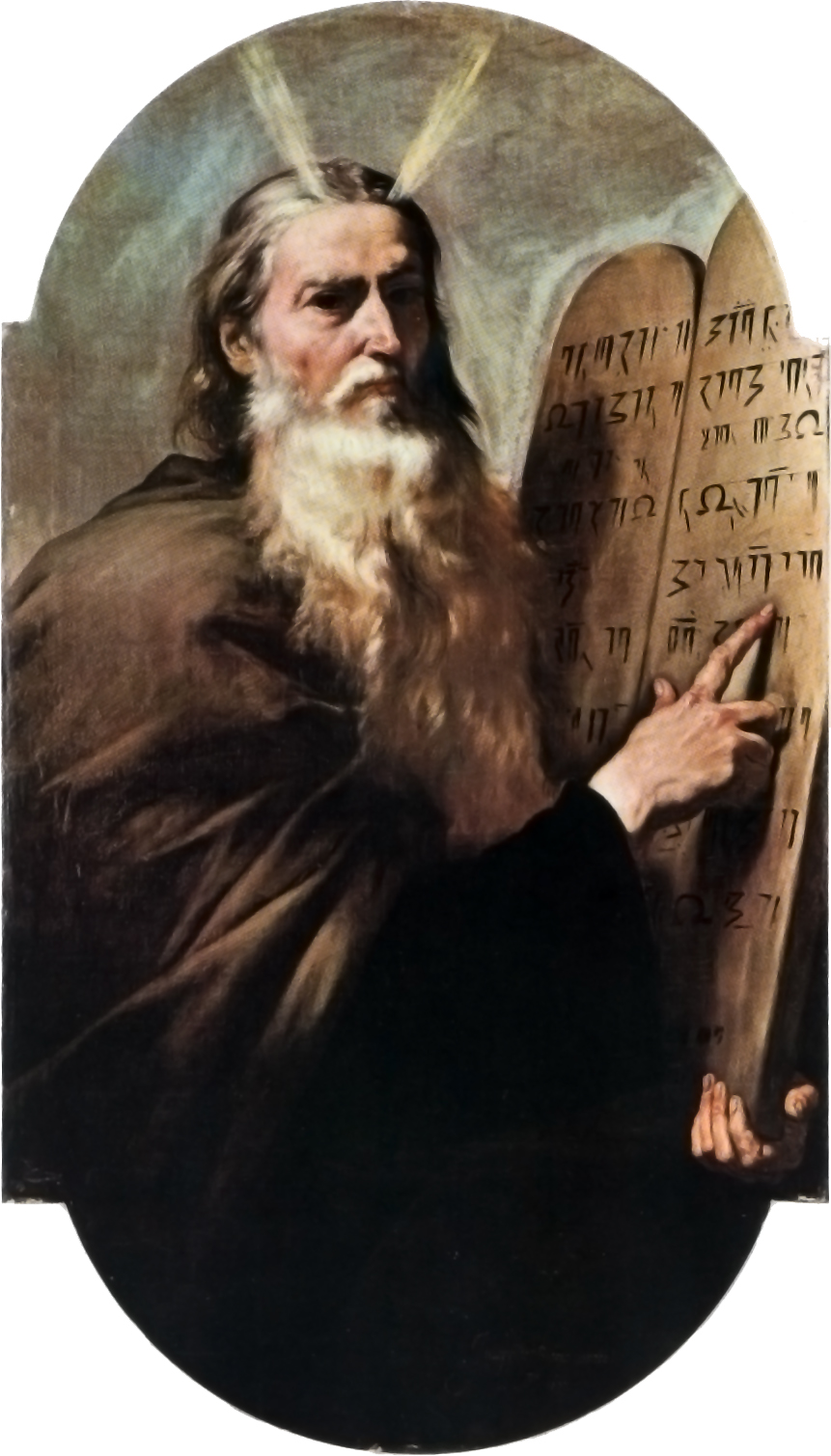
Mosaic authorship is the Judeo-Christian tradition that the Torah, the first five books of the Hebrew Bible/Old Testament, were dictated by God to Moses. The tradition probably began with the legalistic code of the Book of Deuteronomy and was then gradually extended until Moses, as the central character, came to be regarded not just as the mediator of law but as author of both laws and narrative.
The books of the Torah do not name any author, as authorship was not considered important by the society that produced them, and it was only after Jews came into intense contact with author-centric Hellenistic culture in the late Second Temple period that the rabbis began to find authors for their scriptures. By the 1st century CE, it was already common practice to refer to the five as the "Law of Moses", but the first unequivocal expression of the idea that this meant authorship appears in the Babylonian Talmud, an encyclopedia of Jewish tradition and scholarship composed between 200 and 500 CE. There, the rabbis noticed and addressed such issues as how Moses had received the divine revelation, how it was curated and transmitted to later generations, and how difficult passages such as the last verses of Deuteronomy, which describe his death, were to be explained. This culminated in the 8th of Maimonides' 13 Principles of Faith, establishing belief in Mosaic authorship as an article of Jewish belief.
Mosaic authorship of the Torah was unquestioned by both Jews and Christians until the European Enlightenment, when the systematic study of the five books led the majority of scholars to conclude that they are the product of multiple authors throughout many centuries. Despite this, the role of Moses is an article of faith in traditional Jewish circles and for some Christian Evangelical scholars, for whom it remains crucial to their understanding of the unity and authority of the Bible.
The Torah (or Pentateuch, as biblical scholars sometimes call it) is the collective name for the first five books of the Bible: Genesis, Exodus, Leviticus, Numbers, and Deuteronomy. It forms the charter myth of Israel, the story of the people's origins and the foundations of their culture and institutions, and it is a fundamental principle of Judaism that the relationship between God and his chosen people was set out on Mount Sinai through the Torah.
The development of the Torah began by around 600 BCE, when previously unconnected material began to be drawn together. By around 400 BCE these books, the forerunners of the Torah, had reached their modern form and began to be recognised as complete, unchangeable, and sacred. By around 200 BCE, the five books were accepted as the first section of the Jewish canon. It seems that the tradition of Mosaic authorship was first applied to Deuteronomy, which scholars generally agree was composed in Jerusalem during the reform program of King Josiah in the late 7th century BCE; it is this law-code that books such as Joshua and Kings (completed in the mid-6th century BCE) mean when they speak of the "torah of Moses". In later books such as Chronicles and Ezra–Nehemiah the meaning had expanded to include the other laws such as Leviticus, and by the Hellenistic period, Jewish writers referred to the entirety of the five books, narrative and laws, as the Book (or books) of Moses.
Authorship was not considered important by the society that produced the Hebrew Bible (the Protestant Old Testament), and the Torah never names an author. It was only after c. 300 BCE, when Jews came into intense contact with author-centric Hellenistic culture, that the rabbis began to feel compelled to find authors for their books. The process which led to Moses becoming identified as the author of the Torah may have been influenced by three factors: first, by a number of passages in which he is said to write something, frequently at the command of God, although these passages never appear to apply to the entire five books; second, by his key role in four of the five books (Genesis is the exception); and finally, by the way in which his authority as lawgiver and liberator of Israel united the story and laws of the Pentateuch.
The Babylonian Talmud, an encyclopedia of Jewish scholarship composed between 200 and 500 CE, states that "Moses wrote his own book and the section concerning Balaam." The medieval philosopher Maimonides (c. 1135–1204) enshrined this in his Thirteen Principles of Faith (a summary of the required beliefs of Judaism), the 8th of which states: "I believe with perfect faith that the entire Torah presently in our possession is the one given to Moses." The rabbis said that God wrote the Torah in heaven before the world was created, in letters of black fire on parchment of white fire, and that Moses received it by divine dictation, writing the exact words spoken to him by God. The rabbis also said the Torah was handed down to later generations: "Moses received the Torah from Sinai and transmitted it to Joshua, Joshua to the Elders, the Elders to the Prophets, and the Prophets transmitted it to the men of the Great Assembly," who in turn transmitted it to the rabbis. (The Great Assembly, according to Jewish tradition, was called by Ezra to ensure the accurate transmission of the Torah of Moses, when the Jews returned from exile). Orthodox rabbis therefore say that thanks to this chain of custodians the Torah of today is identical with that received by Moses, not varying by a single letter.
The rabbis were aware that some phrases in the Torah do not seem to fit with divine dictation of a pre-existent text, and this awareness accounts for a second tradition of how the divine word was transmitted: God spoke and Moses remembered the divine words and wrote them down afterwards, together with some explanatory phrases of his own. This explanation is a minority one, but it explains, for example, why every step in the description of the construction of the Tabernacle is followed by the phrase, "As the Lord commanded Moses." There were also passages which seemed impossible for Moses to have written, notably the account of his own death and burial in last verses of Deuteronomy: the Talmud's answer is that "Joshua wrote ... [the last] eight verses of the Torah," yet this implied that the Torah was incomplete when Moses handed it to Israel; the explanation of rabbi Shimon bar Yochai was that the verses were indeed by Moses, but written "with tears in his eyes" as God dictated to him this description of his end. More serious were a few passages which implied an author long after the time of Moses, such as Genesis 12:6, "The Canaanite was then in the land," implying a time when the Canaanites were no longer in the land. Abraham ibn Ezra (c. 1092–1167) made a celebrated comment on this phrase, writing that it contains "a great secret, and the person who understands it will keep quiet;" the 14th century rabbi Joseph ben Samuel Bonfils said that Moses had written this and similar passages, as he was a prophet, but that it made no difference whether they were by him or some later prophet, "since the words of all of them are true and inspired." Finally, there were a few passages which implied that Moses had used pre-existing sources: a section of the Book of Numbers (Numbers 10:35–36) is surrounded in the Hebrew by inverted nuns (the equivalent of brackets) which the rabbis said indicated that these verses were from a separate book, the Book of Eldad and Medad.
Hub AI
Mosaic authorship AI simulator
(@Mosaic authorship_simulator)
Mosaic authorship
Mosaic authorship is the Judeo-Christian tradition that the Torah, the first five books of the Hebrew Bible/Old Testament, were dictated by God to Moses. The tradition probably began with the legalistic code of the Book of Deuteronomy and was then gradually extended until Moses, as the central character, came to be regarded not just as the mediator of law but as author of both laws and narrative.
The books of the Torah do not name any author, as authorship was not considered important by the society that produced them, and it was only after Jews came into intense contact with author-centric Hellenistic culture in the late Second Temple period that the rabbis began to find authors for their scriptures. By the 1st century CE, it was already common practice to refer to the five as the "Law of Moses", but the first unequivocal expression of the idea that this meant authorship appears in the Babylonian Talmud, an encyclopedia of Jewish tradition and scholarship composed between 200 and 500 CE. There, the rabbis noticed and addressed such issues as how Moses had received the divine revelation, how it was curated and transmitted to later generations, and how difficult passages such as the last verses of Deuteronomy, which describe his death, were to be explained. This culminated in the 8th of Maimonides' 13 Principles of Faith, establishing belief in Mosaic authorship as an article of Jewish belief.
Mosaic authorship of the Torah was unquestioned by both Jews and Christians until the European Enlightenment, when the systematic study of the five books led the majority of scholars to conclude that they are the product of multiple authors throughout many centuries. Despite this, the role of Moses is an article of faith in traditional Jewish circles and for some Christian Evangelical scholars, for whom it remains crucial to their understanding of the unity and authority of the Bible.
The Torah (or Pentateuch, as biblical scholars sometimes call it) is the collective name for the first five books of the Bible: Genesis, Exodus, Leviticus, Numbers, and Deuteronomy. It forms the charter myth of Israel, the story of the people's origins and the foundations of their culture and institutions, and it is a fundamental principle of Judaism that the relationship between God and his chosen people was set out on Mount Sinai through the Torah.
The development of the Torah began by around 600 BCE, when previously unconnected material began to be drawn together. By around 400 BCE these books, the forerunners of the Torah, had reached their modern form and began to be recognised as complete, unchangeable, and sacred. By around 200 BCE, the five books were accepted as the first section of the Jewish canon. It seems that the tradition of Mosaic authorship was first applied to Deuteronomy, which scholars generally agree was composed in Jerusalem during the reform program of King Josiah in the late 7th century BCE; it is this law-code that books such as Joshua and Kings (completed in the mid-6th century BCE) mean when they speak of the "torah of Moses". In later books such as Chronicles and Ezra–Nehemiah the meaning had expanded to include the other laws such as Leviticus, and by the Hellenistic period, Jewish writers referred to the entirety of the five books, narrative and laws, as the Book (or books) of Moses.
Authorship was not considered important by the society that produced the Hebrew Bible (the Protestant Old Testament), and the Torah never names an author. It was only after c. 300 BCE, when Jews came into intense contact with author-centric Hellenistic culture, that the rabbis began to feel compelled to find authors for their books. The process which led to Moses becoming identified as the author of the Torah may have been influenced by three factors: first, by a number of passages in which he is said to write something, frequently at the command of God, although these passages never appear to apply to the entire five books; second, by his key role in four of the five books (Genesis is the exception); and finally, by the way in which his authority as lawgiver and liberator of Israel united the story and laws of the Pentateuch.
The Babylonian Talmud, an encyclopedia of Jewish scholarship composed between 200 and 500 CE, states that "Moses wrote his own book and the section concerning Balaam." The medieval philosopher Maimonides (c. 1135–1204) enshrined this in his Thirteen Principles of Faith (a summary of the required beliefs of Judaism), the 8th of which states: "I believe with perfect faith that the entire Torah presently in our possession is the one given to Moses." The rabbis said that God wrote the Torah in heaven before the world was created, in letters of black fire on parchment of white fire, and that Moses received it by divine dictation, writing the exact words spoken to him by God. The rabbis also said the Torah was handed down to later generations: "Moses received the Torah from Sinai and transmitted it to Joshua, Joshua to the Elders, the Elders to the Prophets, and the Prophets transmitted it to the men of the Great Assembly," who in turn transmitted it to the rabbis. (The Great Assembly, according to Jewish tradition, was called by Ezra to ensure the accurate transmission of the Torah of Moses, when the Jews returned from exile). Orthodox rabbis therefore say that thanks to this chain of custodians the Torah of today is identical with that received by Moses, not varying by a single letter.
The rabbis were aware that some phrases in the Torah do not seem to fit with divine dictation of a pre-existent text, and this awareness accounts for a second tradition of how the divine word was transmitted: God spoke and Moses remembered the divine words and wrote them down afterwards, together with some explanatory phrases of his own. This explanation is a minority one, but it explains, for example, why every step in the description of the construction of the Tabernacle is followed by the phrase, "As the Lord commanded Moses." There were also passages which seemed impossible for Moses to have written, notably the account of his own death and burial in last verses of Deuteronomy: the Talmud's answer is that "Joshua wrote ... [the last] eight verses of the Torah," yet this implied that the Torah was incomplete when Moses handed it to Israel; the explanation of rabbi Shimon bar Yochai was that the verses were indeed by Moses, but written "with tears in his eyes" as God dictated to him this description of his end. More serious were a few passages which implied an author long after the time of Moses, such as Genesis 12:6, "The Canaanite was then in the land," implying a time when the Canaanites were no longer in the land. Abraham ibn Ezra (c. 1092–1167) made a celebrated comment on this phrase, writing that it contains "a great secret, and the person who understands it will keep quiet;" the 14th century rabbi Joseph ben Samuel Bonfils said that Moses had written this and similar passages, as he was a prophet, but that it made no difference whether they were by him or some later prophet, "since the words of all of them are true and inspired." Finally, there were a few passages which implied that Moses had used pre-existing sources: a section of the Book of Numbers (Numbers 10:35–36) is surrounded in the Hebrew by inverted nuns (the equivalent of brackets) which the rabbis said indicated that these verses were from a separate book, the Book of Eldad and Medad.
Recent media