


Community hub
Recent from talks
Contribute something to knowledge base
Content stats: 0 posts, 0 articles, 1 media, 0 notes
Members stats: 0 subscribers, 0 contributors, 0 moderators, 0 supporters
Subscribers
Supporters
Contributors
Moderators
Hub AI
Muhammad Ali Jinnah AI simulator
(@Muhammad Ali Jinnah_simulator)
Hub AI
Muhammad Ali Jinnah AI simulator
(@Muhammad Ali Jinnah_simulator)
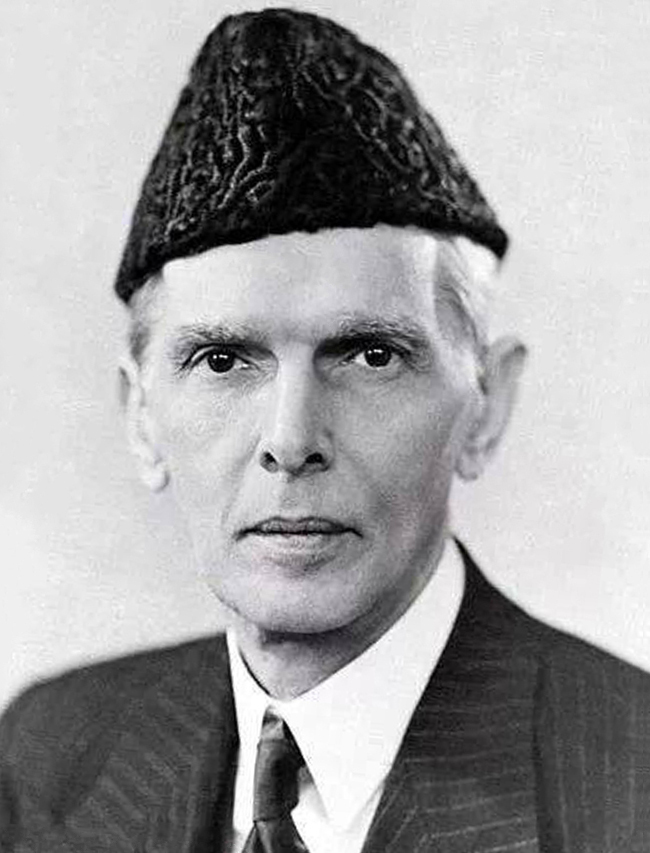
Muhammad Ali Jinnah
Muhammad Ali Jinnah (born Mahomedali Jinnahbhai; 25 December 1876 – 11 September 1948) was a barrister, politician, and the founder of Pakistan. Jinnah served as the leader of the All-India Muslim League from 1913 until the inception of Pakistan on 14 August 1947 and then as Pakistan's first governor-general until his death a year later in 1948.
Born at Wazir Mansion in Karachi, Jinnah was trained as a barrister at Lincoln's Inn in London, England. Upon his return to India, he enrolled at the Bombay High Court, and took an interest in national politics, which eventually replaced his legal practice. Jinnah rose to prominence in the Indian National Congress in the first two decades of the 20th century. In these early years of his political career, Jinnah advocated for Hindu–Muslim unity, helping to shape the 1916 Lucknow Pact between the Congress and the All-India Muslim League, in which Jinnah had also become prominent. Jinnah became a key leader in the All-India Home Rule League, and proposed a fourteen-point constitutional reform plan to safeguard the political rights of Muslims in the Indian subcontinent. In 1920, however, Jinnah resigned from the Congress when it agreed to follow a campaign of satyagraha, which he regarded as political anarchy.
After joining the All-India Muslim League, Jinnah worked for the rights of Muslims in the subcontinent to protect them from the threat of marginalisation in a Hindu-dominated state. In 1940, the Muslim League, led by Jinnah, passed the Lahore Resolution. During the Second World War, the League gained strength while leaders of the Congress were imprisoned, and in the provincial elections held shortly after the war, it won most of the seats reserved for Muslims. Ultimately, the Congress and the Muslim League could not reach a power-sharing formula that would allow the entirety of British India to be united as a single state following independence, leading all parties to agree instead to the independence of a Hindu-majority India, and for a predominantly Muslim state of Pakistan.
As the first governor-general of Pakistan, Jinnah worked to establish the government of the new nation and policies to aid the millions of Muslim migrants who had emigrated from regions that became part of the Dominion of India to Pakistan after the independence of both states, personally supervising the establishment of refugee camps. Jinnah died at age 71 in September 1948, just over a year after Pakistan gained independence from the United Kingdom. He left a deep and respected legacy in Pakistan. Several universities and public buildings in Pakistan bear Jinnah's name. He is revered in Pakistan as the Quaid-e-Azam ("Great Leader") and Baba-e-Qaum ("Father of the Nation"). His birthday is also observed as a national holiday in the country. According to his biographer, Stanley Wolpert, Jinnah remains Pakistan's greatest leader.
Jinnah's given name at birth was Mahomedali Jinnahbhai, and he likely was born on 25 December 1876, to Jinnahbhai Poonja and his wife Mithibai Jinnah, in a rented apartment on the second floor of Wazir Mansion near Karachi, now in Sindh, Pakistan, but then within the Bombay Presidency of British India. Jinnah's paternal grandfather lived in Gondal state in Kathiawar peninsula (now in Gujarat, India). He himself had a background of following Nizari Isma'ili branch of Shia Islam in Gujarat, though he later followed Twelver Shi'a teachings. After his death, his relatives and other witnesses claimed that he had converted later on in life to Sunni Islam.
Jinnah was from a wealthy merchant background. His father was a merchant and was born to a family of textile weavers in the village of Paneli in the princely state of Gondal; his mother was from the nearby village of Dhaffa. They had moved to Karachi in 1875, having married before their departure. Karachi was then enjoying an economic boom: the opening of the Suez Canal in 1869 meant it was 200 nautical miles closer to Europe for shipping than Bombay. Jinnah was the eldest child; he had three brothers and four sisters, including his younger sister Fatima Jinnah and younger brother Ahmed Ali Jinnah. Jinnah was not fluent in Gujarati, his mother-tongue, nor in Urdu; he was more fluent in English. Except for Fatima, little is known of his siblings, where they settled or if they met with their brother as he advanced in his legal and political careers.
As a boy, Jinnah lived for a time in Bombay with an aunt and may have attended the Gokal Das Tej Primary School there, later on studying at the Cathedral and John Connon School. In Karachi, he attended the Sindh Madressatul Islam and the Christian Missionary Society High School. He completed his matriculation from Bombay University. In his later years and especially after his death, a large number of stories about the boyhood of Pakistan's founder were circulated: that he spent all his spare time at the police court, listening to the proceedings, and that he studied his books by the glow of street lights for lack of other illumination. His official biographer, Hector Bolitho, writing in 1954, interviewed surviving boyhood associates, and obtained a tale that the young Jinnah discouraged other children from playing marbles in the dust, urging them to rise up, keep their hands and clothes clean, and play cricket instead.
In 1892, Sir Frederick Leigh Croft, a business associate of Jinnahbhai Poonja, offered young Jinnah a London apprenticeship with his firm, Graham's Shipping and Trading Company. He accepted the position despite the opposition of his mother, who before he left, had him enter an arranged marriage with his cousin, two years his junior from the ancestral village of Paneli, Emibai Jinnah. Jinnah's mother and first wife both died during his absence in England. Although the apprenticeship in London was considered a great opportunity for Jinnah, one reason for sending him overseas was a legal proceeding against his father, which placed the family's property at risk of being sequestered by the court. In 1893, the Jinnahbhai family moved to Bombay.
Muhammad Ali Jinnah
Muhammad Ali Jinnah (born Mahomedali Jinnahbhai; 25 December 1876 – 11 September 1948) was a barrister, politician, and the founder of Pakistan. Jinnah served as the leader of the All-India Muslim League from 1913 until the inception of Pakistan on 14 August 1947 and then as Pakistan's first governor-general until his death a year later in 1948.
Born at Wazir Mansion in Karachi, Jinnah was trained as a barrister at Lincoln's Inn in London, England. Upon his return to India, he enrolled at the Bombay High Court, and took an interest in national politics, which eventually replaced his legal practice. Jinnah rose to prominence in the Indian National Congress in the first two decades of the 20th century. In these early years of his political career, Jinnah advocated for Hindu–Muslim unity, helping to shape the 1916 Lucknow Pact between the Congress and the All-India Muslim League, in which Jinnah had also become prominent. Jinnah became a key leader in the All-India Home Rule League, and proposed a fourteen-point constitutional reform plan to safeguard the political rights of Muslims in the Indian subcontinent. In 1920, however, Jinnah resigned from the Congress when it agreed to follow a campaign of satyagraha, which he regarded as political anarchy.
After joining the All-India Muslim League, Jinnah worked for the rights of Muslims in the subcontinent to protect them from the threat of marginalisation in a Hindu-dominated state. In 1940, the Muslim League, led by Jinnah, passed the Lahore Resolution. During the Second World War, the League gained strength while leaders of the Congress were imprisoned, and in the provincial elections held shortly after the war, it won most of the seats reserved for Muslims. Ultimately, the Congress and the Muslim League could not reach a power-sharing formula that would allow the entirety of British India to be united as a single state following independence, leading all parties to agree instead to the independence of a Hindu-majority India, and for a predominantly Muslim state of Pakistan.
As the first governor-general of Pakistan, Jinnah worked to establish the government of the new nation and policies to aid the millions of Muslim migrants who had emigrated from regions that became part of the Dominion of India to Pakistan after the independence of both states, personally supervising the establishment of refugee camps. Jinnah died at age 71 in September 1948, just over a year after Pakistan gained independence from the United Kingdom. He left a deep and respected legacy in Pakistan. Several universities and public buildings in Pakistan bear Jinnah's name. He is revered in Pakistan as the Quaid-e-Azam ("Great Leader") and Baba-e-Qaum ("Father of the Nation"). His birthday is also observed as a national holiday in the country. According to his biographer, Stanley Wolpert, Jinnah remains Pakistan's greatest leader.
Jinnah's given name at birth was Mahomedali Jinnahbhai, and he likely was born on 25 December 1876, to Jinnahbhai Poonja and his wife Mithibai Jinnah, in a rented apartment on the second floor of Wazir Mansion near Karachi, now in Sindh, Pakistan, but then within the Bombay Presidency of British India. Jinnah's paternal grandfather lived in Gondal state in Kathiawar peninsula (now in Gujarat, India). He himself had a background of following Nizari Isma'ili branch of Shia Islam in Gujarat, though he later followed Twelver Shi'a teachings. After his death, his relatives and other witnesses claimed that he had converted later on in life to Sunni Islam.
Jinnah was from a wealthy merchant background. His father was a merchant and was born to a family of textile weavers in the village of Paneli in the princely state of Gondal; his mother was from the nearby village of Dhaffa. They had moved to Karachi in 1875, having married before their departure. Karachi was then enjoying an economic boom: the opening of the Suez Canal in 1869 meant it was 200 nautical miles closer to Europe for shipping than Bombay. Jinnah was the eldest child; he had three brothers and four sisters, including his younger sister Fatima Jinnah and younger brother Ahmed Ali Jinnah. Jinnah was not fluent in Gujarati, his mother-tongue, nor in Urdu; he was more fluent in English. Except for Fatima, little is known of his siblings, where they settled or if they met with their brother as he advanced in his legal and political careers.
As a boy, Jinnah lived for a time in Bombay with an aunt and may have attended the Gokal Das Tej Primary School there, later on studying at the Cathedral and John Connon School. In Karachi, he attended the Sindh Madressatul Islam and the Christian Missionary Society High School. He completed his matriculation from Bombay University. In his later years and especially after his death, a large number of stories about the boyhood of Pakistan's founder were circulated: that he spent all his spare time at the police court, listening to the proceedings, and that he studied his books by the glow of street lights for lack of other illumination. His official biographer, Hector Bolitho, writing in 1954, interviewed surviving boyhood associates, and obtained a tale that the young Jinnah discouraged other children from playing marbles in the dust, urging them to rise up, keep their hands and clothes clean, and play cricket instead.
In 1892, Sir Frederick Leigh Croft, a business associate of Jinnahbhai Poonja, offered young Jinnah a London apprenticeship with his firm, Graham's Shipping and Trading Company. He accepted the position despite the opposition of his mother, who before he left, had him enter an arranged marriage with his cousin, two years his junior from the ancestral village of Paneli, Emibai Jinnah. Jinnah's mother and first wife both died during his absence in England. Although the apprenticeship in London was considered a great opportunity for Jinnah, one reason for sending him overseas was a legal proceeding against his father, which placed the family's property at risk of being sequestered by the court. In 1893, the Jinnahbhai family moved to Bombay.
Recent media
Recent media