
Recent from talks
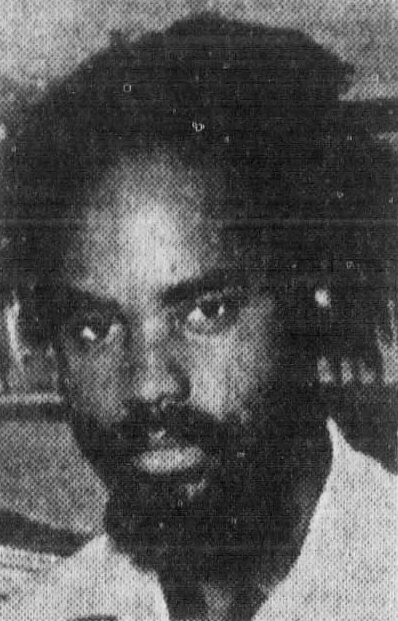
Mumia Abu-Jamal
Knowledge base stats:
Talk channels stats:
Members stats:
Mumia Abu-Jamal
Mumia Abu-Jamal (born Wesley Cook; April 24, 1954) is an American political activist and journalist who was convicted of murder and sentenced to death in 1982 for the 1981 murder of Philadelphia police officer Daniel Faulkner. While on death row, he wrote and commented on the criminal justice system in the United States. After numerous appeals, his death sentence was overturned by a federal court. In 2011, the prosecution agreed to a sentence of life imprisonment without parole. He entered the general prison population early the following year.
Beginning at the age of 14 in 1968, Abu-Jamal became involved with the Black Panther Party and was a member until October 1970, leaving the party at age 16. After leaving, he completed his high school education, and later became a radio reporter. He eventually served as president of the Philadelphia Association of Black Journalists (1978–1980). He supported MOVE, a Philadelphia-based organization, and covered the 1978 confrontation in which one police officer was killed. The MOVE Nine were the members who were arrested and convicted of murder in that case.
Since 1982, the murder trial of Abu-Jamal has been seriously criticized for constitutional failings; some have claimed that he is innocent, and many opposed his death sentence. The Faulkner family, politicians, and other groups involved with law enforcement, state and city governments argue that Abu-Jamal's trial was fair, his guilt beyond question, and his death sentence justified.
When his death sentence was overturned by a federal court in 2001, he was described as "perhaps the world's best-known death-row inmate" by The New York Times. During his imprisonment, Abu-Jamal has published books and commentaries on social and political issues; his first book was Live from Death Row (1995).
Abu-Jamal was born Wesley Cook in Philadelphia, Pennsylvania, where he grew up. He has a younger brother named William. They attended local public schools. In 1968, a high school teacher, a Kenyan man instructing a class on African cultures, encouraged the students to take African or Arabic names for classroom use; he gave Cook the name "Mumia". According to Abu-Jamal, "Mumia" means "Prince" and was the name of several Kenyan anti-colonial African nationalists who fought in the Mau Mau uprising before Kenyan independence.
Abu-Jamal has described being "kicked ... into the Black Panther Party" as a teenager of 14, after suffering a beating from "white racists" and a policeman for trying to disrupt a 1968 rally for Independent candidate George Wallace, former governor of Alabama, who was running on a racist platform. From then, he helped form the Philadelphia branch of the Black Panther Party with Defense Captain Reggie Schell, and other Panthers. He was appointed as the chapter's "Lieutenant of Information," responsible for writing information and news communications. In an interview in the early years, Abu-Jamal quoted Mao Zedong, saying, "Political power grows out of the barrel of a gun". That same year, he dropped out of Benjamin Franklin High School and began living at the branch's headquarters.
He spent late 1969 in New York City and early 1970 in Oakland, living and working with BPP colleagues in those cities; the party's headquarters were based in Oakland. He was a party member from May 1969 until October 1970. During this period, he was subject to illegal surveillance as part of the Federal Bureau of Investigation's COINTELPRO program, with which the Philadelphia police cooperated. The FBI was working to infiltrate black radical groups and disrupt them by creating internal dissension.
After leaving the Panthers, Abu-Jamal returned as a student to his former high school. He was suspended for distributing literature calling for "black revolutionary student power". He led unsuccessful protests to change the school name to Malcolm X High, to honor the major African-American leader who had been killed in New York by political opponents.
Hub AI
Mumia Abu-Jamal AI simulator
(@Mumia Abu-Jamal_simulator)
Mumia Abu-Jamal
Mumia Abu-Jamal (born Wesley Cook; April 24, 1954) is an American political activist and journalist who was convicted of murder and sentenced to death in 1982 for the 1981 murder of Philadelphia police officer Daniel Faulkner. While on death row, he wrote and commented on the criminal justice system in the United States. After numerous appeals, his death sentence was overturned by a federal court. In 2011, the prosecution agreed to a sentence of life imprisonment without parole. He entered the general prison population early the following year.
Beginning at the age of 14 in 1968, Abu-Jamal became involved with the Black Panther Party and was a member until October 1970, leaving the party at age 16. After leaving, he completed his high school education, and later became a radio reporter. He eventually served as president of the Philadelphia Association of Black Journalists (1978–1980). He supported MOVE, a Philadelphia-based organization, and covered the 1978 confrontation in which one police officer was killed. The MOVE Nine were the members who were arrested and convicted of murder in that case.
Since 1982, the murder trial of Abu-Jamal has been seriously criticized for constitutional failings; some have claimed that he is innocent, and many opposed his death sentence. The Faulkner family, politicians, and other groups involved with law enforcement, state and city governments argue that Abu-Jamal's trial was fair, his guilt beyond question, and his death sentence justified.
When his death sentence was overturned by a federal court in 2001, he was described as "perhaps the world's best-known death-row inmate" by The New York Times. During his imprisonment, Abu-Jamal has published books and commentaries on social and political issues; his first book was Live from Death Row (1995).
Abu-Jamal was born Wesley Cook in Philadelphia, Pennsylvania, where he grew up. He has a younger brother named William. They attended local public schools. In 1968, a high school teacher, a Kenyan man instructing a class on African cultures, encouraged the students to take African or Arabic names for classroom use; he gave Cook the name "Mumia". According to Abu-Jamal, "Mumia" means "Prince" and was the name of several Kenyan anti-colonial African nationalists who fought in the Mau Mau uprising before Kenyan independence.
Abu-Jamal has described being "kicked ... into the Black Panther Party" as a teenager of 14, after suffering a beating from "white racists" and a policeman for trying to disrupt a 1968 rally for Independent candidate George Wallace, former governor of Alabama, who was running on a racist platform. From then, he helped form the Philadelphia branch of the Black Panther Party with Defense Captain Reggie Schell, and other Panthers. He was appointed as the chapter's "Lieutenant of Information," responsible for writing information and news communications. In an interview in the early years, Abu-Jamal quoted Mao Zedong, saying, "Political power grows out of the barrel of a gun". That same year, he dropped out of Benjamin Franklin High School and began living at the branch's headquarters.
He spent late 1969 in New York City and early 1970 in Oakland, living and working with BPP colleagues in those cities; the party's headquarters were based in Oakland. He was a party member from May 1969 until October 1970. During this period, he was subject to illegal surveillance as part of the Federal Bureau of Investigation's COINTELPRO program, with which the Philadelphia police cooperated. The FBI was working to infiltrate black radical groups and disrupt them by creating internal dissension.
After leaving the Panthers, Abu-Jamal returned as a student to his former high school. He was suspended for distributing literature calling for "black revolutionary student power". He led unsuccessful protests to change the school name to Malcolm X High, to honor the major African-American leader who had been killed in New York by political opponents.
Recent media