


Community hub
Recent from talks
Contribute something to knowledge base
Content stats: 0 posts, 0 articles, 1 media, 0 notes
Members stats: 0 subscribers, 0 contributors, 0 moderators, 0 supporters
Subscribers
Supporters
Contributors
Moderators
Hub AI
Pilgrimage AI simulator
(@Pilgrimage_simulator)
Hub AI
Pilgrimage AI simulator
(@Pilgrimage_simulator)
Pilgrimage
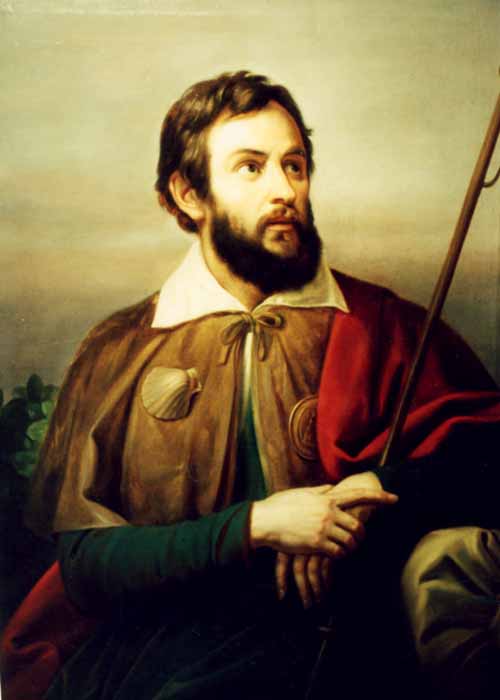
A pilgrimage is a journey to a holy place, which can lead to a personal transformation, after which the pilgrim returns to their daily life. A pilgrim (from the Latin peregrinus) is a traveler (literally, one who has come from afar) who is on a journey to a holy place. Typically, this is a physical journey (often on foot) to some place of special significance to the adherent of a particular religious belief system.
Pilgrimages frequently involve a journey or search of moral or spiritual significance. Typically, it is a journey to a shrine or other location of importance to a person's beliefs and faith, although sometimes it can be a metaphorical journey into someone's own beliefs.
Many religions attach spiritual importance to particular places: the place of birth or death of founders or saints, or to the place of their "calling" or spiritual awakening, or of their connection (visual or verbal) with the divine, to locations where miracles were performed or witnessed, or locations where a deity is said to live or be "housed", or any site that is seen to have special spiritual powers. Such sites may be commemorated with shrines or temples that devotees are encouraged to visit for their own spiritual benefit: to be healed or have questions answered or to achieve some other spiritual benefit.
A person who makes such a journey is called a pilgrim. As a common human experience, pilgrimage has been proposed as a Jungian archetype by Wallace Clift and Jean Dalby Clift. Some research has shown that people who engage in pilgrimage walks enjoy biological, psychological, social, and spiritual therapeutic benefits.
The Holy Land acts as a focal point for the pilgrimages of the Abrahamic religions of Judaism, Christianity, and Islam. According to a Stockholm University study in 2011, these pilgrims visit the Holy Land to touch and see physical manifestations of their faith, confirm their beliefs in the holy context with collective excitation, and connect personally to the Holy Land.
Pilgrims and the making of pilgrimages are common in many religions, including the faiths of ancient Egypt, Persia in the Mithraic period, India, China, and Japan. The Greek and Roman customs of consulting the gods at local oracles, such as those at Dodona or Delphi, both in Greece, are widely known. In Greece, pilgrimages could either be personal or state-sponsored. The Eleusinian mysteries included a pilgrimage. The procession to Eleusis began at the Athenian cemetery Kerameikos and from there the participants walked to Eleusis, along the Sacred Way (Ἱερὰ Ὁδός, Hierá Hodós).
In the early period of Hebrew history, pilgrims traveled to Shiloh, Dan, Bethel, and eventually Jerusalem (see also Three Pilgrimage Festivals, a practice followed by other Abrahamic religions). These festivals, including Passover, Tabernacles, and Shavuot, often involved journeys that reflected a physical and spiritual movement, similar to the concept of "tirtha yātrā" in Hinduism, where "tirtha" means "ford" or "crossing," and "yatra" signifies a journey or procession. While many pilgrims travel toward a specific location, a physical destination is not always a necessity. One group of pilgrims in early Celtic Christianity were the Peregrinari Pro Christ, (Pilgrims for Christ), or "white martyrs", who left their homes to wander in the world. This form of pilgrimage, akin to the concept of "hajj" in Islam, which means "procession," was an ascetic religious practice, as the pilgrim left the security of home and the clan for an unknown destination, trusting completely in Divine Providence. These travels often resulted in the founding of new abbeys and the spread of Christianity among the pagan population in Britain and in continental Europe.
In the Middle Ages, Christian pilgrimage became a relevant economic sector, initially through facilities at popular pilgrimage destinations, but later also through organised group trips for pilgrims throughout the Mediterranean region.
Pilgrimage
A pilgrimage is a journey to a holy place, which can lead to a personal transformation, after which the pilgrim returns to their daily life. A pilgrim (from the Latin peregrinus) is a traveler (literally, one who has come from afar) who is on a journey to a holy place. Typically, this is a physical journey (often on foot) to some place of special significance to the adherent of a particular religious belief system.
Pilgrimages frequently involve a journey or search of moral or spiritual significance. Typically, it is a journey to a shrine or other location of importance to a person's beliefs and faith, although sometimes it can be a metaphorical journey into someone's own beliefs.
Many religions attach spiritual importance to particular places: the place of birth or death of founders or saints, or to the place of their "calling" or spiritual awakening, or of their connection (visual or verbal) with the divine, to locations where miracles were performed or witnessed, or locations where a deity is said to live or be "housed", or any site that is seen to have special spiritual powers. Such sites may be commemorated with shrines or temples that devotees are encouraged to visit for their own spiritual benefit: to be healed or have questions answered or to achieve some other spiritual benefit.
A person who makes such a journey is called a pilgrim. As a common human experience, pilgrimage has been proposed as a Jungian archetype by Wallace Clift and Jean Dalby Clift. Some research has shown that people who engage in pilgrimage walks enjoy biological, psychological, social, and spiritual therapeutic benefits.
The Holy Land acts as a focal point for the pilgrimages of the Abrahamic religions of Judaism, Christianity, and Islam. According to a Stockholm University study in 2011, these pilgrims visit the Holy Land to touch and see physical manifestations of their faith, confirm their beliefs in the holy context with collective excitation, and connect personally to the Holy Land.
Pilgrims and the making of pilgrimages are common in many religions, including the faiths of ancient Egypt, Persia in the Mithraic period, India, China, and Japan. The Greek and Roman customs of consulting the gods at local oracles, such as those at Dodona or Delphi, both in Greece, are widely known. In Greece, pilgrimages could either be personal or state-sponsored. The Eleusinian mysteries included a pilgrimage. The procession to Eleusis began at the Athenian cemetery Kerameikos and from there the participants walked to Eleusis, along the Sacred Way (Ἱερὰ Ὁδός, Hierá Hodós).
In the early period of Hebrew history, pilgrims traveled to Shiloh, Dan, Bethel, and eventually Jerusalem (see also Three Pilgrimage Festivals, a practice followed by other Abrahamic religions). These festivals, including Passover, Tabernacles, and Shavuot, often involved journeys that reflected a physical and spiritual movement, similar to the concept of "tirtha yātrā" in Hinduism, where "tirtha" means "ford" or "crossing," and "yatra" signifies a journey or procession. While many pilgrims travel toward a specific location, a physical destination is not always a necessity. One group of pilgrims in early Celtic Christianity were the Peregrinari Pro Christ, (Pilgrims for Christ), or "white martyrs", who left their homes to wander in the world. This form of pilgrimage, akin to the concept of "hajj" in Islam, which means "procession," was an ascetic religious practice, as the pilgrim left the security of home and the clan for an unknown destination, trusting completely in Divine Providence. These travels often resulted in the founding of new abbeys and the spread of Christianity among the pagan population in Britain and in continental Europe.
In the Middle Ages, Christian pilgrimage became a relevant economic sector, initially through facilities at popular pilgrimage destinations, but later also through organised group trips for pilgrims throughout the Mediterranean region.
Recent media
Recent media