
Recent from talks
Mostafa el-Nahas
Knowledge base stats:
Talk channels stats:
Members stats:
Mostafa el-Nahas
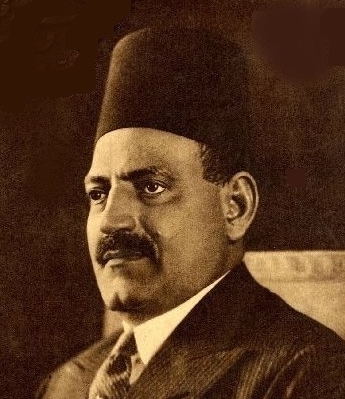
Mostafa el-Nahas Pasha or Mostafa Nahas (Arabic: مصطفى النحاس باشا; June 15, 1879 – August 23, 1965) was an Egyptian politician who served as the Prime Minister for five terms, the most out of any politician during Egypt's parliamentary era. He was the leader of the Wafd Party after the death of its founder Saad Zaghloul.
He was born in Samanud (Gharbiyya) where his father was a lumber merchant. He graduated from el-Nasiraiyah Elementary School in Cairo in 1891. He then graduated from the Khedivial Secondary School in 1896. After earning his license from the Khedivial Law School in 1900, he worked in Mohammad Farid's law office before opening his own practice in Mansoura. In 1904 he became a judge in the Tanta National Court. He was initially a member of the Watani party before joining Sa'ad Zaghloul's delegation - Arabic: Wafd - of Egyptian nationalists to the 1919 Paris Peace Conference. He was dismissed from the bench in 1919 when he joined the Wafd and was exiled with Saad Zaghlul to the Seychelles from December 1921 to 1923 during the 1919 Egyptian revolution. Nahas sided with Zaghloul during a split in 1921 between him and Adly Yakan; supporters of Yakan would later found the Liberal Constitutional Party. Nahas was chosen upon his repatriation to represent Samanud in the first Chamber of Deputies elected under the 1923 Constitution.
He became minister for communications during Zaghloul's ministry in 1924. Reelected in 1926 as a deputy from Sir Abu Nanna (Gharbiyya) and barred by the British from taking another cabinet post, he was elected one of the Chamber's two vice presidents and, in 1927, its president. Upon Saad Zaghloul's death in August 1927, he defeated Saad's nephew in the contest to lead the Wafd Party.
In 1928, Nahas formed his first government, while also serving as the minister of interior. This was his first and shortest government; he was dismissed by King Fuad after he refused to withdraw a law in the assembly that limited the police's ability to contain demonstrations, much to the annoyance of the British. While out of power, he took the position that the Wafd would not recognize any treaty with Britain while it was not in government. During his second term, he was unable to come to an agreement with the British foreign secretary Arthur Henderson. Specifically, Henderson refused to agree to Nahas' proposal of joint rule of Sudan. On the home front, Nahas resigned after the king refused to sign a bill allowing for the prosecution of ministers who attacked the 1923 constitution.
From 1930 to 1935, the 1923 constitution was replaced by a new constitution under Ismail Sidky's government, which granted far more powers to the king while severely limiting the democratic system. The historian Marius Deeb called this time "The Palace-Sidqi Dictatorship". During this time, Nahas led the Wafd to revolt against the government. Nahas organized a boycott of British goods and large demonstrations, some of which, like in Mansura, were deadly. On the 31st of March 1931, the Wafd and the Liberal Constitutionalists agreed to form a coalition to work for the restoration of the constitution, while boycotting the 1931 elections. The need to curtail the autocracy of the conservative monarchy lead the Wafd closer to the British. It was during this time that on June 12th, 1934, Nahas married Zainab Hanim al-Wakil, the daughter of a prominent Wafdist in Beheira. One of the reasons for this marriage was a law passed by the Sidqi government that forbade retired officials from getting a pension if they not married by fifty-five; Nahas was married two days before his fifty-fifth birthday.
After Sidqi resigned over health reasons, Naseem Pasha became prime minister. Nahas tried to pressure Neseem to reinstate the 1923 constitution, but agreed to delay the issue for the time being, costing the Wafd Rose al Yusuf and its writer Abbas Al-Aqqad, as well losing the patience of many rank and file Wafd supporters. However, when the British Foreign Secretary Samuel Hoare announced his opposition to both the 1923 and 1930 constitution, the constitutional question morphed into a nationalist question, as student protests rocked the nation. During these protests that Wafd approved the creation of a student paramilitary organization, the Blue Shirts, on January of 1936. The Blue Shirts would later engage in street battles with Young Egypt's Green Shirts, much to the concern of the palace establishment. These protests led to restoration of the 1923 constitution, allowing the Wafd to return to power for the first time in six years.
After a victory in the 1936 elections, Nahas formed his third government. During this time, Nahas achieved two major diplomatic victories with Britain: the Anglo-Egyptian Treaty of 1936 and the 1937 Montreux Convention. However, his government faced issues with the new king, King Farouk. The Wafd opposed the religiosity of the coronation as a threat to secularism and democracy. Issues between the Palace and the Government over the Blue Shirts, the right to appoint vacate senate seats and the appointment of Ali Maher as Chief of the Royal Cabinet lead to resignation of Nahas. It was also during this that the party split.
The Wafd had traditionally been divided over socioeconomic lines - between rural land owners and the urban middle class. The latter was represented by the "gang of four": Nahas, Makram Ebied, Ahmad Mahir, and Mahmud Fahmi al-Nukrashi. This wing of the party came into power after the election of Nahas to leader of the party. Yet cracks in alliance were forming by 1935. Nukrashi and Mahir were opposed to Naseem's government, while Nahas accused Nukrashi as being responsible for Britain's hardline stance in 1930, since he was in favor of continuing negotiations despite the Sudan issue. Nukrashi and Mahir accused Nahas of running the party as a dictator and building a personality cult. Another issue was regarding the construction of the Aswan Dam. Nukrashi supported opening the project up to international bidding, while Nahas and Makram wanted to give it to a British firm. After a cabinet reshuffle, Mahmud al-Nuqrashi was out of the government and expelled from the party. Ahmad Mahir also left; him and Nuqrashi formed the Sa'adist Party, claiming to be the real successors to Sa'ad Zaghloul. On November 28th, 1937, Ezz al-Din Tewfiq, a member of Young Egypt, tried to assassinate Nahas.
Hub AI
Mostafa el-Nahas AI simulator
(@Mostafa el-Nahas_simulator)
Mostafa el-Nahas
Mostafa el-Nahas Pasha or Mostafa Nahas (Arabic: مصطفى النحاس باشا; June 15, 1879 – August 23, 1965) was an Egyptian politician who served as the Prime Minister for five terms, the most out of any politician during Egypt's parliamentary era. He was the leader of the Wafd Party after the death of its founder Saad Zaghloul.
He was born in Samanud (Gharbiyya) where his father was a lumber merchant. He graduated from el-Nasiraiyah Elementary School in Cairo in 1891. He then graduated from the Khedivial Secondary School in 1896. After earning his license from the Khedivial Law School in 1900, he worked in Mohammad Farid's law office before opening his own practice in Mansoura. In 1904 he became a judge in the Tanta National Court. He was initially a member of the Watani party before joining Sa'ad Zaghloul's delegation - Arabic: Wafd - of Egyptian nationalists to the 1919 Paris Peace Conference. He was dismissed from the bench in 1919 when he joined the Wafd and was exiled with Saad Zaghlul to the Seychelles from December 1921 to 1923 during the 1919 Egyptian revolution. Nahas sided with Zaghloul during a split in 1921 between him and Adly Yakan; supporters of Yakan would later found the Liberal Constitutional Party. Nahas was chosen upon his repatriation to represent Samanud in the first Chamber of Deputies elected under the 1923 Constitution.
He became minister for communications during Zaghloul's ministry in 1924. Reelected in 1926 as a deputy from Sir Abu Nanna (Gharbiyya) and barred by the British from taking another cabinet post, he was elected one of the Chamber's two vice presidents and, in 1927, its president. Upon Saad Zaghloul's death in August 1927, he defeated Saad's nephew in the contest to lead the Wafd Party.
In 1928, Nahas formed his first government, while also serving as the minister of interior. This was his first and shortest government; he was dismissed by King Fuad after he refused to withdraw a law in the assembly that limited the police's ability to contain demonstrations, much to the annoyance of the British. While out of power, he took the position that the Wafd would not recognize any treaty with Britain while it was not in government. During his second term, he was unable to come to an agreement with the British foreign secretary Arthur Henderson. Specifically, Henderson refused to agree to Nahas' proposal of joint rule of Sudan. On the home front, Nahas resigned after the king refused to sign a bill allowing for the prosecution of ministers who attacked the 1923 constitution.
From 1930 to 1935, the 1923 constitution was replaced by a new constitution under Ismail Sidky's government, which granted far more powers to the king while severely limiting the democratic system. The historian Marius Deeb called this time "The Palace-Sidqi Dictatorship". During this time, Nahas led the Wafd to revolt against the government. Nahas organized a boycott of British goods and large demonstrations, some of which, like in Mansura, were deadly. On the 31st of March 1931, the Wafd and the Liberal Constitutionalists agreed to form a coalition to work for the restoration of the constitution, while boycotting the 1931 elections. The need to curtail the autocracy of the conservative monarchy lead the Wafd closer to the British. It was during this time that on June 12th, 1934, Nahas married Zainab Hanim al-Wakil, the daughter of a prominent Wafdist in Beheira. One of the reasons for this marriage was a law passed by the Sidqi government that forbade retired officials from getting a pension if they not married by fifty-five; Nahas was married two days before his fifty-fifth birthday.
After Sidqi resigned over health reasons, Naseem Pasha became prime minister. Nahas tried to pressure Neseem to reinstate the 1923 constitution, but agreed to delay the issue for the time being, costing the Wafd Rose al Yusuf and its writer Abbas Al-Aqqad, as well losing the patience of many rank and file Wafd supporters. However, when the British Foreign Secretary Samuel Hoare announced his opposition to both the 1923 and 1930 constitution, the constitutional question morphed into a nationalist question, as student protests rocked the nation. During these protests that Wafd approved the creation of a student paramilitary organization, the Blue Shirts, on January of 1936. The Blue Shirts would later engage in street battles with Young Egypt's Green Shirts, much to the concern of the palace establishment. These protests led to restoration of the 1923 constitution, allowing the Wafd to return to power for the first time in six years.
After a victory in the 1936 elections, Nahas formed his third government. During this time, Nahas achieved two major diplomatic victories with Britain: the Anglo-Egyptian Treaty of 1936 and the 1937 Montreux Convention. However, his government faced issues with the new king, King Farouk. The Wafd opposed the religiosity of the coronation as a threat to secularism and democracy. Issues between the Palace and the Government over the Blue Shirts, the right to appoint vacate senate seats and the appointment of Ali Maher as Chief of the Royal Cabinet lead to resignation of Nahas. It was also during this that the party split.
The Wafd had traditionally been divided over socioeconomic lines - between rural land owners and the urban middle class. The latter was represented by the "gang of four": Nahas, Makram Ebied, Ahmad Mahir, and Mahmud Fahmi al-Nukrashi. This wing of the party came into power after the election of Nahas to leader of the party. Yet cracks in alliance were forming by 1935. Nukrashi and Mahir were opposed to Naseem's government, while Nahas accused Nukrashi as being responsible for Britain's hardline stance in 1930, since he was in favor of continuing negotiations despite the Sudan issue. Nukrashi and Mahir accused Nahas of running the party as a dictator and building a personality cult. Another issue was regarding the construction of the Aswan Dam. Nukrashi supported opening the project up to international bidding, while Nahas and Makram wanted to give it to a British firm. After a cabinet reshuffle, Mahmud al-Nuqrashi was out of the government and expelled from the party. Ahmad Mahir also left; him and Nuqrashi formed the Sa'adist Party, claiming to be the real successors to Sa'ad Zaghloul. On November 28th, 1937, Ezz al-Din Tewfiq, a member of Young Egypt, tried to assassinate Nahas.
Recent media