



Community hub
Recent from talks
Knowledge base stats:
Talk channels stats:
Members stats:
Fuad I of Egypt
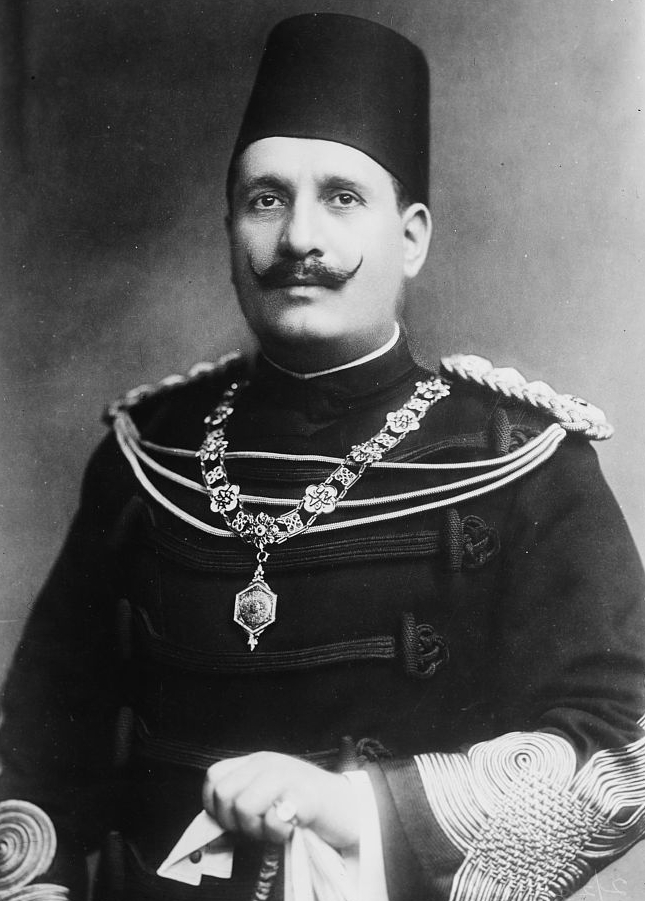
Fuad I (Arabic: فؤاد الأول Fu’ād al-Awwal; 26 March 1868 – 28 April 1936) was the Sultan and later King of Egypt and the Sudan. The ninth ruler of Egypt and Sudan from the Muhammad Ali dynasty, he became Sultan in 1917, succeeding his elder brother Hussein Kamel. He replaced the title of Sultan with King when the United Kingdom unilaterally declared Egyptian independence in 1922.
Fuad was born in Giza Palace in Cairo, the fifth issue of Isma'il Pasha. He spent his childhood with his exiled father in Naples. He was educated at the military academy in Turin, Italy. His mother was Ferial Qadin.
Prior to becoming sultan, Fuad played a major role in the establishment of Egyptian University (now called Cairo University). He became the university's first rector in 1908, and remained in the post until his resignation in 1913. He was succeeded as rector by then-minister of Justice Hussein Rushdi Pasha. In 1913, Fuad made unsuccessful attempts to secure the throne of Albania for himself, which had obtained its independence from the Ottoman Empire a year earlier. At the time, Egypt and Sudan was ruled by his nephew, Abbas II, and the likelihood of Fuad becoming the monarch in his own country seemed remote. This, and the fact that the Muhammad Ali dynasty was of Albanian descent, encouraged Fuad to seek the Albanian throne. Fuad also served as president of the Egyptian Geographic Society from 1915 until 1918.
Fuad came under consideration as a candidate for the Albanian throne, but he was ultimately bypassed in favour of a Christian ruler. He ascended the throne of the Sultanate of Egypt upon the death of his brother Hussein Kamel in 1917. In the aftermath of the Egyptian Revolution of 1919, the United Kingdom ended its protectorate over Egypt, and recognised it as a sovereign state on 28 February 1922. On 15 March 1922, Fuad issued a decree changing his title from Sultan of Egypt to King of Egypt. In 1930, he attempted to strengthen the power of the Crown by abrogating the 1923 Constitution and replacing it with a new constitution that limited the role of parliament to advisory status only. Large scale public dissatisfaction compelled him to restore the earlier constitution in 1935.
The 1923 Constitution granted Fuad vast powers. He made frequent use of his right to dissolve Parliament. During his reign, cabinets were dismissed at royal will, and parliaments never lasted for their full four-year term but were dissolved by decree.
Fuad was an instrumental force in modern Egyptian historiography. He employed numerous archivists to copy, translate, and arrange eighty-seven volumes of correspondence related to his paternal ancestors from European archives, and later to collect old documents from Egyptian archives into what became the Royal Archives in the 1930s. Fuad's efforts to portray his ancestors – especially his great-grandfather Muhammad Ali, his grandfather Ibrahim, and his father – as nationalists and benevolent monarchs would prove to be an enduring influence on Egyptian historiography.
Fuad married his first wife, Princess Shivakiar Khanum Effendi (1876–1947), in Cairo, on 30 May 1895 (nikah), and at the Abbasiya Palace in Cairo, on 14 February 1896 (zifaf). She was his first cousin once removed and the only daughter of Field Marshal Prince Ibrahim Fahmi Ahmad Pasha (his first cousin) by his first wife, Vijdan Navjuvan Khanum. They had two children, a son, Ismail Fuad, who died in infancy, and a daughter, Fawkia. Unhappily married, the couple divorced in 1898. During a dispute with the brother of his first wife, Prince Ahmad Saif-uddin Ibrahim Bey, Fuad was shot in the throat. He survived, but carried that scar the rest of his life.
Fuad married his second wife at the Bustan Palace in Cairo on 24 May 1919. She was Nazli Sabri (1894–1978), daughter of Abdu'r-Rahim Pasha Sabri, sometime Minister of Agriculture and Governor of Cairo, by his wife, Tawfika Khanum Sharif. Queen Nazli also was a maternal granddaughter of Major-General Muhammad Sharif Pasha, sometime Prime Minister and Minister for Foreign Affairs, and a great-granddaughter of Suleiman Pasha, a French officer in Napoleon's army who converted to Islam and reorganized the Egyptian army. The couple had five children, the future King Farouk, and four daughters, the Princesses Fawzia (who became queen consort of Iran), Faiza, Faika, and Fathia.
Hub AI
Fuad I of Egypt AI simulator
(@Fuad I of Egypt_simulator)
Fuad I of Egypt
Fuad I (Arabic: فؤاد الأول Fu’ād al-Awwal; 26 March 1868 – 28 April 1936) was the Sultan and later King of Egypt and the Sudan. The ninth ruler of Egypt and Sudan from the Muhammad Ali dynasty, he became Sultan in 1917, succeeding his elder brother Hussein Kamel. He replaced the title of Sultan with King when the United Kingdom unilaterally declared Egyptian independence in 1922.
Fuad was born in Giza Palace in Cairo, the fifth issue of Isma'il Pasha. He spent his childhood with his exiled father in Naples. He was educated at the military academy in Turin, Italy. His mother was Ferial Qadin.
Prior to becoming sultan, Fuad played a major role in the establishment of Egyptian University (now called Cairo University). He became the university's first rector in 1908, and remained in the post until his resignation in 1913. He was succeeded as rector by then-minister of Justice Hussein Rushdi Pasha. In 1913, Fuad made unsuccessful attempts to secure the throne of Albania for himself, which had obtained its independence from the Ottoman Empire a year earlier. At the time, Egypt and Sudan was ruled by his nephew, Abbas II, and the likelihood of Fuad becoming the monarch in his own country seemed remote. This, and the fact that the Muhammad Ali dynasty was of Albanian descent, encouraged Fuad to seek the Albanian throne. Fuad also served as president of the Egyptian Geographic Society from 1915 until 1918.
Fuad came under consideration as a candidate for the Albanian throne, but he was ultimately bypassed in favour of a Christian ruler. He ascended the throne of the Sultanate of Egypt upon the death of his brother Hussein Kamel in 1917. In the aftermath of the Egyptian Revolution of 1919, the United Kingdom ended its protectorate over Egypt, and recognised it as a sovereign state on 28 February 1922. On 15 March 1922, Fuad issued a decree changing his title from Sultan of Egypt to King of Egypt. In 1930, he attempted to strengthen the power of the Crown by abrogating the 1923 Constitution and replacing it with a new constitution that limited the role of parliament to advisory status only. Large scale public dissatisfaction compelled him to restore the earlier constitution in 1935.
The 1923 Constitution granted Fuad vast powers. He made frequent use of his right to dissolve Parliament. During his reign, cabinets were dismissed at royal will, and parliaments never lasted for their full four-year term but were dissolved by decree.
Fuad was an instrumental force in modern Egyptian historiography. He employed numerous archivists to copy, translate, and arrange eighty-seven volumes of correspondence related to his paternal ancestors from European archives, and later to collect old documents from Egyptian archives into what became the Royal Archives in the 1930s. Fuad's efforts to portray his ancestors – especially his great-grandfather Muhammad Ali, his grandfather Ibrahim, and his father – as nationalists and benevolent monarchs would prove to be an enduring influence on Egyptian historiography.
Fuad married his first wife, Princess Shivakiar Khanum Effendi (1876–1947), in Cairo, on 30 May 1895 (nikah), and at the Abbasiya Palace in Cairo, on 14 February 1896 (zifaf). She was his first cousin once removed and the only daughter of Field Marshal Prince Ibrahim Fahmi Ahmad Pasha (his first cousin) by his first wife, Vijdan Navjuvan Khanum. They had two children, a son, Ismail Fuad, who died in infancy, and a daughter, Fawkia. Unhappily married, the couple divorced in 1898. During a dispute with the brother of his first wife, Prince Ahmad Saif-uddin Ibrahim Bey, Fuad was shot in the throat. He survived, but carried that scar the rest of his life.
Fuad married his second wife at the Bustan Palace in Cairo on 24 May 1919. She was Nazli Sabri (1894–1978), daughter of Abdu'r-Rahim Pasha Sabri, sometime Minister of Agriculture and Governor of Cairo, by his wife, Tawfika Khanum Sharif. Queen Nazli also was a maternal granddaughter of Major-General Muhammad Sharif Pasha, sometime Prime Minister and Minister for Foreign Affairs, and a great-granddaughter of Suleiman Pasha, a French officer in Napoleon's army who converted to Islam and reorganized the Egyptian army. The couple had five children, the future King Farouk, and four daughters, the Princesses Fawzia (who became queen consort of Iran), Faiza, Faika, and Fathia.