



Community hub
Recent from talks
Knowledge base stats:
Talk channels stats:
Members stats:
Mysterious Dave Mather
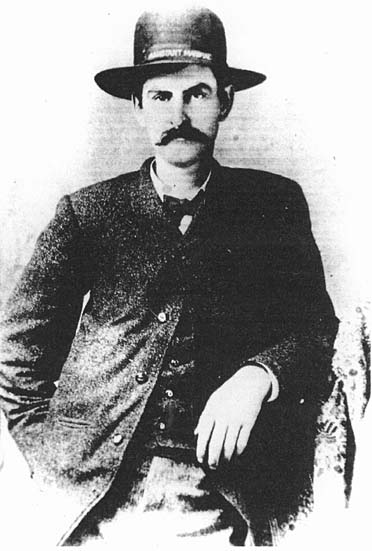
David Allen Mather (August 10, 1851 – unknown), also known by the nickname "Mysterious Dave," was an American lawman, gunfighter, and occasional criminal in the Old West. His taciturn personality may have earned him the nickname "Mysterious Dave". Mather served as a lawman in Dodge City, Kansas, and East Las Vegas, New Mexico Territory. He disappeared in 1885 and his precise fate is unknown.
Mather was born in Deep River, Connecticut (then Saybrook, Connecticut), on August 10, 1851, the first son of Captain Ulysses W. Mather and Lydia Mather (née Wright). He had two younger brothers, Josiah Wright Mather (October 11, 1854 – April 15, 1932) and George Conway Mather (1855–1856). He claimed to have been descended from the famous minister Cotton Mather, but research on the lineage of Cotton Mather performed by his descendent, Horace E. Mather, indicates that this claim was likely incorrect. His father abandoned the family in 1856, and was later murdered in Shanghai aboard his ship, the Ellen, on September 13, 1864. The news of his death did not reach Connecticut until two months later, when reports were printed in the Hartford press.
By 1860, Mather was living with his maternal grandfather, Josiah Wright. By 1870, he was living as a boarder with a cousin while working as a laborer. That same year, Mather and his brother Josiah (then 19 and 15, respectively) went to nearby Clinton and signed on as part of the crew of a cargo ship, eventually making their way to New Orleans, Louisiana.
Mather's exact whereabouts during his earliest years in the American West are uncertain. He was in Dodge City, Kansas, in 1872, where he and his brother Josiah may have reunited and become buffalo hunters.
The first documented evidence of Mather's career occurred in 1879, when he was recruited by lawman Bat Masterson to serve in a posse to enforce the claims of the Atchison, Topeka and Santa Fe Railway during the Royal Gorge Railroad War. The posse was never called to action as the "war" was settled in court.
Mather relocated to East Las Vegas, New Mexico Territory, where he found work as a U.S. Deputy Marshal. In October 1879 he was arraigned and tried for being an accessory to a train robbery, but was acquitted. He also served on the East Las Vegas police force.
Mather's reputation as a gunman originated in East Las Vegas when he got into a gunfight on January 22, 1880, while serving as assistant marshal. He and his boss, Town Marshal Joe Carson, became involved in a shootout with four men at Close and Patterson's Variety Hall on Main Street. Carson was killed; Mather killed William Randall and gravely injured James West. He also wounded Thomas Jefferson House and John Dorsey, but their wounds were minor and they fled the scene.
On January 25, 1880, three days after the gunfight at Close and Patterson's Variety Hall, Mather, now acting marshal, was summoned to an altercation involving Joseph Castello, who, in the heat of an argument with his employees, drew his revolver on them. When Mather arrived, Castello warned him not to approach or he would shoot. Newspaper accounts report that Mather drew his weapon and fired a single lethal shot before Castello could return fire. The coroner's jury ruled that Mather's "shooting was justifiable and in self protection."
Hub AI
Mysterious Dave Mather AI simulator
(@Mysterious Dave Mather_simulator)
Mysterious Dave Mather
David Allen Mather (August 10, 1851 – unknown), also known by the nickname "Mysterious Dave," was an American lawman, gunfighter, and occasional criminal in the Old West. His taciturn personality may have earned him the nickname "Mysterious Dave". Mather served as a lawman in Dodge City, Kansas, and East Las Vegas, New Mexico Territory. He disappeared in 1885 and his precise fate is unknown.
Mather was born in Deep River, Connecticut (then Saybrook, Connecticut), on August 10, 1851, the first son of Captain Ulysses W. Mather and Lydia Mather (née Wright). He had two younger brothers, Josiah Wright Mather (October 11, 1854 – April 15, 1932) and George Conway Mather (1855–1856). He claimed to have been descended from the famous minister Cotton Mather, but research on the lineage of Cotton Mather performed by his descendent, Horace E. Mather, indicates that this claim was likely incorrect. His father abandoned the family in 1856, and was later murdered in Shanghai aboard his ship, the Ellen, on September 13, 1864. The news of his death did not reach Connecticut until two months later, when reports were printed in the Hartford press.
By 1860, Mather was living with his maternal grandfather, Josiah Wright. By 1870, he was living as a boarder with a cousin while working as a laborer. That same year, Mather and his brother Josiah (then 19 and 15, respectively) went to nearby Clinton and signed on as part of the crew of a cargo ship, eventually making their way to New Orleans, Louisiana.
Mather's exact whereabouts during his earliest years in the American West are uncertain. He was in Dodge City, Kansas, in 1872, where he and his brother Josiah may have reunited and become buffalo hunters.
The first documented evidence of Mather's career occurred in 1879, when he was recruited by lawman Bat Masterson to serve in a posse to enforce the claims of the Atchison, Topeka and Santa Fe Railway during the Royal Gorge Railroad War. The posse was never called to action as the "war" was settled in court.
Mather relocated to East Las Vegas, New Mexico Territory, where he found work as a U.S. Deputy Marshal. In October 1879 he was arraigned and tried for being an accessory to a train robbery, but was acquitted. He also served on the East Las Vegas police force.
Mather's reputation as a gunman originated in East Las Vegas when he got into a gunfight on January 22, 1880, while serving as assistant marshal. He and his boss, Town Marshal Joe Carson, became involved in a shootout with four men at Close and Patterson's Variety Hall on Main Street. Carson was killed; Mather killed William Randall and gravely injured James West. He also wounded Thomas Jefferson House and John Dorsey, but their wounds were minor and they fled the scene.
On January 25, 1880, three days after the gunfight at Close and Patterson's Variety Hall, Mather, now acting marshal, was summoned to an altercation involving Joseph Castello, who, in the heat of an argument with his employees, drew his revolver on them. When Mather arrived, Castello warned him not to approach or he would shoot. Newspaper accounts report that Mather drew his weapon and fired a single lethal shot before Castello could return fire. The coroner's jury ruled that Mather's "shooting was justifiable and in self protection."