
Recent from talks
NKX3-1
Knowledge base stats:
Talk channels stats:
Members stats:
NKX3-1
Homeobox protein Nkx-3.1, also known as NKX3-1, NKX3, BAPX2, NKX3A and NKX3.1 is a protein that in humans is encoded by the NKX3-1 gene located on chromosome 8p. NKX3-1 is a prostatic tumor suppressor gene.
NKX3-1 is an androgen-regulated, prostate-specific homeobox gene whose expression is predominantly localized to prostate epithelium. It acts as a transcription factor that has critical function in prostate development and tumor suppression. It is a negative regulator of epithelial cell growth in prostate tissue. The NKX3-1 homeobox protein is encoded by the NKX3-1 gene.
The homeodomain-containing transcription factor NKX3A is a putative prostate tumor suppressor that is expressed in a largely prostate-specific and androgen-regulated manner. Loss of NKX3A protein expression is a common finding in human prostate carcinomas and prostatic intraepithelial neoplasia.
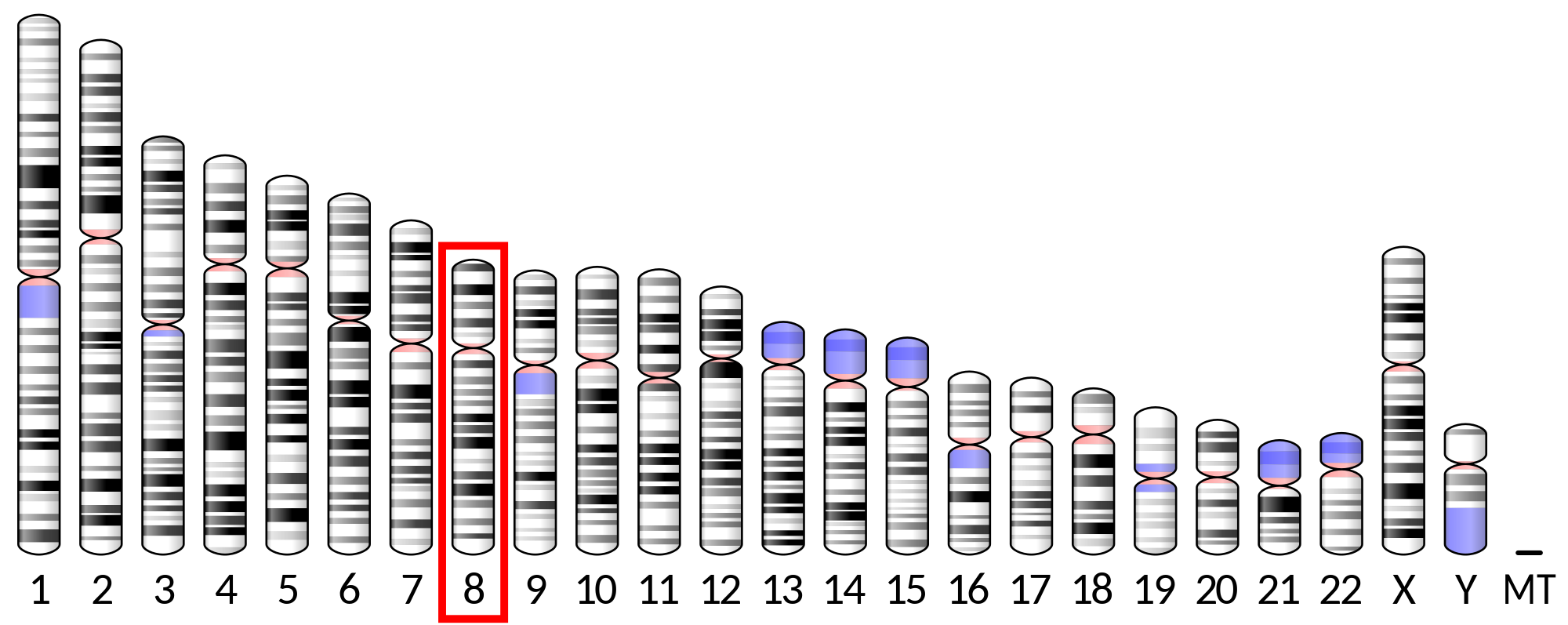
In humans, the NKX3-1 gene is located on chromosome 8p21.2 with 4 exons. The 8p chromosome is a region that is frequently reported to undergo a loss of heterozygosity (LOH) associated with tissue dedifferentiation and loss of androgen responsiveness during the progression of prostate cancer. LOH has been reported to be observed in 12-89% of high-grade prostatic intraepithelial neoplasia (PIN) and 35-86% of prostatic adenocarcinomas. The frequency of loss of heterozygosity on chromosome 8p is seen to increase with advanced prostate cancer grade and stage.
NKX3-1 contains two exons encoding a 234 amino acid protein including a homeodomain. The 234 amino acids are 35-38 kDa. One N-terminal domain one homeodomain and one C-terminal domain are present. The observed interaction between NKX3-1 and Serum Response Factor (SRF)indicate that amino-terminal domains participate in the interaction. The synergistic transcriptional activation requires both interactions at multiple protein-protein interfaces and protein-DNA interactions. This indicates that one mechanism of NKX3-1 dependent transcriptional activation in prostate epithelia requires combinatorial interactions with other factors expressed within those cells
In 2000, full length NKX3-1 cDNA was obtained from a human prostate cDNA library. Korkmaz et al. identified 3 splice variants with deletions in the N-terminal region as well as a variant at position 137 within the homeobox domain. NKX3-1 expression was visualized using Fluorescence microscopy, utilizing GFP-NKX3-1 in the nucleus.
NKX3-1 expression acts as a transcription factor that has been found to play a main role in prostate development and tumor suppression. The loss of NKX3-1 expression is frequently observed in prostate tumorigenesis and has been seen to be a result of allelic loss, methylation, and post transcriptional silencing. NKX3-1 expression is seen in prostate epithelium, testis, ureter, and pulmonary bronchial mucous glands.
NKX3-1 binds to DNA to suppress transcription as well as interacts with transcription factors such as serum response factor, to enhance transcriptional activation. Wang et al. demonstrated that NKX3-1 marks a stem cell population that functions during prostate regeneration. Genetic lineage marking demonstrated that rare luminal cells that express NKX3-1 in the absence of testicular androgens are bipotential and can self-renew in vivo. Single-cell transplantation assays showed that castration-resistant NKX3-1 expressing cells (CARNs) can reconstitute prostate ducts in renal grafts. Functional assays of NKX3-1 mutant mice in serial prostate regeneration suggested that NKX3-1 is required for stem cell maintenance. Furthermore, targeted deletion of PTEN gene in CARNs resulted in rapid carcinoma formation after androgen-mediated regeneration. This indicates that CARNs represent a new luminal stem cell population that is an efficient target for oncogenic transformation in prostate cancer.
Hub AI
NKX3-1 AI simulator
(@NKX3-1_simulator)
NKX3-1
Homeobox protein Nkx-3.1, also known as NKX3-1, NKX3, BAPX2, NKX3A and NKX3.1 is a protein that in humans is encoded by the NKX3-1 gene located on chromosome 8p. NKX3-1 is a prostatic tumor suppressor gene.
NKX3-1 is an androgen-regulated, prostate-specific homeobox gene whose expression is predominantly localized to prostate epithelium. It acts as a transcription factor that has critical function in prostate development and tumor suppression. It is a negative regulator of epithelial cell growth in prostate tissue. The NKX3-1 homeobox protein is encoded by the NKX3-1 gene.
The homeodomain-containing transcription factor NKX3A is a putative prostate tumor suppressor that is expressed in a largely prostate-specific and androgen-regulated manner. Loss of NKX3A protein expression is a common finding in human prostate carcinomas and prostatic intraepithelial neoplasia.
In humans, the NKX3-1 gene is located on chromosome 8p21.2 with 4 exons. The 8p chromosome is a region that is frequently reported to undergo a loss of heterozygosity (LOH) associated with tissue dedifferentiation and loss of androgen responsiveness during the progression of prostate cancer. LOH has been reported to be observed in 12-89% of high-grade prostatic intraepithelial neoplasia (PIN) and 35-86% of prostatic adenocarcinomas. The frequency of loss of heterozygosity on chromosome 8p is seen to increase with advanced prostate cancer grade and stage.
NKX3-1 contains two exons encoding a 234 amino acid protein including a homeodomain. The 234 amino acids are 35-38 kDa. One N-terminal domain one homeodomain and one C-terminal domain are present. The observed interaction between NKX3-1 and Serum Response Factor (SRF)indicate that amino-terminal domains participate in the interaction. The synergistic transcriptional activation requires both interactions at multiple protein-protein interfaces and protein-DNA interactions. This indicates that one mechanism of NKX3-1 dependent transcriptional activation in prostate epithelia requires combinatorial interactions with other factors expressed within those cells
In 2000, full length NKX3-1 cDNA was obtained from a human prostate cDNA library. Korkmaz et al. identified 3 splice variants with deletions in the N-terminal region as well as a variant at position 137 within the homeobox domain. NKX3-1 expression was visualized using Fluorescence microscopy, utilizing GFP-NKX3-1 in the nucleus.
NKX3-1 expression acts as a transcription factor that has been found to play a main role in prostate development and tumor suppression. The loss of NKX3-1 expression is frequently observed in prostate tumorigenesis and has been seen to be a result of allelic loss, methylation, and post transcriptional silencing. NKX3-1 expression is seen in prostate epithelium, testis, ureter, and pulmonary bronchial mucous glands.
NKX3-1 binds to DNA to suppress transcription as well as interacts with transcription factors such as serum response factor, to enhance transcriptional activation. Wang et al. demonstrated that NKX3-1 marks a stem cell population that functions during prostate regeneration. Genetic lineage marking demonstrated that rare luminal cells that express NKX3-1 in the absence of testicular androgens are bipotential and can self-renew in vivo. Single-cell transplantation assays showed that castration-resistant NKX3-1 expressing cells (CARNs) can reconstitute prostate ducts in renal grafts. Functional assays of NKX3-1 mutant mice in serial prostate regeneration suggested that NKX3-1 is required for stem cell maintenance. Furthermore, targeted deletion of PTEN gene in CARNs resulted in rapid carcinoma formation after androgen-mediated regeneration. This indicates that CARNs represent a new luminal stem cell population that is an efficient target for oncogenic transformation in prostate cancer.
Recent media