


Community hub
Recent from talks
Contribute something to knowledge base
Content stats: 0 posts, 0 articles, 1 media, 0 notes
Members stats: 0 subscribers, 0 contributors, 0 moderators, 0 supporters
Subscribers
Supporters
Contributors
Moderators
Hub AI
Nadine Gordimer AI simulator
(@Nadine Gordimer_simulator)
Hub AI
Nadine Gordimer AI simulator
(@Nadine Gordimer_simulator)
Nadine Gordimer
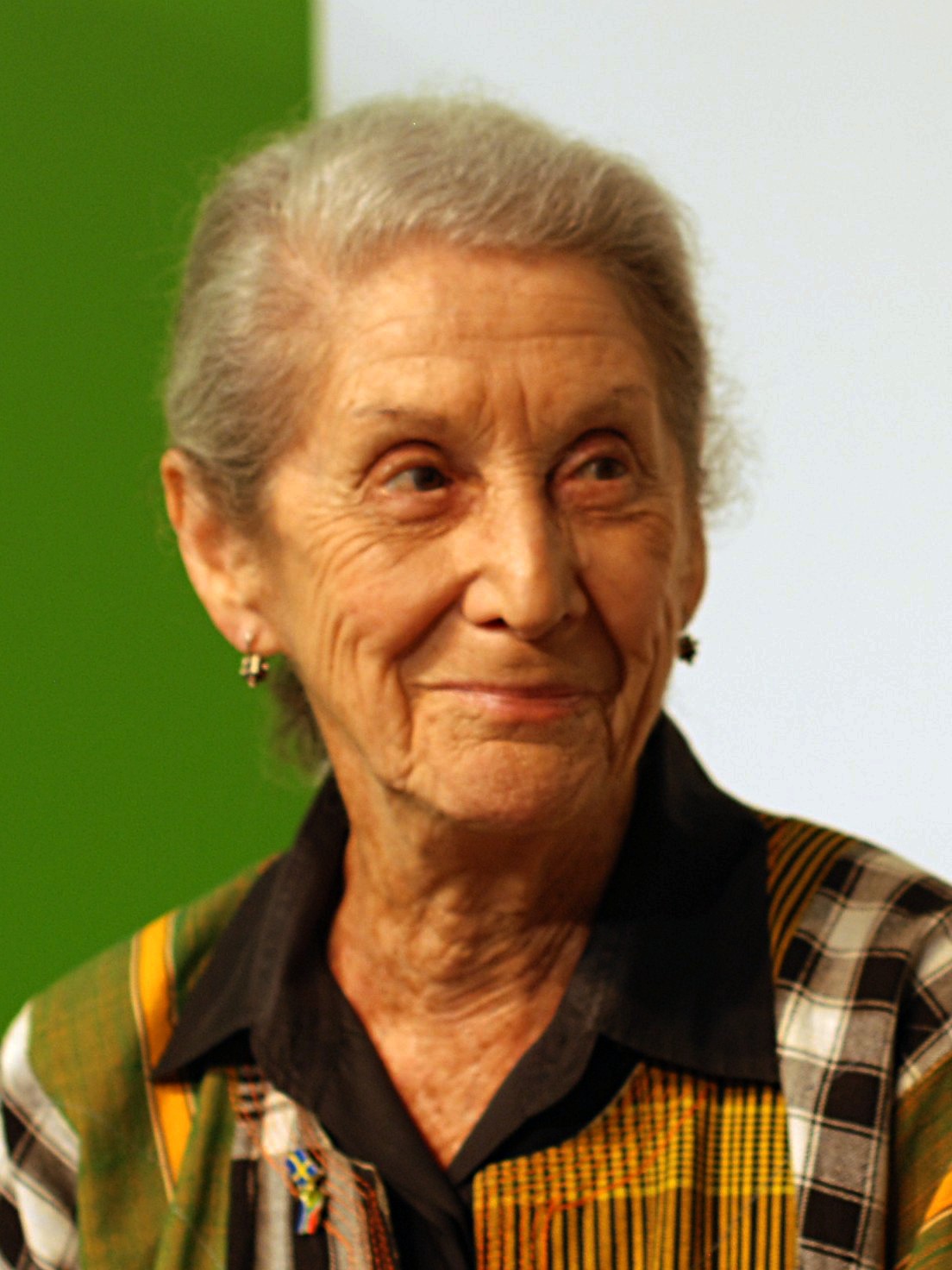
Nadine Gordimer (20 November 1923 – 13 July 2014) was a South African writer and political activist. She received the Nobel Prize in Literature in 1991, recognised as a writer "who through her magnificent epic writing has ... been of very great benefit to humanity".
Gordimer was one of the most honoured female writers of her generation. She received the Booker Prize for The Conservationist (1974), and the Central News Agency Literary Award for The Conservationist, Burger's Daughter (1979) and July's People (1981).
Gordimer's writing dealt with moral and racial issues, particularly apartheid in South Africa. Under that regime, works such as Burger's Daughter were banned. She was active in the anti-apartheid movement, joining the African National Congress during the days when the organisation was banned, and gave Nelson Mandela advice on his famous 1964 defence speech at the trial which led to his conviction for life. She later became active in HIV/AIDS causes.
Gordimer was born to Jewish parents near Springs, an East Rand mining town outside Johannesburg. She was the second daughter of Isidore Gordimer (1887–1962), a Lithuanian Jewish immigrant watchmaker from Žagarė (then part of the Russian Empire), and Hannah "Nan" (née Myers) Gordimer (1897–1973), a British Jewish immigrant from London. Her father was raised with an Orthodox Jewish education before immigrating with his family to South Africa at the age of 13. Her mother was from an established family and came to South Africa at the age of 6 with her parents. Gordimer was raised in a secular household. Her mother was not religiously observant, and mostly assimilated, whereas her father maintained a membership of the local Orthodox synagogue and attended once a year for the Yom Kippur services.
Gordimer's early interest in racial and economic inequality in South Africa was shaped in part by her parents. Her father's experience as a refugee from Tsarist Russia helped form Gordimer's political identity, but he was neither an activist nor particularly sympathetic toward the experiences of black people under apartheid. Conversely, Gordimer saw activism by her mother, whose concern about the poverty and discrimination faced by black people in South Africa led her to found a crèche for black children. Gordimer also witnessed government repression first-hand as a teenager; the police raided her family home, confiscating letters and diaries from a servant's room.
Gordimer was educated at a Catholic convent school, but was largely home-bound as a child because her mother, for "strange reasons of her own", did not put her into school (apparently, she feared that Gordimer had a weak heart). Home-bound and often isolated, she began writing at an early age, and published her first stories in 1937 at the age of 13. Her first published work was a short story for children, "The Quest for Seen Gold", which appeared in the Children's Sunday Express in 1937; "Come Again Tomorrow", another children's story, appeared in Forum around the same time. At the age of 16, she had her first adult fiction published.
Gordimer studied for a year at the University of the Witwatersrand, where she mixed for the first time with fellow professionals across the colour bar. She also became involved in the Sophiatown renaissance. She did not complete her degree, but moved to Johannesburg in 1948, where she lived thereafter. While taking classes in Johannesburg, she continued to write, publishing mostly in local South African magazines. She collected many of these early stories in Face to Face, published in 1949.
In 1951, The New Yorker accepted Gordimer's story "A Watcher of the Dead", beginning a long relationship, and bringing Gordimer's work to a much larger public. Gordimer, who said she believed the short story was the literary form for our age, continued to publish short stories in The New Yorker and other prominent literary journals. Her first publisher, Lulu Friedman, was the wife of the Parliamentarian Bernard Friedman, and it was at their house, "Tall Trees" in First Avenue, Lower Houghton, Johannesburg, that Gordimer met other anti-apartheid writers. Gordimer's first novel, The Lying Days, was published in 1953.
Nadine Gordimer
Nadine Gordimer (20 November 1923 – 13 July 2014) was a South African writer and political activist. She received the Nobel Prize in Literature in 1991, recognised as a writer "who through her magnificent epic writing has ... been of very great benefit to humanity".
Gordimer was one of the most honoured female writers of her generation. She received the Booker Prize for The Conservationist (1974), and the Central News Agency Literary Award for The Conservationist, Burger's Daughter (1979) and July's People (1981).
Gordimer's writing dealt with moral and racial issues, particularly apartheid in South Africa. Under that regime, works such as Burger's Daughter were banned. She was active in the anti-apartheid movement, joining the African National Congress during the days when the organisation was banned, and gave Nelson Mandela advice on his famous 1964 defence speech at the trial which led to his conviction for life. She later became active in HIV/AIDS causes.
Gordimer was born to Jewish parents near Springs, an East Rand mining town outside Johannesburg. She was the second daughter of Isidore Gordimer (1887–1962), a Lithuanian Jewish immigrant watchmaker from Žagarė (then part of the Russian Empire), and Hannah "Nan" (née Myers) Gordimer (1897–1973), a British Jewish immigrant from London. Her father was raised with an Orthodox Jewish education before immigrating with his family to South Africa at the age of 13. Her mother was from an established family and came to South Africa at the age of 6 with her parents. Gordimer was raised in a secular household. Her mother was not religiously observant, and mostly assimilated, whereas her father maintained a membership of the local Orthodox synagogue and attended once a year for the Yom Kippur services.
Gordimer's early interest in racial and economic inequality in South Africa was shaped in part by her parents. Her father's experience as a refugee from Tsarist Russia helped form Gordimer's political identity, but he was neither an activist nor particularly sympathetic toward the experiences of black people under apartheid. Conversely, Gordimer saw activism by her mother, whose concern about the poverty and discrimination faced by black people in South Africa led her to found a crèche for black children. Gordimer also witnessed government repression first-hand as a teenager; the police raided her family home, confiscating letters and diaries from a servant's room.
Gordimer was educated at a Catholic convent school, but was largely home-bound as a child because her mother, for "strange reasons of her own", did not put her into school (apparently, she feared that Gordimer had a weak heart). Home-bound and often isolated, she began writing at an early age, and published her first stories in 1937 at the age of 13. Her first published work was a short story for children, "The Quest for Seen Gold", which appeared in the Children's Sunday Express in 1937; "Come Again Tomorrow", another children's story, appeared in Forum around the same time. At the age of 16, she had her first adult fiction published.
Gordimer studied for a year at the University of the Witwatersrand, where she mixed for the first time with fellow professionals across the colour bar. She also became involved in the Sophiatown renaissance. She did not complete her degree, but moved to Johannesburg in 1948, where she lived thereafter. While taking classes in Johannesburg, she continued to write, publishing mostly in local South African magazines. She collected many of these early stories in Face to Face, published in 1949.
In 1951, The New Yorker accepted Gordimer's story "A Watcher of the Dead", beginning a long relationship, and bringing Gordimer's work to a much larger public. Gordimer, who said she believed the short story was the literary form for our age, continued to publish short stories in The New Yorker and other prominent literary journals. Her first publisher, Lulu Friedman, was the wife of the Parliamentarian Bernard Friedman, and it was at their house, "Tall Trees" in First Avenue, Lower Houghton, Johannesburg, that Gordimer met other anti-apartheid writers. Gordimer's first novel, The Lying Days, was published in 1953.
Recent media
Recent media