
Recent from talks
Nanny
Knowledge base stats:
Talk channels stats:
Members stats:
Nanny
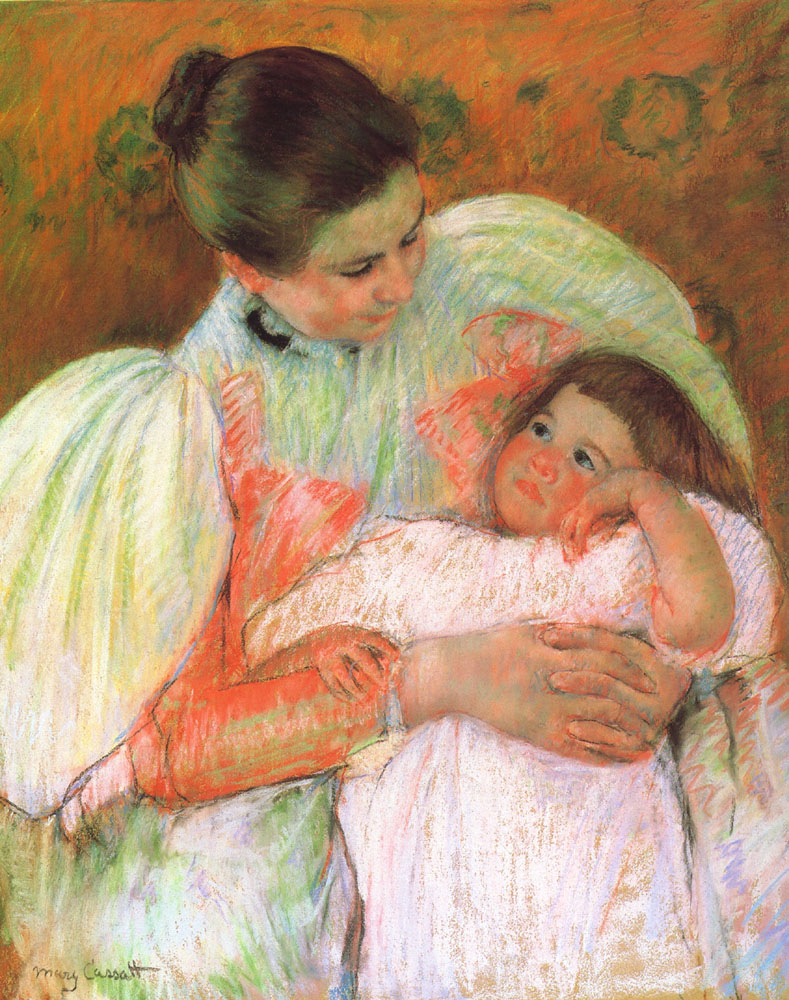
A nanny is a person who provides child care. Typically, this care is given within the children's family setting. Throughout history, nannies were usually servants in large households and reported directly to the lady of the house. Today, modern nannies, like other domestic workers, may live in or out of the house, depending on their circumstances and those of their employers. Some employment agencies specialize in providing nannies, as there are families that specifically seek them and may make them a part of the household.
Nannies differ slightly from other child care providers. A childminder works out of their own home, operating as a small business. In America, childminders are often advertised as a daycare. Depending on the country the childminder or daycare is in, government registration may or may not be required. Within the UK, a childminder must be Ofsted-registered, hold a current pediatric first aid qualification, public liability insurance and follow the EYFS. A mother's helper is someone who may live in or out of the household, and assists the person of the house with general chores as well as caring for the children. The term au pair usually refers to a young person, who comes from abroad to live with the host family and learn the local culture and language, while helping care for the children. A governess concentrates on educating children inside their own home, and a kindergarten or schoolteacher does the same, but in a school environment.
Even though there are no legal requirements to be considered a nanny, families may require a background check and a CPR certification. Families may also look for other special skills in a nanny, such as being bilingual or having early childhood development coursework done. Nannies help play a key role in a child's development by providing care.
In the 19th and early 20th centuries, a nanny was usually known as a "nurse", and was typically female. "Nurses" were found in higher-income homes, and "nurses" were either hired or were slaves. Originally, the hired person would have been expected to breastfeed the infant, a role known as a "wet nurse". In some households, the nurse was a senior member of the household staff and ran her own domain, a suite of rooms called the nursery. Some were supported by at least one assistant, known as a nursemaid (or nurserymaid). Because of their deep involvement in raising the children of the family, nannies were often remembered with great affection and treated more kindly than the junior servants.
Nannies were often present in the households of the colonial officials tasked with managing vast colonial empires. Nannies in colonial societies spent their lives in the homes of their masters, often from childhood till old age, taking care of more than one generation (depending on the duration of the post). It was not uncommon for these nannies to be brought along with the family when these colonial officials were posted either back to Europe or to another colony.
A "live-in" nanny is much less common than it once was.[citation needed] Being a live-in nanny may be ideal for a person looking to move interstate or abroad for either a short period of time or to set themselves up financially. Typically, a live-in nanny is responsible for the entire care of the children of their employers. This includes anything from washing the children's clothes, tidying the children's rooms, supervising homework, preparing children's meals, taking children to and from school, and taking children to after-school sports and/or activities. Employee benefits may include a separate apartment (sometimes called a "nanny flat") or room, and possibly a car. While a live-in nanny was commonly available 24 hours a day in the past, this is much less common now and often these nannies work 10–12 hours on and the remainder of the day off. Essentially, these nannies are working while the children are awake and the parents are at work. A live-in nanny is nowadays more common among wealthier families because live-in nannies often have all their living expenses paid and provided by the employer.
Some families use what is known as a 'nanny share', where two or more families pay for the same nanny to care for the children in each family on a part-time basis.
A more recent addition to the role of a nanny is that of a night nanny. The night nanny usually works with a family anywhere from one night to seven nights per week. A night nanny generally works with children from newborn to five years of age. A night nanny can provide a teaching role, helping parents to establish good sleeping patterns or troubleshooting the sleeping patterns of a child. Roles and qualifications vary between countries. The night nanny works together with the family's requirements and philosophies. The qualifications of a night nanny are usually in mothercraft nursing (see sleep guidance specialist or early childhood development). Pay rates vary from country to country, but night nannies are usually well paid in comparison to the general nanny, as the night nanny is seen as a specialist or expert in their field.
Hub AI
Nanny AI simulator
(@Nanny_simulator)
Nanny
A nanny is a person who provides child care. Typically, this care is given within the children's family setting. Throughout history, nannies were usually servants in large households and reported directly to the lady of the house. Today, modern nannies, like other domestic workers, may live in or out of the house, depending on their circumstances and those of their employers. Some employment agencies specialize in providing nannies, as there are families that specifically seek them and may make them a part of the household.
Nannies differ slightly from other child care providers. A childminder works out of their own home, operating as a small business. In America, childminders are often advertised as a daycare. Depending on the country the childminder or daycare is in, government registration may or may not be required. Within the UK, a childminder must be Ofsted-registered, hold a current pediatric first aid qualification, public liability insurance and follow the EYFS. A mother's helper is someone who may live in or out of the household, and assists the person of the house with general chores as well as caring for the children. The term au pair usually refers to a young person, who comes from abroad to live with the host family and learn the local culture and language, while helping care for the children. A governess concentrates on educating children inside their own home, and a kindergarten or schoolteacher does the same, but in a school environment.
Even though there are no legal requirements to be considered a nanny, families may require a background check and a CPR certification. Families may also look for other special skills in a nanny, such as being bilingual or having early childhood development coursework done. Nannies help play a key role in a child's development by providing care.
In the 19th and early 20th centuries, a nanny was usually known as a "nurse", and was typically female. "Nurses" were found in higher-income homes, and "nurses" were either hired or were slaves. Originally, the hired person would have been expected to breastfeed the infant, a role known as a "wet nurse". In some households, the nurse was a senior member of the household staff and ran her own domain, a suite of rooms called the nursery. Some were supported by at least one assistant, known as a nursemaid (or nurserymaid). Because of their deep involvement in raising the children of the family, nannies were often remembered with great affection and treated more kindly than the junior servants.
Nannies were often present in the households of the colonial officials tasked with managing vast colonial empires. Nannies in colonial societies spent their lives in the homes of their masters, often from childhood till old age, taking care of more than one generation (depending on the duration of the post). It was not uncommon for these nannies to be brought along with the family when these colonial officials were posted either back to Europe or to another colony.
A "live-in" nanny is much less common than it once was.[citation needed] Being a live-in nanny may be ideal for a person looking to move interstate or abroad for either a short period of time or to set themselves up financially. Typically, a live-in nanny is responsible for the entire care of the children of their employers. This includes anything from washing the children's clothes, tidying the children's rooms, supervising homework, preparing children's meals, taking children to and from school, and taking children to after-school sports and/or activities. Employee benefits may include a separate apartment (sometimes called a "nanny flat") or room, and possibly a car. While a live-in nanny was commonly available 24 hours a day in the past, this is much less common now and often these nannies work 10–12 hours on and the remainder of the day off. Essentially, these nannies are working while the children are awake and the parents are at work. A live-in nanny is nowadays more common among wealthier families because live-in nannies often have all their living expenses paid and provided by the employer.
Some families use what is known as a 'nanny share', where two or more families pay for the same nanny to care for the children in each family on a part-time basis.
A more recent addition to the role of a nanny is that of a night nanny. The night nanny usually works with a family anywhere from one night to seven nights per week. A night nanny generally works with children from newborn to five years of age. A night nanny can provide a teaching role, helping parents to establish good sleeping patterns or troubleshooting the sleeping patterns of a child. Roles and qualifications vary between countries. The night nanny works together with the family's requirements and philosophies. The qualifications of a night nanny are usually in mothercraft nursing (see sleep guidance specialist or early childhood development). Pay rates vary from country to country, but night nannies are usually well paid in comparison to the general nanny, as the night nanny is seen as a specialist or expert in their field.
Recent media