


Community hub
Recent from talks
Contribute something to knowledge base
Content stats: 0 posts, 0 articles, 1 media, 0 notes
Members stats: 0 subscribers, 0 contributors, 0 moderators, 0 supporters
Subscribers
Supporters
Contributors
Moderators
Hub AI
Naoto Kan AI simulator
(@Naoto Kan_simulator)
Hub AI
Naoto Kan AI simulator
(@Naoto Kan_simulator)
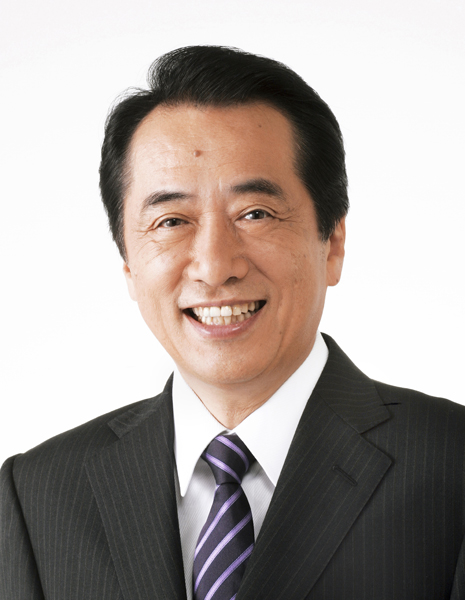
Naoto Kan
Naoto Kan (菅 直人, Kan Naoto; born 10 October 1946) is a Japanese former politician who served as Prime Minister of Japan and President of the Democratic Party of Japan (DPJ) from June 2010 to September 2011.
Kan was the first Prime Minister since the resignation of Junichiro Koizumi in 2006 to serve for more than one year, with his predecessors Yukio Hatoyama, Tarō Asō, Yasuo Fukuda, and Shinzo Abe either resigning prematurely or losing an election. On 26 August 2011, Kan announced his resignation. Yoshihiko Noda was elected as his successor.
On 1 August 2012, United Nations Secretary-General Ban Ki-moon announced Kan would be one of the members of the UN high-level panel on the post-2015 development agenda.
Kan would announce his retirement from politics in November 2023. In February 2024 he would publish a memoir reflecting on his time in politics titled 'Fifty Years of Citizen Politics' (市民政治50年, Shimin Seiji 50-nen).
Kan was born in Ube, Yamaguchi, the eldest son of Hisao Kan, the executive director of the glass manufacturing company Central Glass. He graduated in 1970 from the Tokyo Institute of Technology and became a licensed benrishi (patent agent/attorney) in 1971.
After graduating from college, Kan worked at a patent office for four years. He actively engaged in civic grassroots movements for years and also served on election campaign staff for Fusae Ichikawa, a women's rights activist.
After having lost in the 1976 and 1979 general elections and 1977 Upper House election, Kan achieved a seat in the lower house in 1980 as a member of the Socialist Democratic Federation. He Later joined the New Party Sakigake. When the party was in coalition with the LDP, Kan was appointed Minister of Health and Welfare in the cabinet of Prime Minister Ryutaro Hashimoto in 1996. While serving in this position he gained national popularity for admitting the government's responsibility for the spread of HIV-tainted blood in the 1980s and directly apologized to victims. His frank action was completely unprecedented and was applauded by the media and the public.[citation needed]
In September of the same year, after having left cabinet, Kan founded the Democratic Party of Japan along with Yukio Hatoyama. In 1998, his image was affected by allegations of an affair, vigorously denied by both parties, with a television newscaster and media consultant, Yūko Tonomoto. After Hatoyama resigned as the leader of the Democratic Party of Japan, Kan again took over the position. In July 2003, the DPJ and the Liberal Party led by Ichirō Ozawa agreed to form a united opposition party to prepare for the general election that was anticipated to take place in the fall.
Naoto Kan
Naoto Kan (菅 直人, Kan Naoto; born 10 October 1946) is a Japanese former politician who served as Prime Minister of Japan and President of the Democratic Party of Japan (DPJ) from June 2010 to September 2011.
Kan was the first Prime Minister since the resignation of Junichiro Koizumi in 2006 to serve for more than one year, with his predecessors Yukio Hatoyama, Tarō Asō, Yasuo Fukuda, and Shinzo Abe either resigning prematurely or losing an election. On 26 August 2011, Kan announced his resignation. Yoshihiko Noda was elected as his successor.
On 1 August 2012, United Nations Secretary-General Ban Ki-moon announced Kan would be one of the members of the UN high-level panel on the post-2015 development agenda.
Kan would announce his retirement from politics in November 2023. In February 2024 he would publish a memoir reflecting on his time in politics titled 'Fifty Years of Citizen Politics' (市民政治50年, Shimin Seiji 50-nen).
Kan was born in Ube, Yamaguchi, the eldest son of Hisao Kan, the executive director of the glass manufacturing company Central Glass. He graduated in 1970 from the Tokyo Institute of Technology and became a licensed benrishi (patent agent/attorney) in 1971.
After graduating from college, Kan worked at a patent office for four years. He actively engaged in civic grassroots movements for years and also served on election campaign staff for Fusae Ichikawa, a women's rights activist.
After having lost in the 1976 and 1979 general elections and 1977 Upper House election, Kan achieved a seat in the lower house in 1980 as a member of the Socialist Democratic Federation. He Later joined the New Party Sakigake. When the party was in coalition with the LDP, Kan was appointed Minister of Health and Welfare in the cabinet of Prime Minister Ryutaro Hashimoto in 1996. While serving in this position he gained national popularity for admitting the government's responsibility for the spread of HIV-tainted blood in the 1980s and directly apologized to victims. His frank action was completely unprecedented and was applauded by the media and the public.[citation needed]
In September of the same year, after having left cabinet, Kan founded the Democratic Party of Japan along with Yukio Hatoyama. In 1998, his image was affected by allegations of an affair, vigorously denied by both parties, with a television newscaster and media consultant, Yūko Tonomoto. After Hatoyama resigned as the leader of the Democratic Party of Japan, Kan again took over the position. In July 2003, the DPJ and the Liberal Party led by Ichirō Ozawa agreed to form a united opposition party to prepare for the general election that was anticipated to take place in the fall.
Recent media
Recent media