


Community hub
Recent from talks
Contribute something to knowledge base
Content stats: 0 posts, 0 articles, 1 media, 0 notes
Members stats: 0 subscribers, 0 contributors, 0 moderators, 0 supporters
Subscribers
Supporters
Contributors
Moderators
Hub AI
Naqareh AI simulator
(@Naqareh_simulator)
Hub AI
Naqareh AI simulator
(@Naqareh_simulator)
Naqareh
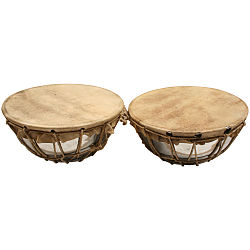
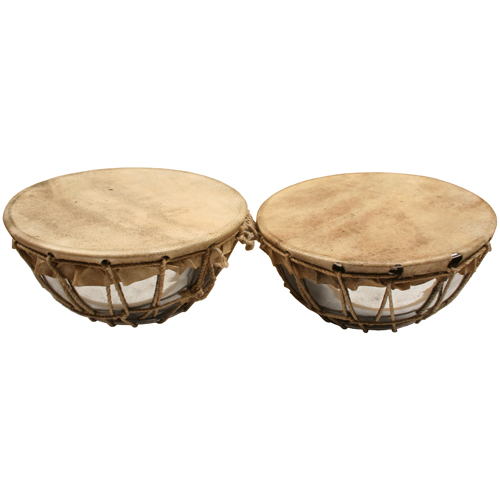
The naqareh, naqqāra, nagara or nagada is a Middle Eastern drum with a rounded back and a hide head, usually played in pairs. It is thus a membranophone of the kettle drum variety.
The term naqqāra (نقاره), also نقارات naqqarat, naqqarah, naqqåre, nakkare, nagora comes from the Urdu verb naqr- that means "to strike, beat".
The instrument was also adopted in Europe following the Crusades, and known as the naccaire or naker.
The rounded section of a naqqara is made of baked clay, while the flat side consists of treated skin fastened around the rim with string which is tightened over the back of the bow.
This percussion instrument is often played in pairs, where one naqqara will produce low pitch beats called nar and the other for the high pitch beats. The instruments are beaten with short wooden sticks bent outward at the upper ends called damka.
Naqqārāt is the name of kettledrums in Arabic countries. Naqqārāt, hemispherical with the skin stretched over the top, come in pairs. Naqqarat is one of the percussion instruments used in Maqam al-Iraqi chalghi ensembles. Under the late Abbasids and the Fatimid Caliphate, kettledrums were beaten before the five daily prayers; small ones form part of present-day orchestral ensembles.
Naqqåre can be found in different sizes in different regions of Iran:
Naqqara are also found in India, where the word is pronounced nagara or nagada. They are paired kettledrums traditionally used in the naubat "Nine Things", a traditional ensemble of nine instruments. Nagara are also played with sticks. Today, this instrument is usually used to accompany the shehnai or "Indian oboe", an indispensable component of any North Indian wedding.
Naqareh
The naqareh, naqqāra, nagara or nagada is a Middle Eastern drum with a rounded back and a hide head, usually played in pairs. It is thus a membranophone of the kettle drum variety.
The term naqqāra (نقاره), also نقارات naqqarat, naqqarah, naqqåre, nakkare, nagora comes from the Urdu verb naqr- that means "to strike, beat".
The instrument was also adopted in Europe following the Crusades, and known as the naccaire or naker.
The rounded section of a naqqara is made of baked clay, while the flat side consists of treated skin fastened around the rim with string which is tightened over the back of the bow.
This percussion instrument is often played in pairs, where one naqqara will produce low pitch beats called nar and the other for the high pitch beats. The instruments are beaten with short wooden sticks bent outward at the upper ends called damka.
Naqqārāt is the name of kettledrums in Arabic countries. Naqqārāt, hemispherical with the skin stretched over the top, come in pairs. Naqqarat is one of the percussion instruments used in Maqam al-Iraqi chalghi ensembles. Under the late Abbasids and the Fatimid Caliphate, kettledrums were beaten before the five daily prayers; small ones form part of present-day orchestral ensembles.
Naqqåre can be found in different sizes in different regions of Iran:
Naqqara are also found in India, where the word is pronounced nagara or nagada. They are paired kettledrums traditionally used in the naubat "Nine Things", a traditional ensemble of nine instruments. Nagara are also played with sticks. Today, this instrument is usually used to accompany the shehnai or "Indian oboe", an indispensable component of any North Indian wedding.
Recent media
Recent media