
Recent from talks
Narayana Guru
Knowledge base stats:
Talk channels stats:
Members stats:
Narayana Guru
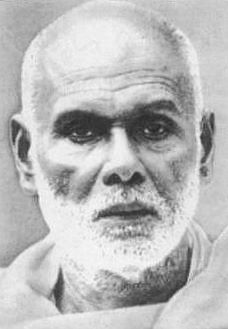
Sree Narayana Guru (IPA: [nɑːrɑːjɐɳɐ guˈru]) (20 August 1856 – 20 September 1928) was a philosopher, spiritual leader and social reformer in India. He led a reform movement against the injustice in the caste-ridden society of Kerala in order to promote spiritual enlightenment and social equality. A quote of his that defined his movement was "one caste, one religion, and one god for all human beings". He is the author of the Advaita poem Daiva Dasakam, which is one of the most used poem in Kerala for community prayer.
French philosopher and Nobel prize laureate for literature, Romain Rolland described Narayana guru as 'Jnani of Karma', noting that he exemplified how faith could be used to bring about social change.
Narayanan, né Nanu, was born on 20 August 1856 to Madan Asan and Kuttiyamma in an Ezhava family of ayurvedic physicians, in the village of Chempazhanthy near Thiruvananthapuram, in the erstwhile state of Travancore. Unlike other Ezhavas who confined their Sanskrit reading to ayurvedic works, Narayana guru studied religious texts as well. His early education was in the gurukula way under Chempazhanthi Mootha Pillai during which time his mother died when he was 15. At the age of 21, he went to central Travancore to learn from Raman Pillai Asan, a Sanskrit scholar who taught him Vedas, Upanishads and the literature and logical rhetoric of Sanskrit. A year later, he married Kaliamma but soon disassociated himself from the marriage to commence his public life as a social reformer. He returned to his village in 1881, when his father was seriously ill, and started a village school where he taught local children which earned him the name Nanu Asan.
Leaving home, he traveled through Kerala and Tamil Nadu and it was during these journeys, he met Chattampi Swamikal, a social and religious reformer, who introduced Guru to Ayyavu Swamikal from whom he learned meditation and yoga. Later, he continued his wanderings until he reached the Pillathadam cave at Maruthwamala where he set up a hermitage and practiced meditation for the next eight years.
In 1888, he visited Aruvippuram and spent time meditating in a cave near the Neyyar River. It was here that his first and one of his prominent disciple, Sivalingadasa Swamikal, who hailed from an orthodox Nair family, discovered him. During his stay, he consecrated a rock from the deepest part of the Neyyar River, a whirlpool sinkhole known as 'Sankaran Kuzhi'. It is believed that it was in this 'Sankaran Kuzhi' sage Agastya gave his worshipping Shiva Linga to Neyyar river somewhere before leaving. This rock was established as the idol of Shiva, and the site has since been known as the Aruvippuram Shiva Temple. The act, which later came to be known as Aruvipuram Pratishta, created a social commotion among the upper caste Brahmins who questioned Guru's right to consecrate the idol. His reply to them, "This is not a Brahmin Shiva but an Ezhava Shiva", later became a famous quote, used against casteism. It was here, the Sree Narayana Dharma Paripalana Yogam (SNDP Yogam) was founded on 15 May 1903 by the efforts of Padmanabhan Palpu with Narayana Guru as its founder president.
Guru shifted his base to Sivagiri, near Varkala in 1904 where he opened a school for children from the lower strata of the society and provided free education to them without considering their caste. However, it took him seven years to build a temple there, the Sarada Mutt was built in 1912. He also built temples in other places such as Thrissur, Kannur, Anchuthengu, Thalassery, Kozhikode, and Mangalore and it took him to many places including Sri Lanka (then called Ceylon) where he made his final visit in 1926. On his return to India, he was involved in a number of activities including the planning of the Sivagiri pilgrimage which was planned after his visit to Pallathuruthy in 1927 to attend the anniversary of the S.N.D.P. Yogam.
Soon after the meeting at Pallathuruthy, which was the last public function he attended, Guru became ill and underwent treatment at places such as Aluva, Thrissur, Palakkad, and finally to Chennai; the physicians attended to him included Ayurvedic physicians like Cholayil Mami Vaidyar, Panappally Krishnan Vaidyar and Thycauttu Divakaran Moos as well as allopathic physicians viz. Krishnan Thampi, Panikker, Palpu and a European physician by name, Noble. He returned to Sarada Mutt and died on 20 September 1928, at the age of 72.
Casteism was practised in Kerala during the 19th and early 20th centuries and the backward castes such as Ezhavas and other untouchable castes like Paraiyars, Adivasis and Pulayars had to suffer discrimination from the upper caste community. It was against this discrimination that Guru performed his first major public act, the consecration of Siva idol at Aruvippuram in 1888.[citation needed] Overall, he consecrated forty five temples across Kerala and Tamil Nadu. His consecrations were not necessarily conventional deities; these included a slab inscribed with the words, "Truth, Ethics, Compassion, Love", a vegetarian Shiva, a mirror, and an Italian sculpture. He propagated the ideals of compassion and religious tolerance and one of his noted works, Anukampadasakam, extols various religious figures such as Krishna, The Buddha, Adi Shankara, Jesus Christ.
Hub AI
Narayana Guru AI simulator
(@Narayana Guru_simulator)
Narayana Guru
Sree Narayana Guru (IPA: [nɑːrɑːjɐɳɐ guˈru]) (20 August 1856 – 20 September 1928) was a philosopher, spiritual leader and social reformer in India. He led a reform movement against the injustice in the caste-ridden society of Kerala in order to promote spiritual enlightenment and social equality. A quote of his that defined his movement was "one caste, one religion, and one god for all human beings". He is the author of the Advaita poem Daiva Dasakam, which is one of the most used poem in Kerala for community prayer.
French philosopher and Nobel prize laureate for literature, Romain Rolland described Narayana guru as 'Jnani of Karma', noting that he exemplified how faith could be used to bring about social change.
Narayanan, né Nanu, was born on 20 August 1856 to Madan Asan and Kuttiyamma in an Ezhava family of ayurvedic physicians, in the village of Chempazhanthy near Thiruvananthapuram, in the erstwhile state of Travancore. Unlike other Ezhavas who confined their Sanskrit reading to ayurvedic works, Narayana guru studied religious texts as well. His early education was in the gurukula way under Chempazhanthi Mootha Pillai during which time his mother died when he was 15. At the age of 21, he went to central Travancore to learn from Raman Pillai Asan, a Sanskrit scholar who taught him Vedas, Upanishads and the literature and logical rhetoric of Sanskrit. A year later, he married Kaliamma but soon disassociated himself from the marriage to commence his public life as a social reformer. He returned to his village in 1881, when his father was seriously ill, and started a village school where he taught local children which earned him the name Nanu Asan.
Leaving home, he traveled through Kerala and Tamil Nadu and it was during these journeys, he met Chattampi Swamikal, a social and religious reformer, who introduced Guru to Ayyavu Swamikal from whom he learned meditation and yoga. Later, he continued his wanderings until he reached the Pillathadam cave at Maruthwamala where he set up a hermitage and practiced meditation for the next eight years.
In 1888, he visited Aruvippuram and spent time meditating in a cave near the Neyyar River. It was here that his first and one of his prominent disciple, Sivalingadasa Swamikal, who hailed from an orthodox Nair family, discovered him. During his stay, he consecrated a rock from the deepest part of the Neyyar River, a whirlpool sinkhole known as 'Sankaran Kuzhi'. It is believed that it was in this 'Sankaran Kuzhi' sage Agastya gave his worshipping Shiva Linga to Neyyar river somewhere before leaving. This rock was established as the idol of Shiva, and the site has since been known as the Aruvippuram Shiva Temple. The act, which later came to be known as Aruvipuram Pratishta, created a social commotion among the upper caste Brahmins who questioned Guru's right to consecrate the idol. His reply to them, "This is not a Brahmin Shiva but an Ezhava Shiva", later became a famous quote, used against casteism. It was here, the Sree Narayana Dharma Paripalana Yogam (SNDP Yogam) was founded on 15 May 1903 by the efforts of Padmanabhan Palpu with Narayana Guru as its founder president.
Guru shifted his base to Sivagiri, near Varkala in 1904 where he opened a school for children from the lower strata of the society and provided free education to them without considering their caste. However, it took him seven years to build a temple there, the Sarada Mutt was built in 1912. He also built temples in other places such as Thrissur, Kannur, Anchuthengu, Thalassery, Kozhikode, and Mangalore and it took him to many places including Sri Lanka (then called Ceylon) where he made his final visit in 1926. On his return to India, he was involved in a number of activities including the planning of the Sivagiri pilgrimage which was planned after his visit to Pallathuruthy in 1927 to attend the anniversary of the S.N.D.P. Yogam.
Soon after the meeting at Pallathuruthy, which was the last public function he attended, Guru became ill and underwent treatment at places such as Aluva, Thrissur, Palakkad, and finally to Chennai; the physicians attended to him included Ayurvedic physicians like Cholayil Mami Vaidyar, Panappally Krishnan Vaidyar and Thycauttu Divakaran Moos as well as allopathic physicians viz. Krishnan Thampi, Panikker, Palpu and a European physician by name, Noble. He returned to Sarada Mutt and died on 20 September 1928, at the age of 72.
Casteism was practised in Kerala during the 19th and early 20th centuries and the backward castes such as Ezhavas and other untouchable castes like Paraiyars, Adivasis and Pulayars had to suffer discrimination from the upper caste community. It was against this discrimination that Guru performed his first major public act, the consecration of Siva idol at Aruvippuram in 1888.[citation needed] Overall, he consecrated forty five temples across Kerala and Tamil Nadu. His consecrations were not necessarily conventional deities; these included a slab inscribed with the words, "Truth, Ethics, Compassion, Love", a vegetarian Shiva, a mirror, and an Italian sculpture. He propagated the ideals of compassion and religious tolerance and one of his noted works, Anukampadasakam, extols various religious figures such as Krishna, The Buddha, Adi Shankara, Jesus Christ.
Recent media