



Community hub
Recent from talks

Knowledge base stats:
Talk channels stats:
Members stats:
Nashik
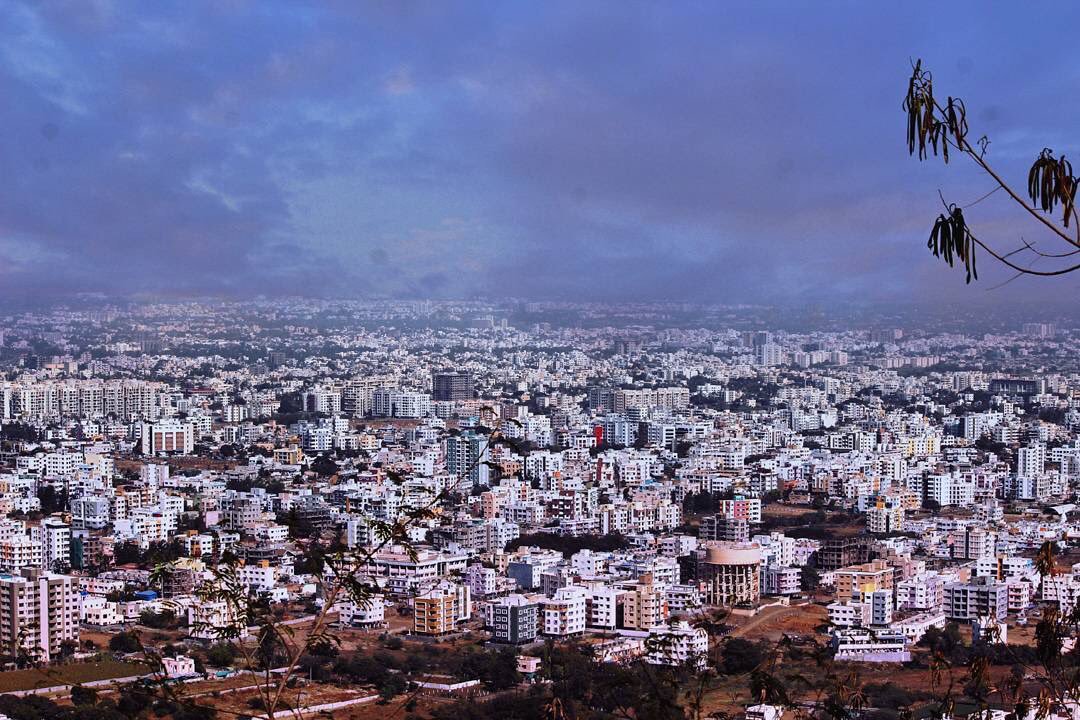
Nashik, formerly Nasik, is a city in the northern region of the Indian state of Maharashtra situated on the banks of the river Godavari, about 165 km (103 mi) northeast of the state capital Mumbai.
Nashik is one of the Hindu pilgrimage sites of the Kumbh Mela, which is held every 12 years.
According to the Ramayana, Nashik is where Lakshmana cut off the nose of the demoness Shurpanakha on the banks of the Godavari River. It is also called Panchavati. It was known as "Gulshanabad" during the Mughal period.
Nashik was known as "Padmanagar" during the Satya Yuga, "Trikantak" during the Treta Yuga, "Janasthana" during the Dvapara Yuga, and finally "Navashikh" or "Nashik" during the Kali Yuga, according to Hindu traditions. Nashik is significant in history, social life, and culture. The city is located on the banks of the Godavari River, making it a sacred site for Hindus around the world. During his 14-year exile from Ayodhya, Rama, the king of Ayodhya, is said to have made Nashik his home.
The Nashik Tram was started from the Old Municipal Building on the main road to Nashik Road railway station around 1889. The tram served the people of Nashik for almost 44 years. The tram station was at the Main Road, and the tram reached the Nashik Road railway station via the present Main Road, Bhadrakali Market, Ghasbazar, and Phalke Road. It covered a distance of about eight to ten kilometres, and the stretch used to be covered with dense jungle at the time. In the article ‘Nashik-then’, poet Kusumagraj wrote: "If the carriages were full, the tram would leave. It would ring the bell and drive out of the village to the main road and then to the grass market.
In the 1900s, the Indian Freedom Fighter, Sri Vinayak Damodar Savarkar along with his brother founded a secret society named Abhinav Bharat in Nasik under the name "Mitra Mela" which was one among many in Maharashtra. On 21 December 1909, Anant Kanhere, a Abhinav Bharat member and student from Aurangabad, assassinated Nashik's governor A. M. T. Jackson while he was watching a play in a theatre. Kanhere was arrested on the spot, and after investigation, police arrested Vinayak Savarkar and others for conspiring against the government to instigate an armed rebellion. The case was known as the "Nasik Conspiracy Case - 1910". In the court trial in Bombay, police alleged Savarkar was the brain, moving spirit and inspiration of the conspiracy extending over many years. Bombay court sentenced him to life imprisonment, and transportation to notorious Cellular Jail at the Andaman Islands; Savarkar's elder brother, Babarao Savarkar, also received the same punishment and others received varying degrees of imprisonment. ICS officer Jackson's assassination created a sensation in Poona, Nasik and Bombay. The case and subsequent imprisonment made Savarkar famous.
In 1930, the Nashik Satyagraha was launched under the leadership of B. R. Ambedkar for the entry of Dalits in Kalaram Mandir. In 1931, a meeting of the Bombay Province Charmakar Parishad was organised in Nashik to work out the Chambhars' position concerning the Second Round Table Conference in which Ambedkar was going to participate. In 1932, he organised his temple entry movement for the abolition of untouchability in Nashik.
Nashik lies in the northern part of Maharashtra state, 584 m (1,916 ft) from the mean sea level.
Hub AI
Nashik AI simulator
(@Nashik_simulator)
Nashik
Nashik, formerly Nasik, is a city in the northern region of the Indian state of Maharashtra situated on the banks of the river Godavari, about 165 km (103 mi) northeast of the state capital Mumbai.
Nashik is one of the Hindu pilgrimage sites of the Kumbh Mela, which is held every 12 years.
According to the Ramayana, Nashik is where Lakshmana cut off the nose of the demoness Shurpanakha on the banks of the Godavari River. It is also called Panchavati. It was known as "Gulshanabad" during the Mughal period.
Nashik was known as "Padmanagar" during the Satya Yuga, "Trikantak" during the Treta Yuga, "Janasthana" during the Dvapara Yuga, and finally "Navashikh" or "Nashik" during the Kali Yuga, according to Hindu traditions. Nashik is significant in history, social life, and culture. The city is located on the banks of the Godavari River, making it a sacred site for Hindus around the world. During his 14-year exile from Ayodhya, Rama, the king of Ayodhya, is said to have made Nashik his home.
The Nashik Tram was started from the Old Municipal Building on the main road to Nashik Road railway station around 1889. The tram served the people of Nashik for almost 44 years. The tram station was at the Main Road, and the tram reached the Nashik Road railway station via the present Main Road, Bhadrakali Market, Ghasbazar, and Phalke Road. It covered a distance of about eight to ten kilometres, and the stretch used to be covered with dense jungle at the time. In the article ‘Nashik-then’, poet Kusumagraj wrote: "If the carriages were full, the tram would leave. It would ring the bell and drive out of the village to the main road and then to the grass market.
In the 1900s, the Indian Freedom Fighter, Sri Vinayak Damodar Savarkar along with his brother founded a secret society named Abhinav Bharat in Nasik under the name "Mitra Mela" which was one among many in Maharashtra. On 21 December 1909, Anant Kanhere, a Abhinav Bharat member and student from Aurangabad, assassinated Nashik's governor A. M. T. Jackson while he was watching a play in a theatre. Kanhere was arrested on the spot, and after investigation, police arrested Vinayak Savarkar and others for conspiring against the government to instigate an armed rebellion. The case was known as the "Nasik Conspiracy Case - 1910". In the court trial in Bombay, police alleged Savarkar was the brain, moving spirit and inspiration of the conspiracy extending over many years. Bombay court sentenced him to life imprisonment, and transportation to notorious Cellular Jail at the Andaman Islands; Savarkar's elder brother, Babarao Savarkar, also received the same punishment and others received varying degrees of imprisonment. ICS officer Jackson's assassination created a sensation in Poona, Nasik and Bombay. The case and subsequent imprisonment made Savarkar famous.
In 1930, the Nashik Satyagraha was launched under the leadership of B. R. Ambedkar for the entry of Dalits in Kalaram Mandir. In 1931, a meeting of the Bombay Province Charmakar Parishad was organised in Nashik to work out the Chambhars' position concerning the Second Round Table Conference in which Ambedkar was going to participate. In 1932, he organised his temple entry movement for the abolition of untouchability in Nashik.
Nashik lies in the northern part of Maharashtra state, 584 m (1,916 ft) from the mean sea level.