
Recent from talks
Nasr City
Knowledge base stats:
Talk channels stats:
Members stats:
Nasr City
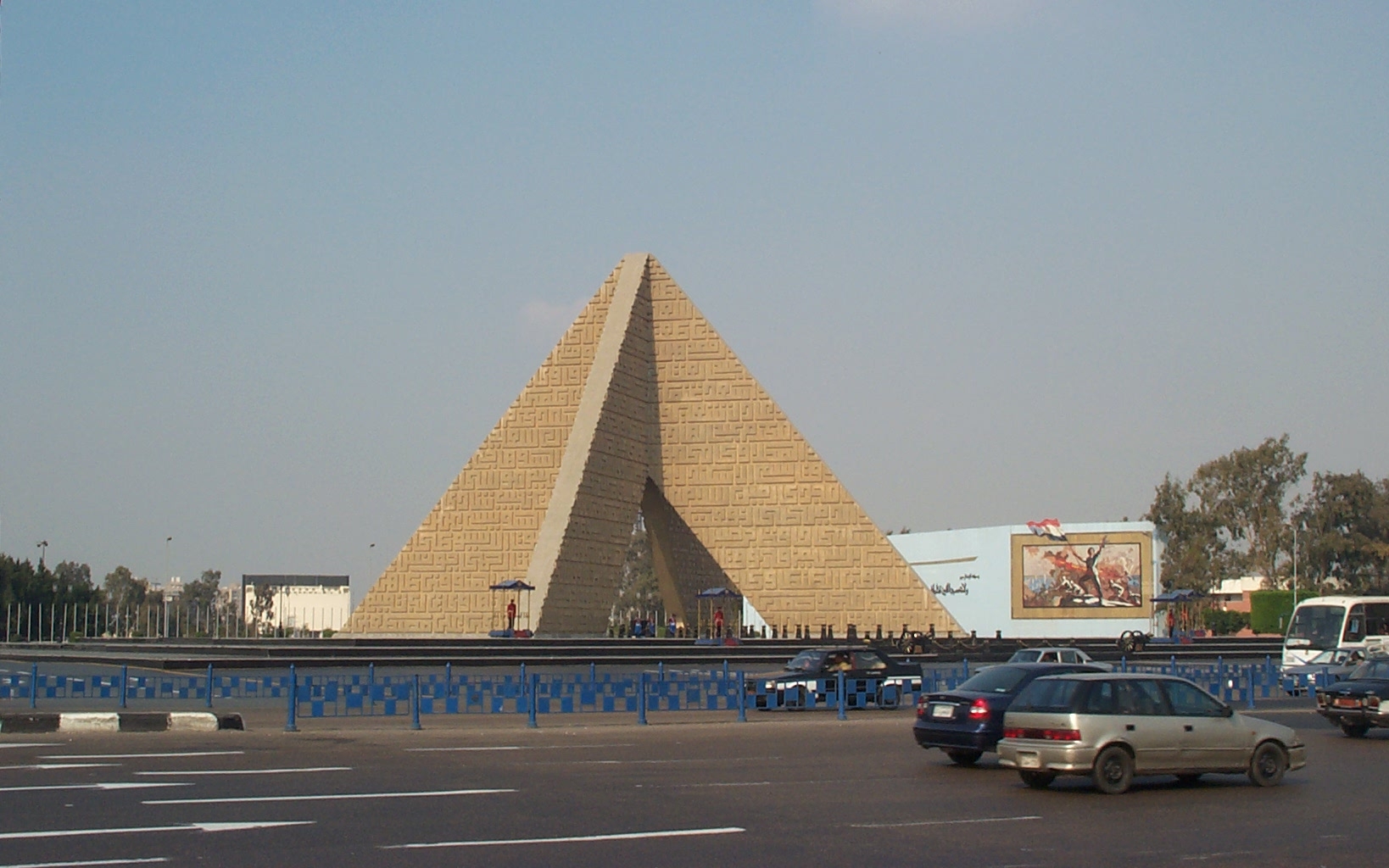
Nasr City (Arabic: مدينة نصر pronounced [mæˈdiːnɪt ˈnɑsˤɾ]) forms two of the nine districts of the Eastern Area of Cairo, Egypt. It is administratively divided into Nasr City West/One (Gharb Madinet Nasr/awwal), and Nasr City East/Two (Sharq Madinet Nasr/thani). In 2021, Nasr City had a third district sub-divided from Nasr City East to be named either Nasr City Third or Al-Amal, as well as a qism (police ward) named Nasr City Third.
Nasr City was established in the 1960s as an extension to the neighboring settlement of Heliopolis. The establishment of the district was part of the Egyptian Government's plan to modernise and expand Cairo following the Egyptian Revolution of 1952. Gamal Abdel Nasser, the Egyptian President at the time, was involved personally in the design process, and was the one who chose the name Nasr for the new district ("nasr" being the Arabic word for "victory"). During the early stages of the project it was envisioned that it would constitute a new capital city, though it just became a suburb of Cairo.
Nasr City was planned by architect and urban planner Sayed Karim on a modern grid street system with calculated building heights, densities and land uses. However, many of the original family homes have since been demolished to make way for illegal residential 'towers' that have heavily densified it.
Nasr City is the largest neighbourhood in Cairo by area, occupying nearly 250 km2 (97 sq mi) of the capital's total area of 1,445 km2 (558 sq mi). For this reason, it is divided into two districts (hayy): East Madīnat Naṣr (Qism Awwal) and West Madīnat Naṣr (Qism Than), and 25 sub-districts that have become shiakhas (non-administrative census blocks), that have a mix of names, and numbers (see table below). In addition to the planned sub-districts, Nasr City is home to two self-built informal areas: Ezbet al-Haggana and Ezbet al-Nasr.
As of the 2017 census, Nasr City had a total population of 707,000 people:
East Madinat Nasr (Qism Awwal): 634,818
West Madinat Nasr (Qism Than): 72,182.
When catching a microbus, minibus or even a CTA bus, specific hand signs may be used. These signs include putting the index and middle fingers in an upwards "V", which is the Hindi numeral ٧, for the 7th district, placing those fingers upside down in a downwards "V", which is the Hindi number ٨ for the 8th district, or putting out a hand and slowly opening and closing the fingers slightly above the start of the palm for the 10th district.
Hub AI
Nasr City AI simulator
(@Nasr City_simulator)
Nasr City
Nasr City (Arabic: مدينة نصر pronounced [mæˈdiːnɪt ˈnɑsˤɾ]) forms two of the nine districts of the Eastern Area of Cairo, Egypt. It is administratively divided into Nasr City West/One (Gharb Madinet Nasr/awwal), and Nasr City East/Two (Sharq Madinet Nasr/thani). In 2021, Nasr City had a third district sub-divided from Nasr City East to be named either Nasr City Third or Al-Amal, as well as a qism (police ward) named Nasr City Third.
Nasr City was established in the 1960s as an extension to the neighboring settlement of Heliopolis. The establishment of the district was part of the Egyptian Government's plan to modernise and expand Cairo following the Egyptian Revolution of 1952. Gamal Abdel Nasser, the Egyptian President at the time, was involved personally in the design process, and was the one who chose the name Nasr for the new district ("nasr" being the Arabic word for "victory"). During the early stages of the project it was envisioned that it would constitute a new capital city, though it just became a suburb of Cairo.
Nasr City was planned by architect and urban planner Sayed Karim on a modern grid street system with calculated building heights, densities and land uses. However, many of the original family homes have since been demolished to make way for illegal residential 'towers' that have heavily densified it.
Nasr City is the largest neighbourhood in Cairo by area, occupying nearly 250 km2 (97 sq mi) of the capital's total area of 1,445 km2 (558 sq mi). For this reason, it is divided into two districts (hayy): East Madīnat Naṣr (Qism Awwal) and West Madīnat Naṣr (Qism Than), and 25 sub-districts that have become shiakhas (non-administrative census blocks), that have a mix of names, and numbers (see table below). In addition to the planned sub-districts, Nasr City is home to two self-built informal areas: Ezbet al-Haggana and Ezbet al-Nasr.
As of the 2017 census, Nasr City had a total population of 707,000 people:
East Madinat Nasr (Qism Awwal): 634,818
West Madinat Nasr (Qism Than): 72,182.
When catching a microbus, minibus or even a CTA bus, specific hand signs may be used. These signs include putting the index and middle fingers in an upwards "V", which is the Hindi numeral ٧, for the 7th district, placing those fingers upside down in a downwards "V", which is the Hindi number ٨ for the 8th district, or putting out a hand and slowly opening and closing the fingers slightly above the start of the palm for the 10th district.
Recent media