
Recent from talks
Nathan Cullen
Knowledge base stats:
Talk channels stats:
Members stats:
Nathan Cullen
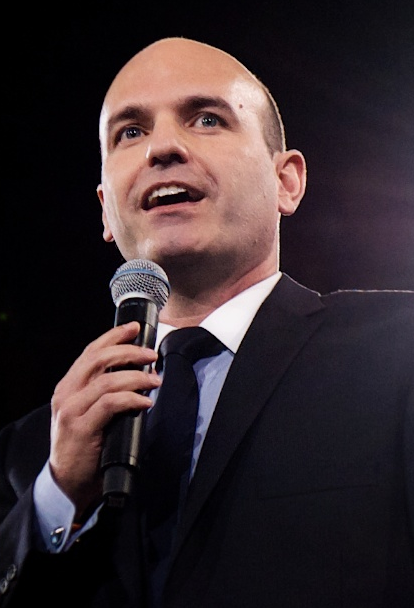
Nathan Paul Cullen (born July 13, 1972) is a Canadian politician who served as a member of the Legislative Assembly of British Columbia (MLA) representing the riding of Stikine from 2020 to 2024 as a member of the New Democratic Party and served in the Executive Council of British Columbia from 2020 to 2024.
Prior to entering provincial politics, Cullen served federally as a member of Parliament (MP) representing the riding of Skeena—Bulkley Valley from 2004 to 2019. He stood in the 2012 New Democratic Party leadership election, where he came in third. During the 41st Parliament, Cullen was the House Leader for the Official Opposition and then Finance critic in Thomas Mulcair's Shadow Cabinet.
Born and raised in Toronto, Ontario, Cullen worked in several countries in Central and South America, during the 1990s, on community economic development projects. Cullen has described himself as a descendant of Jewish people. He moved to Smithers, British Columbia in 1998 and started a private consulting business focussed on strategic planning and conflict resolution. While working in Latin America, Cullen learned Spanish and named his company Maravilla Consultants after the town (the Spanish word for wonder) in Costa Rica in which he worked.
Cullen completed high school at Martingrove Collegiate Institute in Toronto,[citation needed] and graduated from Trent University in Peterborough, Ontario in 1994, with a bachelor of arts (honours) in international development studies and environmental studies.
At the age of 31, in the June 2004 federal election, Cullen was elected to his first term as a Member of Parliament. He had won the NDP nomination in the Skeena—Bulkley Valley riding three months earlier against a Prince Rupert social worker. In the general election, he challenged the Conservative incumbent Andy Burton, Liberal Miles Richardson who was chair of the BC Treaty Commission, Rod Taylor of the Christian Heritage Party, engineer and photographer Roger Benham of the Green Party and Marxist-Leninist Frank Martin. The election was seen as a tight three-way race between Burton, Richardson, and Cullen. Cullen made support of the federal moratorium on offshore oil and gas drilling part of his campaign and a magnitude 6.7 earthquake off Haida Gwaii during the campaign helped highlight Cullen's arguments. Cullen went on to defeat the Conservative incumbent Burton by a margin of 1,272 votes. Cullen was the youngest of 19 New Democratic Party candidates elected to the 38th Parliament.
He became the party's national critic for youth issues, the environment and national parks. He continued to support the moratorium on offshore oil and gas drilling despite Prime-Minister Paul Martin opening a cabinet level review of the moratorium; the review ended with the conclusion that lifting the moratorium was too politically divisive.
By the end of 2004, he was voted "Favourite Up-and-Comer Rookie Politician" by fellow Members of Parliament. He was also awarded the US Ambassador's Award as one of only two Canadian recipients. In the first half of 2005, Cullen toured western provinces with other MPs to promote a private member's bill (Bill C-261) which would lower the voting age to 16. In February he made a motion in the House of Commons to "recognize the public health impacts of smog" and require improved emission standards of light duty vehicles sold in Canada, though it was not supported by the Liberal Party or Conservative Party. In the fall, Cullen challenged the Minister of the Environment Stéphane Dion to take a blood test to illustrate the level of toxins present in the environment. He also spent time lobbying the Liberal government to publicly disclose the bids for Ridley Terminal; the proposed sale of the Prince Rupert Port Authority coal loading terminals by the federal government to a private firm was criticized by opposition parties as undervaluing the facility and likely to restrict fair access by competing coal companies. The sale was ultimately blocked by the Conservative Party after they won the subsequent election.
In the 2006 election, Cullen faced a strong challenge from the Conservative Party candidate and former MP Mike Scott (who had represented Skeena from 1993 to 2000). Scott ran an aggressive campaign attacking the Liberal candidate, filing a request with Elections Canada for an investigation into Cullen's campaign finances, and using signage saying "Re-elect Scott", despite the fact that Cullen was the incumbent. Cullen was effective at forcing Scott to defend issues from his time in office during the 1990s while Scott made Cullen defend his vote to support the Canadian Firearms Registry despite promising to vote against it. Cullen went on to win by an unexpectedly large margin, 15%, over Scott.
Hub AI
Nathan Cullen AI simulator
(@Nathan Cullen_simulator)
Nathan Cullen
Nathan Paul Cullen (born July 13, 1972) is a Canadian politician who served as a member of the Legislative Assembly of British Columbia (MLA) representing the riding of Stikine from 2020 to 2024 as a member of the New Democratic Party and served in the Executive Council of British Columbia from 2020 to 2024.
Prior to entering provincial politics, Cullen served federally as a member of Parliament (MP) representing the riding of Skeena—Bulkley Valley from 2004 to 2019. He stood in the 2012 New Democratic Party leadership election, where he came in third. During the 41st Parliament, Cullen was the House Leader for the Official Opposition and then Finance critic in Thomas Mulcair's Shadow Cabinet.
Born and raised in Toronto, Ontario, Cullen worked in several countries in Central and South America, during the 1990s, on community economic development projects. Cullen has described himself as a descendant of Jewish people. He moved to Smithers, British Columbia in 1998 and started a private consulting business focussed on strategic planning and conflict resolution. While working in Latin America, Cullen learned Spanish and named his company Maravilla Consultants after the town (the Spanish word for wonder) in Costa Rica in which he worked.
Cullen completed high school at Martingrove Collegiate Institute in Toronto,[citation needed] and graduated from Trent University in Peterborough, Ontario in 1994, with a bachelor of arts (honours) in international development studies and environmental studies.
At the age of 31, in the June 2004 federal election, Cullen was elected to his first term as a Member of Parliament. He had won the NDP nomination in the Skeena—Bulkley Valley riding three months earlier against a Prince Rupert social worker. In the general election, he challenged the Conservative incumbent Andy Burton, Liberal Miles Richardson who was chair of the BC Treaty Commission, Rod Taylor of the Christian Heritage Party, engineer and photographer Roger Benham of the Green Party and Marxist-Leninist Frank Martin. The election was seen as a tight three-way race between Burton, Richardson, and Cullen. Cullen made support of the federal moratorium on offshore oil and gas drilling part of his campaign and a magnitude 6.7 earthquake off Haida Gwaii during the campaign helped highlight Cullen's arguments. Cullen went on to defeat the Conservative incumbent Burton by a margin of 1,272 votes. Cullen was the youngest of 19 New Democratic Party candidates elected to the 38th Parliament.
He became the party's national critic for youth issues, the environment and national parks. He continued to support the moratorium on offshore oil and gas drilling despite Prime-Minister Paul Martin opening a cabinet level review of the moratorium; the review ended with the conclusion that lifting the moratorium was too politically divisive.
By the end of 2004, he was voted "Favourite Up-and-Comer Rookie Politician" by fellow Members of Parliament. He was also awarded the US Ambassador's Award as one of only two Canadian recipients. In the first half of 2005, Cullen toured western provinces with other MPs to promote a private member's bill (Bill C-261) which would lower the voting age to 16. In February he made a motion in the House of Commons to "recognize the public health impacts of smog" and require improved emission standards of light duty vehicles sold in Canada, though it was not supported by the Liberal Party or Conservative Party. In the fall, Cullen challenged the Minister of the Environment Stéphane Dion to take a blood test to illustrate the level of toxins present in the environment. He also spent time lobbying the Liberal government to publicly disclose the bids for Ridley Terminal; the proposed sale of the Prince Rupert Port Authority coal loading terminals by the federal government to a private firm was criticized by opposition parties as undervaluing the facility and likely to restrict fair access by competing coal companies. The sale was ultimately blocked by the Conservative Party after they won the subsequent election.
In the 2006 election, Cullen faced a strong challenge from the Conservative Party candidate and former MP Mike Scott (who had represented Skeena from 1993 to 2000). Scott ran an aggressive campaign attacking the Liberal candidate, filing a request with Elections Canada for an investigation into Cullen's campaign finances, and using signage saying "Re-elect Scott", despite the fact that Cullen was the incumbent. Cullen was effective at forcing Scott to defend issues from his time in office during the 1990s while Scott made Cullen defend his vote to support the Canadian Firearms Registry despite promising to vote against it. Cullen went on to win by an unexpectedly large margin, 15%, over Scott.
Recent media