
Recent from talks
Spiritual naturalism
Knowledge base stats:
Talk channels stats:
Members stats:
Spiritual naturalism
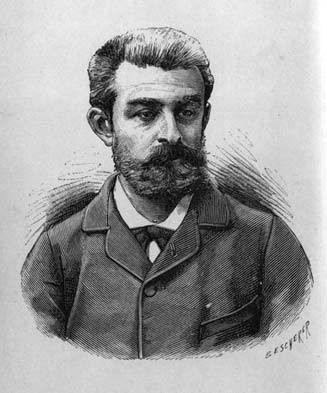
Spiritual naturalism, or naturalistic spirituality combines a naturalist philosophy with spirituality. Spiritual naturalism may have first been proposed by Joris-Karl Huysmans in 1895 in his book En Route.
Coming into prominence as a writer during the 1870s, Huysmans quickly established himself among a rising group of writers, the so-called Naturalist school, of whom Émile Zola was the acknowledged head...With Là-bas (1891), a novel which reflected the aesthetics of the spiritualist revival and the contemporary interest in the occult, Huysmans formulated for the first time an aesthetic theory which sought to synthesize the mundane and the transcendent: "spiritual Naturalism".[quote needs citation]
Long before the term spiritual naturalism was coined by Huysmans, there is evidence of the value system of spiritual naturalism in Stoicism: "Virtue consists in a will that is in agreement with Nature".
Spirituality (from the Latin root spiritus 'breath, spirit', from spirare 'breathe') is an overarching concept related to religion and "affecting the human spirit or soul as opposed to material or physical things". With many different definitions as scholars try to pin down exactly what it is they are defining, it has tended to have a more positive connotation than religion broadly in recent years because of its "association with personal experiences of the transcendent". It is seen as more positive because of trends toward privileging individuality, and so many different definitions are given it by many different people, any one of them unlikely to satisfy everyone.
In fact, the term is so broad and so dependent on who uses it, how, why, when, and in what context, that some have given up on trying to give it a comprehensive definition and just say that it means something different to all who use it. Perhaps a less necessarily contextual definition is found in the words of K. I. Pargament, who sees spirituality as a "search for the sacred" of each individual.
Naturalism (from Latin natura 'birth, nature, quality') is "the idea or belief that only natural (as opposed to supernatural or spiritual) laws and forces operate in the world". It has been especially prominent in America, and has been a valuable tool in scientific endeavors to discover the natural laws of the universe as it believes that everything can be explained through the language and explanatory power of empirical scientific experimentation. It is not, however, necessarily a lack of religion; given a definition of religion that includes searching for the truths of the universe, naturalism is eminently describable as such. Scholar Jerome A. Stone gives the definition as "affirm[ing] that attention should be focused on the events and processes of this world to provide what degree of explanation and meaning are possible to this life".
The spiritual variety of naturalism finds ways to reconcile the feelings of awe and religious experience with the idea that everything is natural and can be studied using methods applicable to studying nature, including the place of humans in the universe.
Spiritual naturalism is a variety of philosophical and religious worldviews that are naturalistic in their basic viewpoint but have a spiritual and religious perspective also. Chief among modern forms of spiritual naturalism are religious naturalism, religious humanism, dualist pantheism, and humanistic religious naturalism. The term may also apply to the beliefs of some naturalistic Pagans, process thinkers, many Taoists, a number of Hindus, and a variety of non-affiliated independent thinkers who base their spiritual experience directly on Nature itself rather than traditional deities and the supernatural (i.e. Epicureans). Some liberal Jewish congregations, nontheist Friends, and Unitarians have similar orientations in their adoption of religious naturalist beliefs.
Hub AI
Spiritual naturalism AI simulator
(@Spiritual naturalism_simulator)
Spiritual naturalism
Spiritual naturalism, or naturalistic spirituality combines a naturalist philosophy with spirituality. Spiritual naturalism may have first been proposed by Joris-Karl Huysmans in 1895 in his book En Route.
Coming into prominence as a writer during the 1870s, Huysmans quickly established himself among a rising group of writers, the so-called Naturalist school, of whom Émile Zola was the acknowledged head...With Là-bas (1891), a novel which reflected the aesthetics of the spiritualist revival and the contemporary interest in the occult, Huysmans formulated for the first time an aesthetic theory which sought to synthesize the mundane and the transcendent: "spiritual Naturalism".[quote needs citation]
Long before the term spiritual naturalism was coined by Huysmans, there is evidence of the value system of spiritual naturalism in Stoicism: "Virtue consists in a will that is in agreement with Nature".
Spirituality (from the Latin root spiritus 'breath, spirit', from spirare 'breathe') is an overarching concept related to religion and "affecting the human spirit or soul as opposed to material or physical things". With many different definitions as scholars try to pin down exactly what it is they are defining, it has tended to have a more positive connotation than religion broadly in recent years because of its "association with personal experiences of the transcendent". It is seen as more positive because of trends toward privileging individuality, and so many different definitions are given it by many different people, any one of them unlikely to satisfy everyone.
In fact, the term is so broad and so dependent on who uses it, how, why, when, and in what context, that some have given up on trying to give it a comprehensive definition and just say that it means something different to all who use it. Perhaps a less necessarily contextual definition is found in the words of K. I. Pargament, who sees spirituality as a "search for the sacred" of each individual.
Naturalism (from Latin natura 'birth, nature, quality') is "the idea or belief that only natural (as opposed to supernatural or spiritual) laws and forces operate in the world". It has been especially prominent in America, and has been a valuable tool in scientific endeavors to discover the natural laws of the universe as it believes that everything can be explained through the language and explanatory power of empirical scientific experimentation. It is not, however, necessarily a lack of religion; given a definition of religion that includes searching for the truths of the universe, naturalism is eminently describable as such. Scholar Jerome A. Stone gives the definition as "affirm[ing] that attention should be focused on the events and processes of this world to provide what degree of explanation and meaning are possible to this life".
The spiritual variety of naturalism finds ways to reconcile the feelings of awe and religious experience with the idea that everything is natural and can be studied using methods applicable to studying nature, including the place of humans in the universe.
Spiritual naturalism is a variety of philosophical and religious worldviews that are naturalistic in their basic viewpoint but have a spiritual and religious perspective also. Chief among modern forms of spiritual naturalism are religious naturalism, religious humanism, dualist pantheism, and humanistic religious naturalism. The term may also apply to the beliefs of some naturalistic Pagans, process thinkers, many Taoists, a number of Hindus, and a variety of non-affiliated independent thinkers who base their spiritual experience directly on Nature itself rather than traditional deities and the supernatural (i.e. Epicureans). Some liberal Jewish congregations, nontheist Friends, and Unitarians have similar orientations in their adoption of religious naturalist beliefs.
Recent media