
Recent from talks
Sican culture
Knowledge base stats:
Talk channels stats:
Members stats:
Sican culture
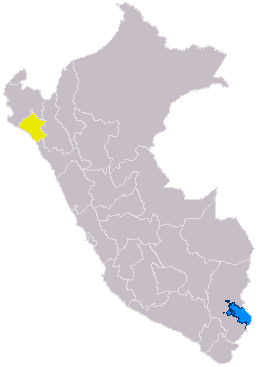
The Sican (also Sicán) culture is the name that archaeologist Izumi Shimada gave to the culture that inhabited what is now the north coast of Peru between about 750 and 1375 CE. According to Shimada, Sican means "temple of the Moon". The Sican culture is also referred to as Lambayeque culture, after the name of the region in Peru. It succeeded the Moche culture. There is still controversy among archeologists and anthropologists over whether the two are separate cultures. The Sican culture is divided into three major periods based on cultural changes as evidenced in archeological artifacts.
Archaeologist Izumi Shimada, founder of the Sican Archaeological Project, named the prehistoric culture which he discovered in northwestern Peru. They succeeded the Moche and preceded the Inca Empire, the historical civilization that encountered the Spanish explorers and conquistadors.
The Sican inhabited a coastal territory near the La Leche and Lambayeque Rivers. The archaeological sites span the Lambayeque region, including the Motupe, La Leche, Lambayeque, and Zaña valleys, near modern-day Chiclayo. Numerous sites have been identified in the Batán Grande area of the La Leche Valley.
The climate of the area during Sican occupation was similar to the current climate, despite changes in landscape accumulated in the last 600 years. The drought-and-flood cycles seen in the region for the past 1500 years did not spare the Sican culture. (Goldstein and Shimada 2007, p. 49)
The Early Sican period began around 750 and lasted until 900. The lack of artifacts has limited the development of knowledge about this early period. The Sican were probably descendants of the Moche culture, which fell around 800. Their works shows shared motifs in the artifacts recovered. Similar groups include Cajamarca, Wari, and Pachacamac. From remains found in the archaeological locations, researchers have determined that this culture maintained commercial exchange with people from present-day Ecuador (shells and snails), Colombia to the north (emeralds and amber), Chile to the south (blue stone), and the eastern basin of the Marañón River (seeds of gold). The Lambayeque culture may have been a separate trading people as well. Around 800, the Sican created the city of Poma, located at Batán Grande, in La Leche Valley. Few other Early Sican sites have been discovered.
The Early Sican culture is known for the highly polished, black-finish ceramics found in the La Leche Valley. This black-finish ceramic style began in the Moche culture prior to the Early Sican, and shows the sharing of cultures in the region. Much of the ceramics were examples of a single spout, loop-handle bottle, featuring an anthropomorphic-avian (bird) face at the spout base. The face consisted of bulging eyes, a hooked beak or triangular projection instead of a nose, stylized ears, and no mouth. It appeared to be a predecessor to the related faces of the Sican Deity and the Sican Lord of the Middle Sican culture. (Shimada 2000, p. 51)
Aside from the shared ceramic styles, much of the Early Sican defines a distinguishable culture. While the ceramic styles and iconography show some continuity with previous cultures, the combination of all the influences is Sican. The changing ceramic styles, iconography, and funerary practices reflect a change in religious ideology and cosmology that expressed the Sican culture. Most importantly, the late Early Sican period saw the accumulation of these changes in art style and iconography, coupled with other changes in organization, by which the Sican constructed monumental adobe structures, developed large-scale copper alloy smelting and metalworking, and developed the elaborate funerary tradition that would come to characterize the Middle Sican (Shimada 1985, p. 361). Such changes have been seen by researchers at sites in Batán Grande, including the Huaca del Pueblo site, dated to around 850-900.
The Middle Sican period lasted from 900 to 1100 . This is the period of the Sican's "cultural florescence", and is marked by the emergence of various cultural innovations, some of which were unprecedented in the local area. The decline of the Wari Empire and the Middle Cajamarca polity enabled the resurgence in local political and religious identity and autonomy. The Middle Sican culture is marked by distinctive characteristics in six areas: art and ideology, crafts and technology, funerary customs, long-distance trade, religious cities and monumental temples, and the structure and authority of the state (Shimada 2000, p. 52-61; Shimada 1985, p. 365-369). Together, these characteristics provide evidence that the Sicán culture had a highly productive economy, clear social differentiation, and an influential religious ideology. The religious ideology was the underpinning of the structure of their theocratic state.
Hub AI
Sican culture AI simulator
(@Sican culture_simulator)
Sican culture
The Sican (also Sicán) culture is the name that archaeologist Izumi Shimada gave to the culture that inhabited what is now the north coast of Peru between about 750 and 1375 CE. According to Shimada, Sican means "temple of the Moon". The Sican culture is also referred to as Lambayeque culture, after the name of the region in Peru. It succeeded the Moche culture. There is still controversy among archeologists and anthropologists over whether the two are separate cultures. The Sican culture is divided into three major periods based on cultural changes as evidenced in archeological artifacts.
Archaeologist Izumi Shimada, founder of the Sican Archaeological Project, named the prehistoric culture which he discovered in northwestern Peru. They succeeded the Moche and preceded the Inca Empire, the historical civilization that encountered the Spanish explorers and conquistadors.
The Sican inhabited a coastal territory near the La Leche and Lambayeque Rivers. The archaeological sites span the Lambayeque region, including the Motupe, La Leche, Lambayeque, and Zaña valleys, near modern-day Chiclayo. Numerous sites have been identified in the Batán Grande area of the La Leche Valley.
The climate of the area during Sican occupation was similar to the current climate, despite changes in landscape accumulated in the last 600 years. The drought-and-flood cycles seen in the region for the past 1500 years did not spare the Sican culture. (Goldstein and Shimada 2007, p. 49)
The Early Sican period began around 750 and lasted until 900. The lack of artifacts has limited the development of knowledge about this early period. The Sican were probably descendants of the Moche culture, which fell around 800. Their works shows shared motifs in the artifacts recovered. Similar groups include Cajamarca, Wari, and Pachacamac. From remains found in the archaeological locations, researchers have determined that this culture maintained commercial exchange with people from present-day Ecuador (shells and snails), Colombia to the north (emeralds and amber), Chile to the south (blue stone), and the eastern basin of the Marañón River (seeds of gold). The Lambayeque culture may have been a separate trading people as well. Around 800, the Sican created the city of Poma, located at Batán Grande, in La Leche Valley. Few other Early Sican sites have been discovered.
The Early Sican culture is known for the highly polished, black-finish ceramics found in the La Leche Valley. This black-finish ceramic style began in the Moche culture prior to the Early Sican, and shows the sharing of cultures in the region. Much of the ceramics were examples of a single spout, loop-handle bottle, featuring an anthropomorphic-avian (bird) face at the spout base. The face consisted of bulging eyes, a hooked beak or triangular projection instead of a nose, stylized ears, and no mouth. It appeared to be a predecessor to the related faces of the Sican Deity and the Sican Lord of the Middle Sican culture. (Shimada 2000, p. 51)
Aside from the shared ceramic styles, much of the Early Sican defines a distinguishable culture. While the ceramic styles and iconography show some continuity with previous cultures, the combination of all the influences is Sican. The changing ceramic styles, iconography, and funerary practices reflect a change in religious ideology and cosmology that expressed the Sican culture. Most importantly, the late Early Sican period saw the accumulation of these changes in art style and iconography, coupled with other changes in organization, by which the Sican constructed monumental adobe structures, developed large-scale copper alloy smelting and metalworking, and developed the elaborate funerary tradition that would come to characterize the Middle Sican (Shimada 1985, p. 361). Such changes have been seen by researchers at sites in Batán Grande, including the Huaca del Pueblo site, dated to around 850-900.
The Middle Sican period lasted from 900 to 1100 . This is the period of the Sican's "cultural florescence", and is marked by the emergence of various cultural innovations, some of which were unprecedented in the local area. The decline of the Wari Empire and the Middle Cajamarca polity enabled the resurgence in local political and religious identity and autonomy. The Middle Sican culture is marked by distinctive characteristics in six areas: art and ideology, crafts and technology, funerary customs, long-distance trade, religious cities and monumental temples, and the structure and authority of the state (Shimada 2000, p. 52-61; Shimada 1985, p. 365-369). Together, these characteristics provide evidence that the Sicán culture had a highly productive economy, clear social differentiation, and an influential religious ideology. The religious ideology was the underpinning of the structure of their theocratic state.
Recent media