Hubbry Logo
Neil Hamilton (actor)Neil Hamilton (actor)Main
Open search
Neil Hamilton (actor)
Community hub
Neil Hamilton (actor)
logo
8 pages, 0 posts
0 subscribers
Be the first to start a discussion here.
Neil Hamilton (actor)
from Wikipedia

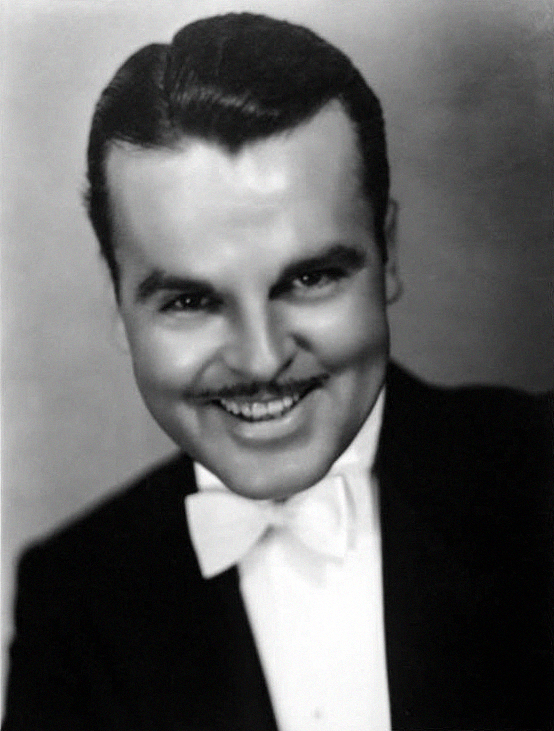
James Neil Hamilton (September 9, 1899 – September 24, 1984) was an American stage, film and television actor, best remembered for his role as Commissioner Gordon on the Batman TV series of the 1960s, having first played a character by that name in 1928's Three Week-Ends.[1] During his motion picture career, which spanned more than a half century, Hamilton performed in over 260 productions in the silent and sound eras.

Key Information

Acting career

[edit]

An only child, Hamilton was born in Lynn, Massachusetts. His show business career began when he secured a job as a shirt model in magazine advertisements.[2]

After this, he became interested in acting and joined several stock companies, where he gained experience and training as an actor in professional stage productions. This allowed him to get his first film role, in Vitagraph's The Beloved Impostor (1918). He got his big break in D. W. Griffith's The White Rose (1923). He traveled to Germany with Griffith and made a film about the incredibly harsh conditions in Germany after World War I, Isn't Life Wonderful (1924).

Hamilton in Stars of the Photoplay, 1924

While he was filming America (1924), a soldier's arm was blown off. Actor Charles Emmett Mack recalled: "Neil Hamilton and I went to neighboring towns and raised a fund for him—I doing a song and dance and Neil collecting a coin."[3]

Hamilton was signed by Paramount Pictures in the mid-1920s and became one of its leading men. He often appeared opposite Bebe Daniels. He played one of Ronald Colman's brothers in Paramount's original silent version of Beau Geste (1926) and Nick Carraway in the first film of The Great Gatsby (1926), now a lost film. He starred with Victor McLaglen in John Ford's Mother Machree (1928), whose title became the catchphrase of Gordon's associate Chief O'Hara (played by Stafford Repp) on the Batman television series almost four decades later. Machree is likely an English representation of the Irish phrase "mo chroí", meaning "my heart", and has identical pronunciation.

In 1930, Hamilton appeared in the original production of The Dawn Patrol (retitled "Flight Commander" after its remake), playing the squadron commander, who was played by Basil Rathbone in the 1938 remake. Hamilton was billed above newcomer Clark Gable in Laughing Sinners (1931), in which he played a cad who deserts Joan Crawford's brokenhearted character. He originated the role of milksop Harry Holt, Jane's fiancé, in Tarzan the Ape Man (1932), where he got top billing. Hamilton reprised the role in the pre-Code sequel Tarzan and His Mate (1934) at Metro-Goldwyn-Mayer. He made five films in England in 1936 and 1937.

"A"-level work in Hollywood dried up for Hamilton by the 1940s, and he was reduced to working in serials, "B" films, and other low-budget projects. He starred as the villain in King of the Texas Rangers (1941), one of the Republic Pictures most successful movie serials.

In Since You Went Away (1944), about life on the home front in World War II, Hamilton is seen only in still photographs as a serviceman away at war. His family's travails during his absence are the center of the movie. Hamilton reportedly shot scenes for the movie before filmmakers decided to keep his character off-screen. He appeared in the film noir When Strangers Marry (1944) with Robert Mitchum.

In a 1970s book interview for Whatever Happened to..., Hamilton said he had been banned from A level work for insulting a studio executive. A Roman Catholic, Hamilton said that his faith got him through the difficult period of late 1942 to early 1944 when he could not obtain film employment and was down on his luck financially.

When television came along, Hamilton hosted Hollywood Screen Test (1948-1953), co-starred in the short-lived sitcom That Wonderful Guy with Jack Lemmon (1949–50), at the same time as Hollywood Screen Test, and did guest shots on numerous series of the 1950s and 1960s, such as seven episodes of Perry Mason: in 1958 he played murder victim Bertrand Allred in "The Case of the Lazy Lover" and Grove Dillingham in "The Case of the Drifting Dropout" in 1964. He was in five episodes of 77 Sunset Strip. He appeared on Maverick, Tales of Wells Fargo, The Real McCoys, Mister Ed, Bachelor Father, The Outer Limits, and The Cara Williams Show. During the late 1940s and early 1950s, Hamilton performed on Broadway in Many Happy Returns (1945), The Men We Marry (1948), To Be Continued (1952), and Late Love (1953–54).[4]

In 1960, actor Richard Cromwell was seeking a comeback of sorts in 20th Century Fox's planned production of The Little Shepherd of Kingdom Come but Cromwell died of complications from liver cancer. Producer Maury Dexter quickly signed Hamilton to replace Cromwell in the film, which co-starred Jimmie Rodgers and Chill Wills. During the 1960s, Hamilton appeared in three Jerry Lewis films: The Patsy (1964), The Family Jewels (1965), and Which Way to the Front? (1970).

Hamilton co-starred in a season-one episode of The Munsters, "Autumn Croakus", as a conman named Malcolm. He also appeared as Police Commissioner James "Jim" Gordon in all 120 episodes of the Batman television series (1966–68) as well as the 1966 film of the same name. Yvonne Craig, who played Commissioner Gordon's daughter Barbara, said Hamilton "came every day to the set letter perfect in dialogue and never missed a beat—a consummate professional."[5]

Personal life

[edit]

Hamilton was married to Elsa Whitmer from 1922 until his death in September 1984. They had one child.

Hamilton was a Roman Catholic, and a member of the Good Shepherd Parish and the Catholic Motion Picture Guild in Beverly Hills, California.[6]

Hamilton died at the age of 85 on September 24, 1984, in Escondido, California, after suffering a severe asthma attack. After his cremation, his ashes were later scattered into the Pacific Ocean.

Filmography

[edit]

References

[edit]
[edit]
Revisions and contributorsEdit on WikipediaRead on Wikipedia
from Grokipedia
Neil Hamilton (September 9, 1899 – September 24, 1984) was an American actor renowned for his work in silent films as a leading man during the and , followed by a resurgence in popularity as James Gordon in the Batman television series. Born James Neil Hamilton in , as the only child of a devout Roman Catholic family, he began his entertainment career as a shirt model, famously known as the "Arrow Collar Man" in magazine advertisements during his late teens and early twenties. After working as a brokerage clerk in , and performing in local theater, Hamilton transitioned to film in 1918 with a small role in The Beloved Impostor, but achieved his breakthrough in D.W. Griffith's 1923 drama The White Rose. Throughout the silent era, Hamilton starred in over 20 films for , including the epic adventure (1926) opposite , (1926) as , and D.W. Griffith's America (1924). He continued into the sound era with supporting roles in films like What Price Hollywood? (1932), Tarzan, the Ape Man (1932), and (1934), amassing over 260 screen credits by the end of his career. In the late , he shifted toward television and stage work, but his most iconic role came in 1966 when he was cast as the beleaguered Commissioner Gordon in the campy Batman series, appearing in nearly every episode alongside and until 1968. Hamilton married Elsa Cozetta Whitmer, whom he met while performing in Toledo theater, and the couple had one child, a daughter; they retired to Escondido, California, after his health declined following Batman. He received a star on the Hollywood Walk of Fame in 1960 for his motion picture contributions. Hamilton died at his Escondido home from complications of asthma at age 85, and his ashes were scattered in the Pacific Ocean.

Early life

Childhood and family

James Neil Hamilton was born on September 9, 1899, in Lynn, Massachusetts. He was the only child of Alexander B. Hamilton and Elizabeth J. O'Neil. Hamilton was raised in a devout Roman Catholic household in Lynn, a working-class industrial city in Massachusetts known for its shoe manufacturing and textile industries during the late 19th and early 20th centuries. No records indicate that Hamilton pursued formal higher education, reflecting the practical, self-reliant ethos of his family's environment.

Entry into show business

Hamilton's entry into the entertainment industry began in the late 1910s when he secured his first professional job as a shirt model for magazine advertisements, capitalizing on his striking good looks and photogenic features. He notably posed as the "Arrow Collar Man" for Cluett, Peabody & Co., a role that brought him early visibility in print media and sparked his interest in performance. After modeling, he worked as a in Toledo, Ohio, before transitioning to acting through hands-on experience in local stock theater companies there, where he honed his skills in live performances across various productions. This practical apprenticeship in the late allowed him to build a foundational repertoire of stage work, debuting in theatrical roles that emphasized his youthful charm and versatility before pursuing opportunities in film. In 1918, Hamilton relocated to Hollywood, drawn by the burgeoning , and quickly signed initial contracts with studios that paved the way for his screen debut that same year. This move marked the bridge from his modeling and stage beginnings to a sustained in motion pictures, establishing him as an emerging talent in the silent era.

Acting career

Silent film era

Hamilton made his screen debut in the 1918 silent film The Beloved Impostor, produced by , marking his transition from modeling and stock theater work to motion pictures. In this early role, he appeared alongside Gladys Leslie in a story of and romance, directed by Joseph Gleason, which showcased his emerging on-screen presence as a young, handsome lead. By the early , Hamilton had established himself as a prominent figure in silent cinema, starring in numerous films for studios including D.W. Griffith's productions and before 1930. His breakthrough came with the lead role opposite in Griffith's The White Rose (1923), a dramatic tale of love and redemption set in the American South, which highlighted his ability to convey emotional depth and romantic appeal. This success led to further collaborations with Griffith, including Isn't Life Wonderful (1924), where he portrayed a resilient family man amid post-World War I hardships in , opposite Carol Dempster. In the mid-1920s, Hamilton signed with , expanding into adventure and literary adaptations that solidified his status as a matinee idol known for romantic and dramatic roles. Notable among these was his portrayal of Digby Geste in (1926), a high-profile epic directed by Herbert Brenon, where he played one of the adventurous brothers alongside , contributing to the film's acclaim for its exotic desert settings and themes of honor. That same year, he took on the role of narrator in the silent adaptation of F. Scott Fitzgerald's (1926), directed by Herbert Brenon, further enhancing his reputation for sophisticated, introspective characters that resonated with audiences. By 1929, Hamilton had appeared in over 20 silent films, cementing his appeal as a versatile leading man in an era of rapid cinematic evolution.

Sound films and peak years

Hamilton successfully transitioned to sound films in the late 1920s, leveraging his established leading man status under his contract, which he had signed in the mid-1920s. His early talkies included the war drama The Dawn Patrol (1930), where he portrayed squadron commander Major Brand opposite and , directed by . This adaptation marked a seamless shift from silent cinema, allowing Hamilton to continue as a versatile supporting actor in high-profile productions. A highlight of his sound era career came with his role as Harry Holt, the bumbling fiancé of Jane Parker, in MGM's (1932), the first sound film starring and . Hamilton reprised the character in the sequel (1934), contributing to the franchise's early success and solidifying his presence in adventure genres. By the mid-1930s, he had appeared in over 50 sound films, including the sophisticated comedy The Animal Kingdom (1932) as Owen Fiske alongside and . Hamilton's peak popularity in saw him in diverse roles across dramas, adventures, and B-movies, often as charming antagonists or romantic leads, with his output reflecting the era's prolific . Notable among these was his villainous turn as John Barton in the serial King of the Texas Rangers (1941), a wartime espionage thriller starring . By 1940, his overall included over 100 credits, underscoring his commercial prominence during this period.

Post-war decline and resurgence

Following , Neil Hamilton's leading man status from the silent and early sound eras waned amid Hollywood's transition to a freelance system and the influx of new talent, resulting in fewer prominent film roles and a shift to supporting parts in lower-budget productions. By the late 1940s, his output had diminished, with appearances confined largely to B-films and serials that capitalized on his established screen presence. Supporting roles in modestly budgeted features such as (1945) as Mr. Grant and (1946) as the police lieutenant exemplified the lighter fare he pursued, though opportunities for starring turns evaporated as studios prioritized postwar blockbusters and television competition grew. His contributions to the Thin Man-inspired Dangerous Lady (1941), playing Duke Martindel opposite June Storey, also reflected this transition. Over the subsequent decades, he appeared in approximately 50 post-war films, often in unassuming or bit parts that underscored the challenges of sustaining a film career without the studio safety net. A partial resurgence occurred in the , as Hamilton secured supporting roles in crime dramas. To bridge the gap, Hamilton turned to radio dramas in the late , voicing roles in that kept his name active, before pivoting to early television hosting duties on Hollywood Screen Test (1952–1954), which previewed his fuller immersion in the medium.

Television work

Early television appearances

As film opportunities for Hamilton declined in the post-war years, he pivoted to the emerging medium of television, co-starring as Franklin Westbrook in the ABC sitcom That Wonderful Guy from 1949 to 1950 alongside . He also debuted as host of the ABC talent competition Hollywood Screen Test from 1948 to 1953. In this program, he introduced aspiring actors, directing them through scripted scenes designed to mimic Hollywood auditions and providing exposure to potential industry scouts. By the mid-1950s, Hamilton had established himself as a reliable guest performer in anthology dramas and procedural series, leveraging his authoritative screen presence in supporting roles such as executives, officials, and paternal figures. He appeared in multiple episodes of across its run from 1957 to 1966, including portrayals of Bertrand Allred in the 1958 episode "The Case of the Lazy Lover," Frank Livesey in the 1959 episode "The Case of the Dubious Bridegroom," Fred McCormick in the 1963 episode "The Case of Constant Doyle," and Victor Billings in the 1964 episode "The Case of the Betrayed Bride." Hamilton also made recurring guest spots on the detective series between 1958 and 1964, accumulating five appearances in characters like John Harrington, Jerry Branford, and Hamilton Rondave, often involving intrigue in high-society or business settings. These roles allowed Hamilton to sustain a steady career on the small screen, where his polished demeanor from the silent era translated effectively to the intimate format of live and filmed broadcasts.

Iconic role in Batman

Neil Hamilton was cast as Commissioner James Gordon in the ABC television series Batman, which ran for three seasons from 1966 to 1968, with Hamilton appearing throughout its 120-episode run. He reprised the role in the 1966 theatrical feature Batman: The Movie, directed by Leslie H. Martinson. As the upright and dedicated commissioner of Gotham City, Gordon frequently summoned Batman and Robin—portrayed by Adam West and Burt Ward, respectively—to combat the city's colorful array of supervillains, often via the iconic Batphone or Bat-Signal. Hamilton's deadpan delivery emphasized Gordon's earnest yet somewhat oblivious demeanor, including his role as the unwitting father of Barbara Gordon (Batgirl), adding layers to the character's comedic dynamic. At the age of 66 when the series premiered, Hamilton's portrayal marked a significant revival for his career, which had waned in the years after a prolific run in silent and sound films. The role brought him renewed visibility and acclaim from fans, though it also led to as the authoritative lawman figure. Despite this, the series' immense popularity—achieving some of the highest television ratings of its era—cemented Hamilton's place in pop culture, with his performance earning praise for its steadfast support of the Dynamic Duo. His final major credit came in 1971, after a handful of post-Batman appearances. Hamilton contributed to the show's distinctive campy, pop-art aesthetic, blending high-camp humor with satirical takes on tropes through exaggerated scenarios and onomatopoeic sound effects. Lines like Gordon's urgent calls to Batman underscored the series' tone, while his presence at public events and fan gatherings in character further amplified its cultural phenomenon status during the late . This portrayal not only highlighted Hamilton's versatility from earlier dramatic roles but also ensured his enduring association with the whimsical world of Gotham.

Personal life

Marriage and family

Neil Hamilton married Elsa Cozetta Whitmer on November 27, 1922, in . The couple remained together for over 62 years until Hamilton's death in 1984, sharing a stable partnership amid the fluctuations of his acting career. The Hamiltons adopted one child, a named Patricia Louise Hamilton, in 1931. photographs capture moments of their life together, such as a 1937 outing at Malibu Beach where Hamilton presented young Patricia with wooden shoes as a gift. During the peak of Hamilton's Hollywood career, the family resided in Beverly Hills, California, where he was an active member of the Good Shepherd Parish. In later years, they moved to Escondido, California, where the couple spent their final days.

Faith, crisis, and renewal

Neil Hamilton was raised in a devout Roman Catholic household and maintained his faith throughout his life, once even considering the priesthood as a vocation. Although his attendance at Mass became irregular during the height of his Hollywood success, he remained a committed Catholic and was an active member of the Good Shepherd Parish in , where he participated in the Catholic Motion Picture Guild alongside other industry figures. In the mid-1940s, Hamilton faced a profound personal crisis amid his professional decline, reduced to working as an for $50 a week while drowning in debt and unable to secure roles. Desperate to provide for his and daughter, he contemplated by jumping into an abandoned , intending to stage it as an accident so they could collect on his . En route to the site, he encountered Father Benjamin Bowling, a Catholic , who dissuaded him from the act and introduced him to a nine-day to St. , urging him to seek intercession and support from others. Completing the novena marked a turning point, as Hamilton experienced a spiritual renewal, hearing an inner voice that guided him to contact an and leading to a job offer at just ten days later. He credited this faith-based intervention with preventing his and revitalizing his career, later stating, "Don Bosco is the best friend I’ve ever had," and viewing his return to as central to his resilience. In subsequent interviews, Hamilton frequently emphasized the role of and Catholic devotion in overcoming adversity, sharing his story as a testament to hope: "Don’t despair, don’t give up. No matter what it seems like, you are not alone."

Death and memorial

Neil Hamilton died on September 24, 1984, at his home in , at the age of 85, from complications following a severe asthma attack. In the years prior, his health had deteriorated, prompting him and his wife Elsa to retire from their longtime Beverly Hills residence to the quieter area. He was survived by his wife Elsa Cozetta Whitmer of more than 60 years, with whom he had shared a since November 27, 1922, and their Patricia Louise Hamilton. Hamilton's body was cremated after his death, and in accordance with his wishes, his ashes were scattered in the off the coast. No public funeral service was reported, though his passing was announced by longtime friend and publicist Jess L. Hoaglin.

Legacy

Cultural impact

Neil Hamilton's portrayal of Commissioner Gordon in the 1960s Batman television series remains his most enduring cultural legacy, defining the character as a bumbling yet earnest ally to the Caped Crusader for generations of fans. This depiction, characterized by Hamilton's delivery and occasional fourth-wall breaks, has permeated Batman adaptations, with direct visual references to his likeness appearing in DC Comics' series and its prequels, where Gordon is rendered to evoke the actor's iconic features despite historical likeness rights challenges. As a symbol of Hollywood's , Hamilton's —spanning from his film debut in silent-era productions to television roles through 1971—exemplifies the transition from the matinee idol archetype of the to the character-driven demands of TV. A popular leading man in over 260 , he embodied the suave, in silent and early sound cinema, contributing to studies of the era's idol figures through roles in epics and adventure serials. Hamilton's work is frequently showcased in retrospectives on camp television, where his Gordon anchors discussions of the Batman series' playful absurdity and pop-art aesthetic. Similarly, his supporting role as Harry Holt in the 1932 Tarzan the Ape Man and its 1934 sequel positions him in analyses of classic adventure films, highlighting the pre-Code era's blend of and light drama. Fan events dedicated to Batman often feature tributes to the cast, emphasizing Hamilton's contribution to the show's lasting camp appeal.

Honors and recognition

In 1960, Hamilton received a star on the Hollywood Walk of Fame for his contributions to motion pictures, located at 6634 Hollywood Boulevard. Earlier in his career, he earned a Photoplay Award in 1931 for Best Performance of the Month (May) for his role in the film Strangers May Kiss. Hamilton did not receive any Academy Award nominations or Emmy nominations during his extensive career. However, his portrayal of Commissioner Gordon in the 1960s Batman television series contributed to the show's high ratings and cultural acclaim, with the series posting some of the highest rating numbers in television history. Following his death in 1984, obituaries across major outlets recognized Hamilton's prolific output, noting his participation in over 260 film and television productions spanning more than five decades from the silent era to the , with particular emphasis on his enduring legacy in Batman.

References

Add your contribution
Related Hubs
User Avatar
No comments yet.