



Community hub
Recent from talks
Knowledge base stats:
Talk channels stats:
Members stats:
Neil Snow
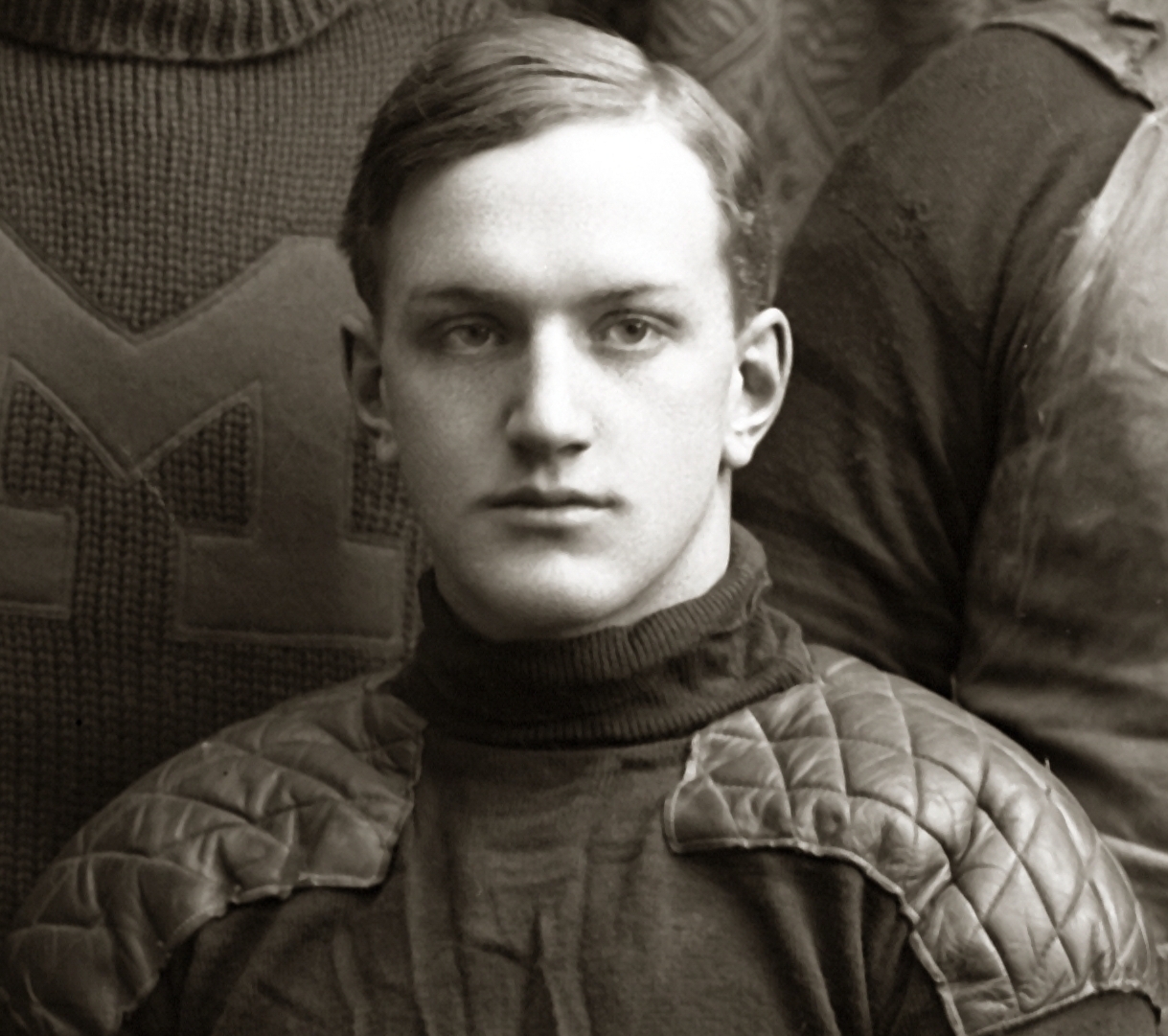
Neil Worthington Snow (November 10, 1879 – January 22, 1914) was an American athlete. He competed in American football, baseball, and track and field at the University of Michigan from 1898 to 1902. He was selected as a first-team All-American football player in 1901 and the MVP of the 1902 Rose Bowl, a game in which he scored five touchdowns. He was posthumously inducted into the College Football Hall of Fame in 1960.
Snow was born into a wealthy family in Detroit, and attended local Central High School. While in high school, Snow was an exceptional bowler, competing in the Peninsular and Junior leagues and leading his league in average one years. He was also a boxer of "considerable prowess".
At the University of Michigan, Snow was the captain of the football, baseball and track teams, and had the distinction of winning more varsity letters than any other man — four in baseball, four in football and three in track. He stood 5 feet 8 inches and weighed 190 pounds. At least one 1905 newspaper account reported that he also lettered in tennis. Various reports differ as to whether he received 10, 11, or 12 varsity letters at Michigan.
While at Michigan, Snow was also a mandolin player of "great talent," and was a member of the mandolin, guitar and banjo club. He was also regarded as "one of the best students in the university." In January 1902, the Detroit Free Press opined: "There is no student in the country who is more entitled to the distinction of being an ideal collegian than Neil Snow."
Snow played four seasons for the Michigan Wolverines football team from 1898 to 1901. As a freshman, he started all ten games at the end position. The 1898 team went 10–0 and won Michigan's first Western Conference football championship, finishing the season with a 12–11 win over the University of Chicago that inspired Louis Elbel to write The Victors, Michigan's fight song. Elbel's lyric, "Champions of the West", refers to Michigan's having won the Western Conference championship for the first time in the school's history.
In 1899, Snow started seven games at right end. In December 1899, he was elected by his teammates to be captain of Michigan's 1900 football team.
As the junior team captain in 1900, he started nine games at right end and led Michigan to a 7-2-1 record. In December 1900, Snow was defeated in his bid for re-election as captain of the football team by a vote of 15 to 7.
Snow's fame grew as a result of his role on the 1901 Michigan Wolverines football team, considered by some the greatest Michigan football team of all time. In Fielding H. Yost's first year as coach, Yost switched Snow to the fullback position where he started all 11 games. Yost played Snow at fullback on offense but at end on defense. Yost later compared Snow to Jim Thorpe for his athletic versatility and opined, "I don't think I have ever seen a better end than he was." Grantland Rice also compared Snow to Thorpe for his talent in football, baseball, and track, and opined that Thorpe was "nothing like Snow's equal on the ballfield."
Hub AI
Neil Snow AI simulator
(@Neil Snow_simulator)
Neil Snow
Neil Worthington Snow (November 10, 1879 – January 22, 1914) was an American athlete. He competed in American football, baseball, and track and field at the University of Michigan from 1898 to 1902. He was selected as a first-team All-American football player in 1901 and the MVP of the 1902 Rose Bowl, a game in which he scored five touchdowns. He was posthumously inducted into the College Football Hall of Fame in 1960.
Snow was born into a wealthy family in Detroit, and attended local Central High School. While in high school, Snow was an exceptional bowler, competing in the Peninsular and Junior leagues and leading his league in average one years. He was also a boxer of "considerable prowess".
At the University of Michigan, Snow was the captain of the football, baseball and track teams, and had the distinction of winning more varsity letters than any other man — four in baseball, four in football and three in track. He stood 5 feet 8 inches and weighed 190 pounds. At least one 1905 newspaper account reported that he also lettered in tennis. Various reports differ as to whether he received 10, 11, or 12 varsity letters at Michigan.
While at Michigan, Snow was also a mandolin player of "great talent," and was a member of the mandolin, guitar and banjo club. He was also regarded as "one of the best students in the university." In January 1902, the Detroit Free Press opined: "There is no student in the country who is more entitled to the distinction of being an ideal collegian than Neil Snow."
Snow played four seasons for the Michigan Wolverines football team from 1898 to 1901. As a freshman, he started all ten games at the end position. The 1898 team went 10–0 and won Michigan's first Western Conference football championship, finishing the season with a 12–11 win over the University of Chicago that inspired Louis Elbel to write The Victors, Michigan's fight song. Elbel's lyric, "Champions of the West", refers to Michigan's having won the Western Conference championship for the first time in the school's history.
In 1899, Snow started seven games at right end. In December 1899, he was elected by his teammates to be captain of Michigan's 1900 football team.
As the junior team captain in 1900, he started nine games at right end and led Michigan to a 7-2-1 record. In December 1900, Snow was defeated in his bid for re-election as captain of the football team by a vote of 15 to 7.
Snow's fame grew as a result of his role on the 1901 Michigan Wolverines football team, considered by some the greatest Michigan football team of all time. In Fielding H. Yost's first year as coach, Yost switched Snow to the fullback position where he started all 11 games. Yost played Snow at fullback on offense but at end on defense. Yost later compared Snow to Jim Thorpe for his athletic versatility and opined, "I don't think I have ever seen a better end than he was." Grantland Rice also compared Snow to Thorpe for his talent in football, baseball, and track, and opined that Thorpe was "nothing like Snow's equal on the ballfield."