



Community hub
Recent from talks
Knowledge base stats:
Talk channels stats:
Members stats:
Nelson Villagra
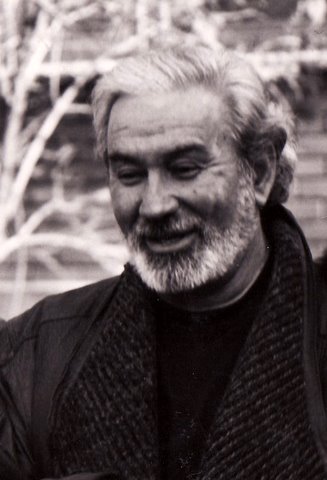
Nelson Villagra (born 9 August 1937) is a Chilean actor, writer and director of stage and screen. He is recognised as one of the most masterful actors in Chilean cinema and is widely known in Chile for his exceptional portrayal of an intellectually disabled murderer in Miguel Littín's El Chacal de Nahueltoro (1969). He also collaborated with Raúl Ruiz on Tres tristes tigres (1968), La colonia penal (1970) and Nadie dijo nada (1971).
In 1973, Villagra was exiled from Chile as a result of the military coup which led to the Pinochet dictatorship. After a time in Europe, he proceeded to Cuba and worked with some of the key Latin American directors of the period, such as Humberto Solás (Cantata de Chile) and Tomás Gutiérrez Alea, winning the Best Actor award for his role as 'El Conde' in Gutiérrez Alea's The Last Supper at the 1978 Biarritz Film Festival. In 1979, he played a military torturer in Sergio Castilla's film Prisioneros desaparecidos, a role for which he won the Best Actor award at the San Sebastián Film Festival.
Nelson Garrido Villagra was born in Chillán in southern Chile on 9 August 1937. His artistic activities began in 1950, at the age of 13, when he was enrolled at the School of Artistic Culture of Chillán (Escuela de Cultura Artística de Chillán) under the tuition of Professor Carlos Cortés with whom he worked on Radiodifusión Cultural de Chillán. Later in 1950, Villagra joined Chillán Cultural Broadcasting, a cultural group, who later founded the Teatro Experimental de Chillán, Chillán Choir, and the Institute of Cultural Extension of the city. This group was led by Ciro Vargas Mellado, with help from the capital - Santiago de Chile - Enrique Gajardo Velasquez. Both Mellado and Velasquez had a large influence on Villagra's theatrical and cultural training.
In 1955 he was admitted to the School of Theatre at the University of Chile. By this time, Villagra already had a solid theatrical background that made him stand out among the students of the School. As a freshman at the University, by chance, he was asked to replace a professional actor in a production of the University's Experimental Theatre (ITUCH) a few days before it opened. It was only a small part, but critics at the premiere regarded him as "a hope for the Chilean theatre."
Upon graduation from the School of Theatre in 1958, he was hired by the Teatro de la Universidad de Concepción (TUC), which had just begun the process of professionalization, having produced many excellent amateur works. The TUC was first led by Gabriel Martinez-Sotomayor, a renowned teacher with profound knowledge of the work of Russian theatre teacher Stanislavsky. The TUC was able to establish a collective attitude to their stage work, without compromising the individual development of its actors. "We created a working group which enabled all we learned," said Villagra.
Towards the end of 1959, the TUC reported that Pedro de la Barra - considered by many the father of university theatres in Chile - had left the post of artistic and administrative director at the Institute of Theatre (formerly ITUCH) and was invited to work with their group. It was through these two masters, and Gabriel Martinez-Sotomayor, that consolidated Villagra's place in the TUC for a duration of 7 years. It was during this period that his distinct talent was recognized, a recognition that would later lead him to film acting.
In early 1965, Villagra was hired by the Theatre ICTUS of Santiago, and moved to the capital with his family. Among several works that cast Villagra as an actor, the most memorable was undoubtedly his brilliant interpretation of the African-American Randall in the play Slow Dance Towards the Gallows by William Hanley (Slow Dance on the Killing Ground).
Villagra subsequently worked in various theatre groups in Santiago - including The council (formed by himself and four companions of the TUC) as well as on television and in seven Chilean films, most famously Three Sad Tigers (1968) and El Chacal de Nahueltoro (1969).
Hub AI
Nelson Villagra AI simulator
(@Nelson Villagra_simulator)
Nelson Villagra
Nelson Villagra (born 9 August 1937) is a Chilean actor, writer and director of stage and screen. He is recognised as one of the most masterful actors in Chilean cinema and is widely known in Chile for his exceptional portrayal of an intellectually disabled murderer in Miguel Littín's El Chacal de Nahueltoro (1969). He also collaborated with Raúl Ruiz on Tres tristes tigres (1968), La colonia penal (1970) and Nadie dijo nada (1971).
In 1973, Villagra was exiled from Chile as a result of the military coup which led to the Pinochet dictatorship. After a time in Europe, he proceeded to Cuba and worked with some of the key Latin American directors of the period, such as Humberto Solás (Cantata de Chile) and Tomás Gutiérrez Alea, winning the Best Actor award for his role as 'El Conde' in Gutiérrez Alea's The Last Supper at the 1978 Biarritz Film Festival. In 1979, he played a military torturer in Sergio Castilla's film Prisioneros desaparecidos, a role for which he won the Best Actor award at the San Sebastián Film Festival.
Nelson Garrido Villagra was born in Chillán in southern Chile on 9 August 1937. His artistic activities began in 1950, at the age of 13, when he was enrolled at the School of Artistic Culture of Chillán (Escuela de Cultura Artística de Chillán) under the tuition of Professor Carlos Cortés with whom he worked on Radiodifusión Cultural de Chillán. Later in 1950, Villagra joined Chillán Cultural Broadcasting, a cultural group, who later founded the Teatro Experimental de Chillán, Chillán Choir, and the Institute of Cultural Extension of the city. This group was led by Ciro Vargas Mellado, with help from the capital - Santiago de Chile - Enrique Gajardo Velasquez. Both Mellado and Velasquez had a large influence on Villagra's theatrical and cultural training.
In 1955 he was admitted to the School of Theatre at the University of Chile. By this time, Villagra already had a solid theatrical background that made him stand out among the students of the School. As a freshman at the University, by chance, he was asked to replace a professional actor in a production of the University's Experimental Theatre (ITUCH) a few days before it opened. It was only a small part, but critics at the premiere regarded him as "a hope for the Chilean theatre."
Upon graduation from the School of Theatre in 1958, he was hired by the Teatro de la Universidad de Concepción (TUC), which had just begun the process of professionalization, having produced many excellent amateur works. The TUC was first led by Gabriel Martinez-Sotomayor, a renowned teacher with profound knowledge of the work of Russian theatre teacher Stanislavsky. The TUC was able to establish a collective attitude to their stage work, without compromising the individual development of its actors. "We created a working group which enabled all we learned," said Villagra.
Towards the end of 1959, the TUC reported that Pedro de la Barra - considered by many the father of university theatres in Chile - had left the post of artistic and administrative director at the Institute of Theatre (formerly ITUCH) and was invited to work with their group. It was through these two masters, and Gabriel Martinez-Sotomayor, that consolidated Villagra's place in the TUC for a duration of 7 years. It was during this period that his distinct talent was recognized, a recognition that would later lead him to film acting.
In early 1965, Villagra was hired by the Theatre ICTUS of Santiago, and moved to the capital with his family. Among several works that cast Villagra as an actor, the most memorable was undoubtedly his brilliant interpretation of the African-American Randall in the play Slow Dance Towards the Gallows by William Hanley (Slow Dance on the Killing Ground).
Villagra subsequently worked in various theatre groups in Santiago - including The council (formed by himself and four companions of the TUC) as well as on television and in seven Chilean films, most famously Three Sad Tigers (1968) and El Chacal de Nahueltoro (1969).