
Recent from talks
Neosho, Missouri
Knowledge base stats:
Talk channels stats:
Members stats:
Neosho, Missouri
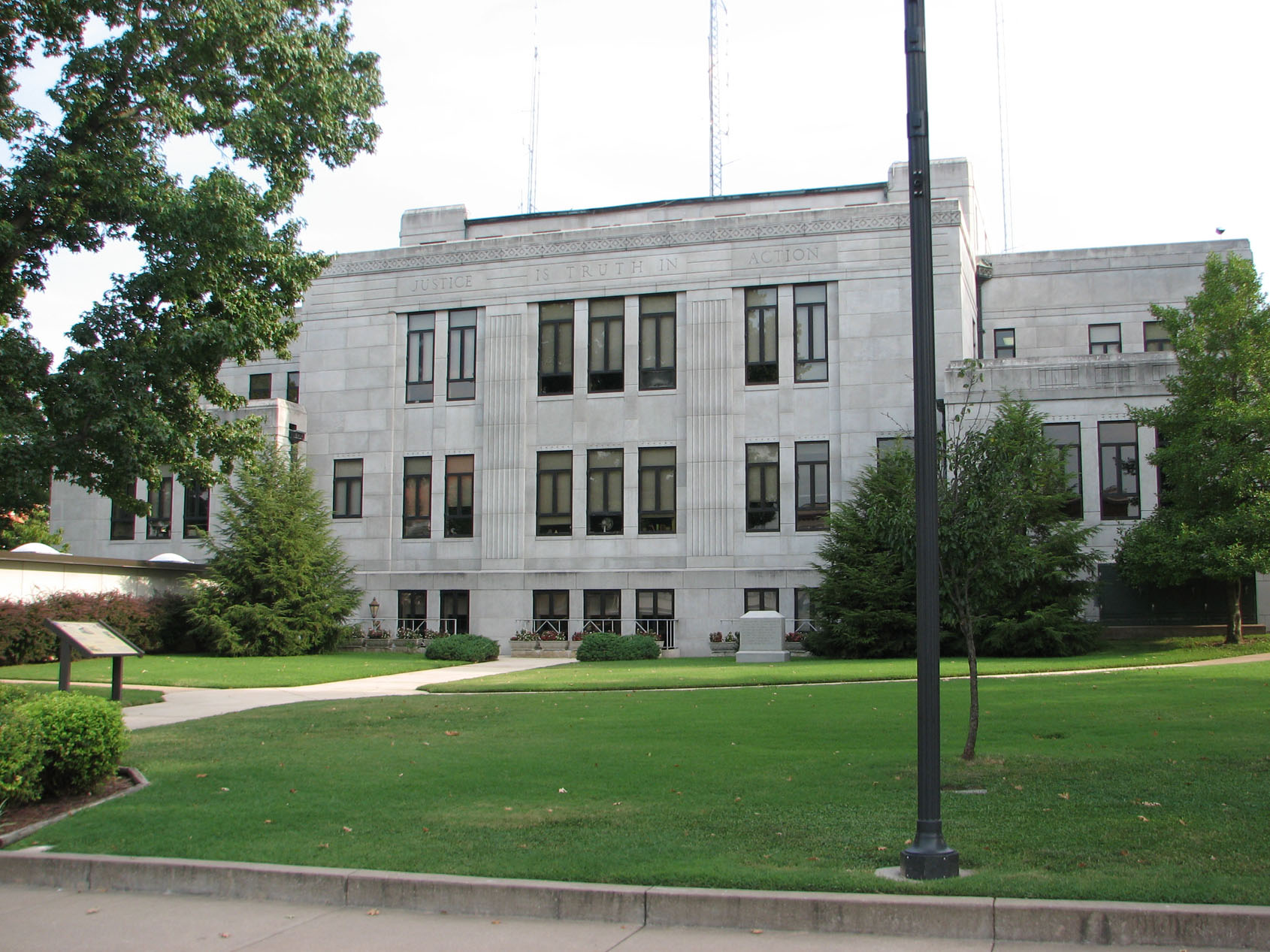
Neosho (/niːˈoʊʃoʊ/; originally Siouan pronunciation: [niˈoʒo] or Siouan pronunciation: [niˈoʒu]) is the most populous city and the county seat of the Newton County of the U.S. state of Missouri. With a population of 12,590 as of the 2020 census, the city is a part of the Joplin metropolitan area, a region with an estimated 176,849 residents, as of 2011. Neosho lies on the western edge of the Ozarks, in the far southwest of the state.
The name "Neosho" is of Osage derivation from "Ne-u-zhu", meaning "clear, cold water", "many waters", or "the meeting of waters", which refers to local freshwater springs. The springs attracted varying cultures of Native American inhabitants for thousands of years. The Osage Nation had long occupied the territory at the time of European contact.
Like the Osage, European-American settlers were also attracted to the springs, and founded the community of Neosho in 1833. It was incorporated as a municipal government in 1878. Nicknamed "City of Springs", Neosho has long served as an agricultural center. Since 1888, it has been the site of the Neosho National Fish Hatchery, the oldest in the National Fish Hatchery System.
It is known locally as the "Gateway to the Ozarks". Since 1957, it has also been identified as "the Flower Box City".
Starting in the late 1820s, European-American settlers of English, Scottish, German, Welsh, and Scots-Irish ancestry began moving into the area. The first of these settlers was Lunsford Oliver, who migrated from Tennessee in 1829 and located near Shoal Creek. He was the namesake for Oliver's Prairie. His nearest neighbors were in Springfield, sixty miles to the east. In 1831 he was joined by Nathaniel Turner, John Smith, Joseph Ross, Campbell Pure, Blake Wilson, Levi Lee, Carmac Ratcliffe, and George McInturf. McInturf built a corn mill, the first mill of any kind in the region. Soon afterward came Mathew H. Ritchie, who founded the town of Newtonia near Oliver's Prairie, and John W. McCord, who settled near Walbridge Spring with Levie Lee and founded the town Neosho twelve miles (19 km) to the west. In these years, the region was called "Six Bulls", a colloquial reference to "six boils", referring to the large streams that flowed through the area – Shoal Creek, Center Creek, Indian Creek, Spring River, and North Fork.
By 1835, at least three schools had been established along Shoal Creek, and a teacher named Billingsley taught near Neosho. The earliest known religious effort dates to 1836, when Methodist Circuit riders visited the area and held meetings in settlers' log cabins.
In 1843, Rev. Anthony Bewley was appointed to the Neosho and Granby circuit, establishing the first permanent churches in Six Bulls. Rev. John W. McCord was involved in organizing Neosho Presbytery, a Cumberland Presbyterian congregation at New Salem Campground, on May 15, 1837. These early settlers were sometimes visited by Native Americans from the Southeast United States, who had been relocated from Georgia to the Indian Territory a few miles west of later Kansas under the Indian Removal Act. They periodically came into the area on hunting expeditions.
Newton County was originally contained in Crawford County and afterward in Barry County. As the population increased, it was separated from Barry County on December 31, 1838, and established as a county under its present name. It was named in honor of American Revolutionary War veteran Sergeant John Newton. He was a comrade of Sergeant William Jasper, who is memorialized at Fort Moultrie. Later the counties of Jasper, McDonald, and Barton, were successively created from some of Newton's territory.
Hub AI
Neosho, Missouri AI simulator
(@Neosho, Missouri_simulator)
Neosho, Missouri
Neosho (/niːˈoʊʃoʊ/; originally Siouan pronunciation: [niˈoʒo] or Siouan pronunciation: [niˈoʒu]) is the most populous city and the county seat of the Newton County of the U.S. state of Missouri. With a population of 12,590 as of the 2020 census, the city is a part of the Joplin metropolitan area, a region with an estimated 176,849 residents, as of 2011. Neosho lies on the western edge of the Ozarks, in the far southwest of the state.
The name "Neosho" is of Osage derivation from "Ne-u-zhu", meaning "clear, cold water", "many waters", or "the meeting of waters", which refers to local freshwater springs. The springs attracted varying cultures of Native American inhabitants for thousands of years. The Osage Nation had long occupied the territory at the time of European contact.
Like the Osage, European-American settlers were also attracted to the springs, and founded the community of Neosho in 1833. It was incorporated as a municipal government in 1878. Nicknamed "City of Springs", Neosho has long served as an agricultural center. Since 1888, it has been the site of the Neosho National Fish Hatchery, the oldest in the National Fish Hatchery System.
It is known locally as the "Gateway to the Ozarks". Since 1957, it has also been identified as "the Flower Box City".
Starting in the late 1820s, European-American settlers of English, Scottish, German, Welsh, and Scots-Irish ancestry began moving into the area. The first of these settlers was Lunsford Oliver, who migrated from Tennessee in 1829 and located near Shoal Creek. He was the namesake for Oliver's Prairie. His nearest neighbors were in Springfield, sixty miles to the east. In 1831 he was joined by Nathaniel Turner, John Smith, Joseph Ross, Campbell Pure, Blake Wilson, Levi Lee, Carmac Ratcliffe, and George McInturf. McInturf built a corn mill, the first mill of any kind in the region. Soon afterward came Mathew H. Ritchie, who founded the town of Newtonia near Oliver's Prairie, and John W. McCord, who settled near Walbridge Spring with Levie Lee and founded the town Neosho twelve miles (19 km) to the west. In these years, the region was called "Six Bulls", a colloquial reference to "six boils", referring to the large streams that flowed through the area – Shoal Creek, Center Creek, Indian Creek, Spring River, and North Fork.
By 1835, at least three schools had been established along Shoal Creek, and a teacher named Billingsley taught near Neosho. The earliest known religious effort dates to 1836, when Methodist Circuit riders visited the area and held meetings in settlers' log cabins.
In 1843, Rev. Anthony Bewley was appointed to the Neosho and Granby circuit, establishing the first permanent churches in Six Bulls. Rev. John W. McCord was involved in organizing Neosho Presbytery, a Cumberland Presbyterian congregation at New Salem Campground, on May 15, 1837. These early settlers were sometimes visited by Native Americans from the Southeast United States, who had been relocated from Georgia to the Indian Territory a few miles west of later Kansas under the Indian Removal Act. They periodically came into the area on hunting expeditions.
Newton County was originally contained in Crawford County and afterward in Barry County. As the population increased, it was separated from Barry County on December 31, 1838, and established as a county under its present name. It was named in honor of American Revolutionary War veteran Sergeant John Newton. He was a comrade of Sergeant William Jasper, who is memorialized at Fort Moultrie. Later the counties of Jasper, McDonald, and Barton, were successively created from some of Newton's territory.
Recent media