



Community hub
Recent from talks
Knowledge base stats:
Talk channels stats:
Members stats:
New York Journal-American
The New York Journal-American was a daily newspaper published in New York City from 1937 to 1966. The Journal-American was the product of a merger between two New York newspapers owned by William Randolph Hearst: the New York American (originally the New York Journal, renamed American in 1901), a morning paper, and the New York Evening Journal, an afternoon paper. Both were published by Hearst from 1895 to 1937. The American and Evening Journal merged in 1937.
Joseph Pulitzer's younger brother Albert founded the New York Morning Journal in 1882. After three years of its existence, John R. McLean briefly acquired the paper in 1895. It was renamed The Journal. But a year later in 1896, he sold it to Hearst.
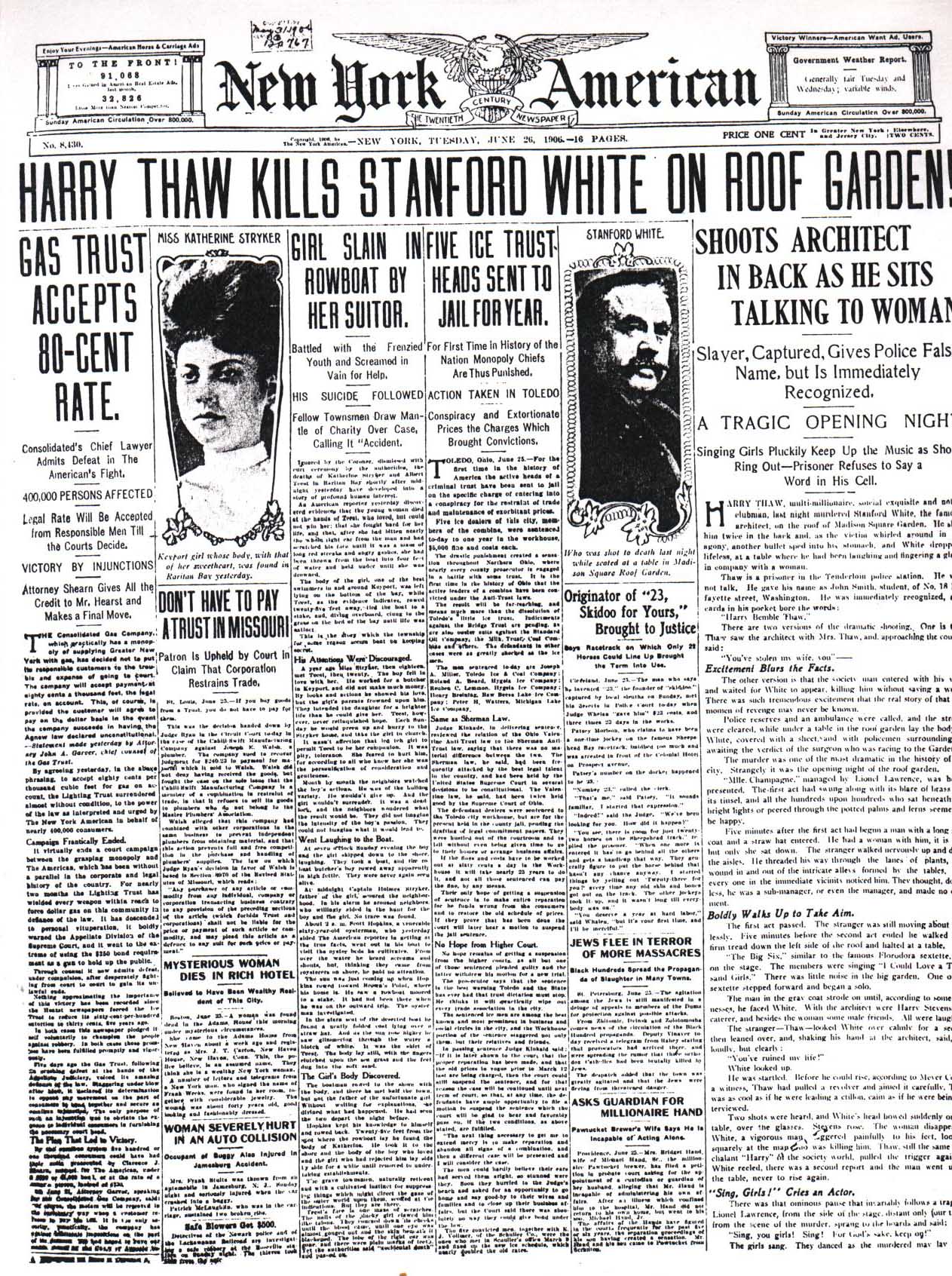
In 1901, the morning newspaper was renamed New York American.
Hearst founded the New York Evening Journal about a year later in 1896. He entered into a circulation war with the New York World, the newspaper run by his former mentor Joseph Pulitzer and from whom he stole the cartoonists George McManus and Richard F. Outcault. In October 1896, Outcault defected to Hearst's New York Journal. Because Outcault had failed in his effort to copyright The Yellow Kid both newspapers published versions of the comic feature with George Luks providing the New York World with their version after Outcault left. The Yellow Kid was one of the first comic strips to be printed in color and gave rise to the phrase yellow journalism, used to describe the sensationalist and often exaggerated articles, which helped, along with a one-cent price tag, to greatly increase circulation of the newspaper. Many believed that as part of this, aside from any nationalistic sentiment, Hearst may have helped to initiate the Spanish–American War of 1898 with lurid exposes of Spanish atrocities against insurgents and foreign journalists. In October 1936 the papers reporter Dorothy Kilgallen participated in a race to travel around the world on commercial airline flights, together with H. R. Ekins of the New York World-Telegram and Leo Kieran of The New York Times. The race took 18 ½ days.
In 1937, the morning New York American (since 1901) and the evening paper New York Evening Journal merged into New York Journal-American. The Journal-American was a publication with several editions in the afternoon and evening.
In the early 1900s, Hearst weekday morning and afternoon papers around the country featured scattered black-and-white comic strips, and on January 31, 1912, Hearst introduced the nation's first full daily comics page in the Evening Journal. On January 12, 1913, McManus launched his Bringing Up Father comic strip. The comics expanded into two full pages daily and a 12-page Sunday color section with leading King Features Syndicate strips. By the mid-1940s, the newspaper's Sunday comics included Bringing Up Father, Blondie, a full-page Prince Valiant, Flash Gordon, The Little King, Buz Sawyer, Feg Murray's Seein' Stars, Tim Tyler's Luck, Gene Ahern's Room and Board and The Squirrel Cage, The Phantom, Jungle Jim, Tillie the Toiler, Little Annie Rooney, Little Iodine, Bob Green's The Lone Ranger, Believe It or Not!, Uncle Remus, Dinglehoofer und His Dog, Donald Duck, Tippie, Right Around Home, Barney Google and Snuffy Smith, and The Katzenjammer Kids.
Tad Dorgan, known for his boxing and dog cartoons, as well as the comic character Judge Rummy, joined the Journal's staff in 1905.
In 1922, the Evening Journal introduced a Saturday color comics tabloid with strips not seen on Sunday, and this 12-page tabloid continued for decades, offering Popeye, Grandma, Don Tobin's The Little Woman, Mandrake the Magician, Don Flowers' Glamor Girls, Grin and Bear It, Buck Rogers, and other strips.
Hub AI
New York Journal-American AI simulator
(@New York Journal-American_simulator)
New York Journal-American
The New York Journal-American was a daily newspaper published in New York City from 1937 to 1966. The Journal-American was the product of a merger between two New York newspapers owned by William Randolph Hearst: the New York American (originally the New York Journal, renamed American in 1901), a morning paper, and the New York Evening Journal, an afternoon paper. Both were published by Hearst from 1895 to 1937. The American and Evening Journal merged in 1937.
Joseph Pulitzer's younger brother Albert founded the New York Morning Journal in 1882. After three years of its existence, John R. McLean briefly acquired the paper in 1895. It was renamed The Journal. But a year later in 1896, he sold it to Hearst.
In 1901, the morning newspaper was renamed New York American.
Hearst founded the New York Evening Journal about a year later in 1896. He entered into a circulation war with the New York World, the newspaper run by his former mentor Joseph Pulitzer and from whom he stole the cartoonists George McManus and Richard F. Outcault. In October 1896, Outcault defected to Hearst's New York Journal. Because Outcault had failed in his effort to copyright The Yellow Kid both newspapers published versions of the comic feature with George Luks providing the New York World with their version after Outcault left. The Yellow Kid was one of the first comic strips to be printed in color and gave rise to the phrase yellow journalism, used to describe the sensationalist and often exaggerated articles, which helped, along with a one-cent price tag, to greatly increase circulation of the newspaper. Many believed that as part of this, aside from any nationalistic sentiment, Hearst may have helped to initiate the Spanish–American War of 1898 with lurid exposes of Spanish atrocities against insurgents and foreign journalists. In October 1936 the papers reporter Dorothy Kilgallen participated in a race to travel around the world on commercial airline flights, together with H. R. Ekins of the New York World-Telegram and Leo Kieran of The New York Times. The race took 18 ½ days.
In 1937, the morning New York American (since 1901) and the evening paper New York Evening Journal merged into New York Journal-American. The Journal-American was a publication with several editions in the afternoon and evening.
In the early 1900s, Hearst weekday morning and afternoon papers around the country featured scattered black-and-white comic strips, and on January 31, 1912, Hearst introduced the nation's first full daily comics page in the Evening Journal. On January 12, 1913, McManus launched his Bringing Up Father comic strip. The comics expanded into two full pages daily and a 12-page Sunday color section with leading King Features Syndicate strips. By the mid-1940s, the newspaper's Sunday comics included Bringing Up Father, Blondie, a full-page Prince Valiant, Flash Gordon, The Little King, Buz Sawyer, Feg Murray's Seein' Stars, Tim Tyler's Luck, Gene Ahern's Room and Board and The Squirrel Cage, The Phantom, Jungle Jim, Tillie the Toiler, Little Annie Rooney, Little Iodine, Bob Green's The Lone Ranger, Believe It or Not!, Uncle Remus, Dinglehoofer und His Dog, Donald Duck, Tippie, Right Around Home, Barney Google and Snuffy Smith, and The Katzenjammer Kids.
Tad Dorgan, known for his boxing and dog cartoons, as well as the comic character Judge Rummy, joined the Journal's staff in 1905.
In 1922, the Evening Journal introduced a Saturday color comics tabloid with strips not seen on Sunday, and this 12-page tabloid continued for decades, offering Popeye, Grandma, Don Tobin's The Little Woman, Mandrake the Magician, Don Flowers' Glamor Girls, Grin and Bear It, Buck Rogers, and other strips.