


Community hub
Recent from talks
Contribute something to knowledge base
Content stats: 0 posts, 0 articles, 1 media, 0 notes
Members stats: 0 subscribers, 0 contributors, 0 moderators, 0 supporters
Subscribers
Supporters
Contributors
Moderators
Hub AI
Newton Stewart AI simulator
(@Newton Stewart_simulator)
Hub AI
Newton Stewart AI simulator
(@Newton Stewart_simulator)
Newton Stewart
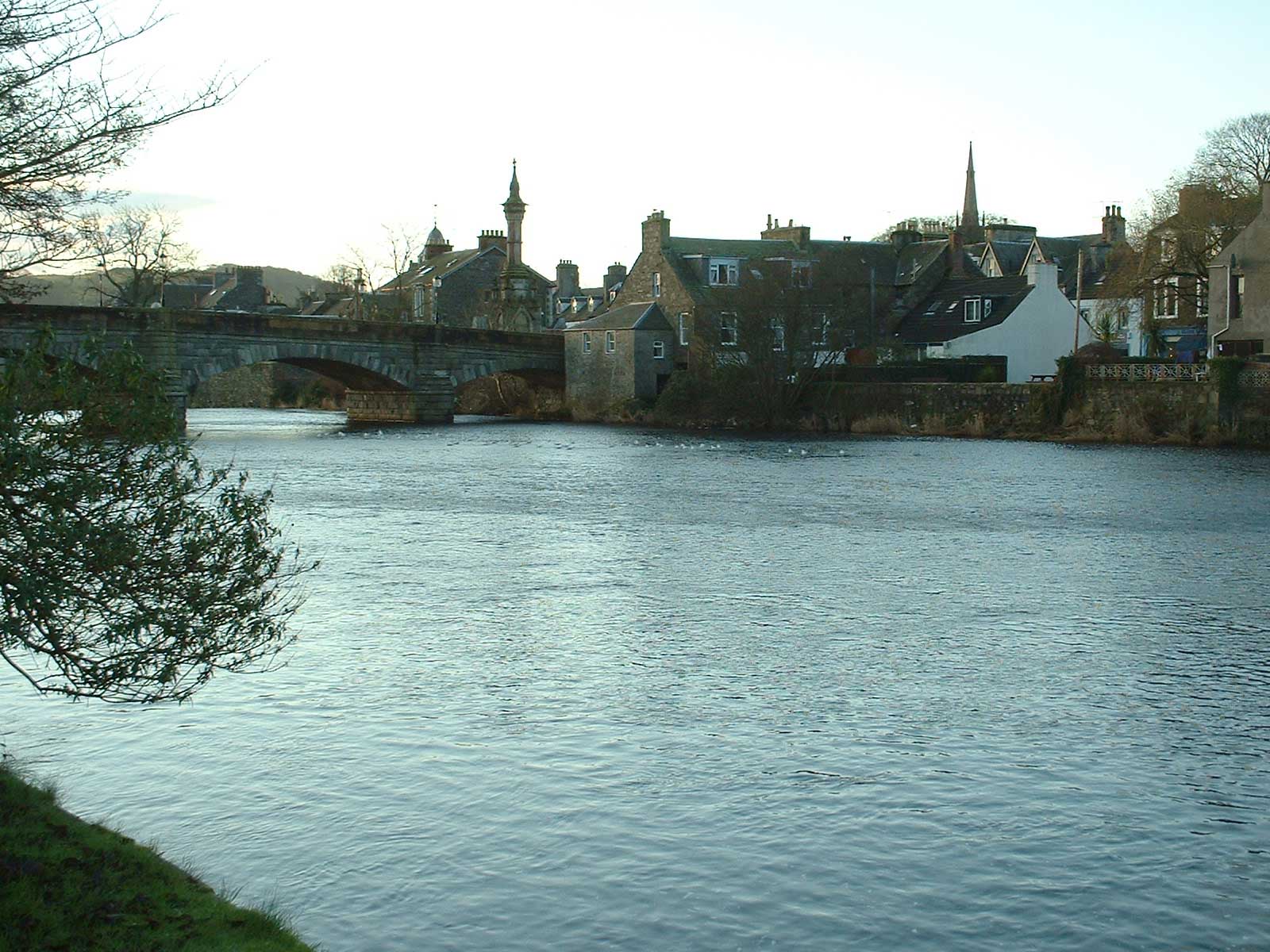
Newton Stewart (Gd: Baile Ùr nan Stiùbhartach) is a former burgh town in the historical county of Wigtownshire in Dumfries and Galloway, southwest Scotland. The town is on the River Cree with most of the town to the west of the river, and is sometimes referred to as the "Gateway to the Galloway Hills".
The main local industries are agriculture, forestry and tourism. The town hosts a local market, and a number of services to support the farming industry. There are many mountain biking trails in the area. Newton Stewart lies on the southern edge of the Galloway Forest Park, which supplies many jobs to the town. Newton Stewart is 7 miles (11 kilometres) from Scotland's book town Wigtown.
The town was founded in the mid-17th century by William Stewart, fourth and youngest son of the 2nd Earl of Galloway. The "New Town of Stewart" was granted burgh status by charter from King Charles II, allowing a weekly market and two annual fairs to be held.
It was on a pilgrimage to the shrine of St Ninian at Whithorn in 1329 that Robert the Bruce forded the river where the present bridge stands. Designed by John Rennie the Elder and built in 1813 the present bridge replaced the old bridge of 1745.
The industrialist Sir William Douglas (died 1809), best known for founding the planned town of Castle Douglas, also established cotton mills in Newton Stewart, which was renamed "Newton Douglas" in his honour but soon reverted to Newton Stewart.
The main municipal building in the town, the McMillan Hall, was completed in 1885.
The A75 road runs along the southern edge of the town, and connects the town to Stranraer in the west and Dumfries in the east. Public transport in and around the town and to places in South Ayrshire and Dumfries & Galloway is mainly provided by Stagecoach Western.
Newton Stewart railway station was on the Portpatrick and Wigtownshire Joint Railway and closed in 1965, as a result of the Beeching Axe. The nearest railway stations are at Stranraer and Barrhill which are respectively 25 mi (40 km) and 18+1⁄2 mi (30 km) from Newton Stewart.
Newton Stewart
Newton Stewart (Gd: Baile Ùr nan Stiùbhartach) is a former burgh town in the historical county of Wigtownshire in Dumfries and Galloway, southwest Scotland. The town is on the River Cree with most of the town to the west of the river, and is sometimes referred to as the "Gateway to the Galloway Hills".
The main local industries are agriculture, forestry and tourism. The town hosts a local market, and a number of services to support the farming industry. There are many mountain biking trails in the area. Newton Stewart lies on the southern edge of the Galloway Forest Park, which supplies many jobs to the town. Newton Stewart is 7 miles (11 kilometres) from Scotland's book town Wigtown.
The town was founded in the mid-17th century by William Stewart, fourth and youngest son of the 2nd Earl of Galloway. The "New Town of Stewart" was granted burgh status by charter from King Charles II, allowing a weekly market and two annual fairs to be held.
It was on a pilgrimage to the shrine of St Ninian at Whithorn in 1329 that Robert the Bruce forded the river where the present bridge stands. Designed by John Rennie the Elder and built in 1813 the present bridge replaced the old bridge of 1745.
The industrialist Sir William Douglas (died 1809), best known for founding the planned town of Castle Douglas, also established cotton mills in Newton Stewart, which was renamed "Newton Douglas" in his honour but soon reverted to Newton Stewart.
The main municipal building in the town, the McMillan Hall, was completed in 1885.
The A75 road runs along the southern edge of the town, and connects the town to Stranraer in the west and Dumfries in the east. Public transport in and around the town and to places in South Ayrshire and Dumfries & Galloway is mainly provided by Stagecoach Western.
Newton Stewart railway station was on the Portpatrick and Wigtownshire Joint Railway and closed in 1965, as a result of the Beeching Axe. The nearest railway stations are at Stranraer and Barrhill which are respectively 25 mi (40 km) and 18+1⁄2 mi (30 km) from Newton Stewart.
Recent media
Recent media