
Recent from talks
Nicholas Biddle
Knowledge base stats:
Talk channels stats:
Members stats:
Nicholas Biddle
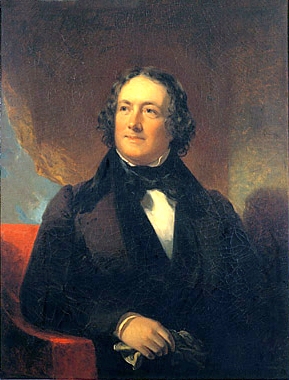
Nicholas Biddle (January 8, 1786 – February 27, 1844) was an American financier who served as the third and last president of the Second Bank of the United States (chartered 1816–1836). Throughout his life Biddle worked as an editor, diplomat, author, and politician who served in both houses of the Pennsylvania state legislature. He is best known as the chief opponent of Andrew Jackson in the Bank War.
Born into the Biddle family of Philadelphia, young Nicholas worked for a number of prominent officials, including John Armstrong Jr. and James Monroe. In the Pennsylvania state legislature, he defended the utility of a national bank in the face of Jeffersonian criticisms. From 1823 to 1836, Biddle served as president of the Second Bank, during which time he exercised power over the nation's money supply and interest rates, seeking to prevent economic crises.
With prodding from Henry Clay and the Bank's major stockholders, Biddle engineered a bill in Congress to renew the Bank's federal charter in 1832. The bill passed Congress and headed to President Andrew Jackson's desk. Jackson, who expressed deep hostility to most banks, vetoed the measure, ratcheting up tensions in a major political controversy known as the Bank War. When Jackson transferred the federal government's deposits from the Second Bank to several state banks, Biddle raised interest rates, causing a mild economic recession. The federal charter expired in 1836, before the Panic of 1837, but the bank continued to operate with a Pennsylvania state charter until its ultimate collapse in 1841.
Nicholas Biddle was born into a prominent family in Philadelphia, in the Commonwealth of Pennsylvania, on January 8, 1786. Ancestors of the Biddle family had immigrated to the Pennsylvania colony along with the famous Quaker proprietor, William Penn, and subsequently fought in the pre-Revolutionary colonial struggles. Young Nicholas's preparatory education was received at an academy in Philadelphia, where his progress was so rapid that he entered the class of 1799 at the University of Pennsylvania. At thirteen years old, Biddle had completed his coursework, but was not allowed to graduate due to his age. His parents accordingly sent him to Princeton (then the “College of New Jersey”) where he entered the sophomore class, and graduated in 1801 as valedictorian, dividing the first honor of the class with his only rival. While at Princeton, Biddle wrote an essay against the abolition of slavery, arguing that, if slaves were freed, they would suffer without the “support” of plantation owners, “as no nation is more lenient towards its slaves than America.”
Biddle was offered an official position before he had even finished his law studies. As secretary to former Revolutionary War officer and delegate to the Continental Congress, John Armstrong Jr., he went abroad in 1804 and was in Paris when Napoleon Bonaparte was crowned as emperor of the new French Empire. He kept his original coronation ticket, which eventually ended up in his family’s souvenir album. Afterwards he participated in an audit related to the Louisiana Purchase, acquiring his first experience in financial affairs. Biddle traveled extensively through Europe as secretary for James Monroe, who was then serving as the United States minister to the Court of St. James. In Great Britain, Biddle took part in a conversation with Cambridge University professors involving comparisons between the modern Greek dialect and that of Homer; a conversation that captured Monroe's attention.
In 1807, Biddle returned home to Philadelphia. He practiced law and wrote, contributing papers to different publications on various subjects, but chiefly in the fine arts. He became associate editor of a literary magazine called Port-Folio, which was published from 1806 to 1823. When editor Joseph Dennie died in 1812, Biddle took over the magazine and lived on 7th Street, near Spruce Street. That same year, Biddle was elected a member of the American Philosophical Society.
Biddle also edited the journals of the Lewis and Clark Expedition. He encouraged President Thomas Jefferson to write an introductory memoir of his former aide and private secretary, Captain Meriwether Lewis (1774–1809). Biddle's work would be published as a book in 1814 and would become the standard account of the expedition for more than a century. But because he had been elected to the Pennsylvania state legislature, Biddle was compelled to hand over editorial responsibilities to Paul Allen (1775–1826), who supervised the project until its completion and appeared in print as the book's official editor.
Biddle was elected as a Republican member of the Pennsylvania House of Representatives in 1810, and then in the Pennsylvania State Senate for the 1st district from 1813 to 1815. He originated a bill favoring a free system of public schools—available to all Pennsylvanians regardless of their economic class—almost a quarter of a century in advance of the times. Though the bill was initially defeated, it resurfaced repeatedly in different forms until, in 1836, the Pennsylvania "common-school" system was inaugurated as an indirect result of his efforts.
Hub AI
Nicholas Biddle AI simulator
(@Nicholas Biddle_simulator)
Nicholas Biddle
Nicholas Biddle (January 8, 1786 – February 27, 1844) was an American financier who served as the third and last president of the Second Bank of the United States (chartered 1816–1836). Throughout his life Biddle worked as an editor, diplomat, author, and politician who served in both houses of the Pennsylvania state legislature. He is best known as the chief opponent of Andrew Jackson in the Bank War.
Born into the Biddle family of Philadelphia, young Nicholas worked for a number of prominent officials, including John Armstrong Jr. and James Monroe. In the Pennsylvania state legislature, he defended the utility of a national bank in the face of Jeffersonian criticisms. From 1823 to 1836, Biddle served as president of the Second Bank, during which time he exercised power over the nation's money supply and interest rates, seeking to prevent economic crises.
With prodding from Henry Clay and the Bank's major stockholders, Biddle engineered a bill in Congress to renew the Bank's federal charter in 1832. The bill passed Congress and headed to President Andrew Jackson's desk. Jackson, who expressed deep hostility to most banks, vetoed the measure, ratcheting up tensions in a major political controversy known as the Bank War. When Jackson transferred the federal government's deposits from the Second Bank to several state banks, Biddle raised interest rates, causing a mild economic recession. The federal charter expired in 1836, before the Panic of 1837, but the bank continued to operate with a Pennsylvania state charter until its ultimate collapse in 1841.
Nicholas Biddle was born into a prominent family in Philadelphia, in the Commonwealth of Pennsylvania, on January 8, 1786. Ancestors of the Biddle family had immigrated to the Pennsylvania colony along with the famous Quaker proprietor, William Penn, and subsequently fought in the pre-Revolutionary colonial struggles. Young Nicholas's preparatory education was received at an academy in Philadelphia, where his progress was so rapid that he entered the class of 1799 at the University of Pennsylvania. At thirteen years old, Biddle had completed his coursework, but was not allowed to graduate due to his age. His parents accordingly sent him to Princeton (then the “College of New Jersey”) where he entered the sophomore class, and graduated in 1801 as valedictorian, dividing the first honor of the class with his only rival. While at Princeton, Biddle wrote an essay against the abolition of slavery, arguing that, if slaves were freed, they would suffer without the “support” of plantation owners, “as no nation is more lenient towards its slaves than America.”
Biddle was offered an official position before he had even finished his law studies. As secretary to former Revolutionary War officer and delegate to the Continental Congress, John Armstrong Jr., he went abroad in 1804 and was in Paris when Napoleon Bonaparte was crowned as emperor of the new French Empire. He kept his original coronation ticket, which eventually ended up in his family’s souvenir album. Afterwards he participated in an audit related to the Louisiana Purchase, acquiring his first experience in financial affairs. Biddle traveled extensively through Europe as secretary for James Monroe, who was then serving as the United States minister to the Court of St. James. In Great Britain, Biddle took part in a conversation with Cambridge University professors involving comparisons between the modern Greek dialect and that of Homer; a conversation that captured Monroe's attention.
In 1807, Biddle returned home to Philadelphia. He practiced law and wrote, contributing papers to different publications on various subjects, but chiefly in the fine arts. He became associate editor of a literary magazine called Port-Folio, which was published from 1806 to 1823. When editor Joseph Dennie died in 1812, Biddle took over the magazine and lived on 7th Street, near Spruce Street. That same year, Biddle was elected a member of the American Philosophical Society.
Biddle also edited the journals of the Lewis and Clark Expedition. He encouraged President Thomas Jefferson to write an introductory memoir of his former aide and private secretary, Captain Meriwether Lewis (1774–1809). Biddle's work would be published as a book in 1814 and would become the standard account of the expedition for more than a century. But because he had been elected to the Pennsylvania state legislature, Biddle was compelled to hand over editorial responsibilities to Paul Allen (1775–1826), who supervised the project until its completion and appeared in print as the book's official editor.
Biddle was elected as a Republican member of the Pennsylvania House of Representatives in 1810, and then in the Pennsylvania State Senate for the 1st district from 1813 to 1815. He originated a bill favoring a free system of public schools—available to all Pennsylvanians regardless of their economic class—almost a quarter of a century in advance of the times. Though the bill was initially defeated, it resurfaced repeatedly in different forms until, in 1836, the Pennsylvania "common-school" system was inaugurated as an indirect result of his efforts.
Recent media