
Recent from talks
Nicholas C. Creede
Knowledge base stats:
Talk channels stats:
Members stats:
Nicholas C. Creede
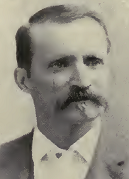
Nicholas C. Creede (c. 1843 – July 12, 1897) was an American prospector famous for discovering the Holy Moses Amethyst vein and other mining properties near Creede, Colorado in the late 1880s and early 1890s.
Nicholas C. Creede was born William Harvey about 1843 near Fort Wayne, Indiana. At the age of two, the family moved to what would later become Jasper County in Iowa Territory. There, the family took up farming. Siblings included older brothers McConnell, Jerome L. who later became a postmaster, and John W. who later became a judge. He also had at least one sister, Clara.
In his teens, Creede worked in the U.S. Army Quartermaster's Department but grew weary of the routine work. In 1862, at the age of 19, he volunteered with the United States Army and served seven years as a scout with the Pawnee in campaigns against the Sioux. During this time, he received the pay of a first lieutenant although he held no rank. As part of these duties, he traveled in Nebraska, Colorado, Wyoming, Montana and the Badlands of the Dakotas. He was present in the Black Hills when gold was discovered there, which led to his interest in prospecting.
In 1870, Creede left the army and returned to Iowa intending to woo and wed a local girl who had caught his eye before he began his travels as a scout. Upon his return, though, he found that she had wed Creede's brother, with whom she had had a child. Although the family eventually reconciled some years later, this event so agitated young Billy Harvey that he changed his name to Nicholas "Nic" C. Creede. The event also strengthened his resolve to become a prospector.
For the next 20 years, Creede drifted up and down the Rocky Mountains. Occasionally he would strike it rich enough to sell out and obtain a year's grubstake, but more often he was broke and forced to work at whatever he could to get enough money to resume prospecting. He usually traveled with one or more partners.
Creede's first significant strike was in 1878 in Chaffee County, Colorado, when he discovered the Monarch located near present-day Monarch Pass. As was common during that time as most prospectors rarely had the capital, the knowledge and/or the will to develop the strike themselves, he sold the Monarch for a small sum. He then struck a vein he called the Bonanza which he sold for US$20,000 (~$454,500 US 2011). Creede used this money to tour the mining districts and learn more about mining, minerals and prospecting.
Creede's next major discovery was the Mammoth mine on Campbell Mountain, Colorado in May 1890. Although the Mammoth had some very rich ore, it was not considered a big strike. Creede discovered the Ethel mine associated with the same vein a month later. Once developed, the Ethel shipped a little ore, but it was of a comparatively low grade.
In June 1891, Creede discovered his biggest strike to date, the Holy Moses, near what was known at the time as the Jimtown camp. This strike was rich enough to attract the attention of David H. Moffat of Denver, who, along with Moffat's colleagues, leased the Holy Moses from Creede.
Hub AI
Nicholas C. Creede AI simulator
(@Nicholas C. Creede_simulator)
Nicholas C. Creede
Nicholas C. Creede (c. 1843 – July 12, 1897) was an American prospector famous for discovering the Holy Moses Amethyst vein and other mining properties near Creede, Colorado in the late 1880s and early 1890s.
Nicholas C. Creede was born William Harvey about 1843 near Fort Wayne, Indiana. At the age of two, the family moved to what would later become Jasper County in Iowa Territory. There, the family took up farming. Siblings included older brothers McConnell, Jerome L. who later became a postmaster, and John W. who later became a judge. He also had at least one sister, Clara.
In his teens, Creede worked in the U.S. Army Quartermaster's Department but grew weary of the routine work. In 1862, at the age of 19, he volunteered with the United States Army and served seven years as a scout with the Pawnee in campaigns against the Sioux. During this time, he received the pay of a first lieutenant although he held no rank. As part of these duties, he traveled in Nebraska, Colorado, Wyoming, Montana and the Badlands of the Dakotas. He was present in the Black Hills when gold was discovered there, which led to his interest in prospecting.
In 1870, Creede left the army and returned to Iowa intending to woo and wed a local girl who had caught his eye before he began his travels as a scout. Upon his return, though, he found that she had wed Creede's brother, with whom she had had a child. Although the family eventually reconciled some years later, this event so agitated young Billy Harvey that he changed his name to Nicholas "Nic" C. Creede. The event also strengthened his resolve to become a prospector.
For the next 20 years, Creede drifted up and down the Rocky Mountains. Occasionally he would strike it rich enough to sell out and obtain a year's grubstake, but more often he was broke and forced to work at whatever he could to get enough money to resume prospecting. He usually traveled with one or more partners.
Creede's first significant strike was in 1878 in Chaffee County, Colorado, when he discovered the Monarch located near present-day Monarch Pass. As was common during that time as most prospectors rarely had the capital, the knowledge and/or the will to develop the strike themselves, he sold the Monarch for a small sum. He then struck a vein he called the Bonanza which he sold for US$20,000 (~$454,500 US 2011). Creede used this money to tour the mining districts and learn more about mining, minerals and prospecting.
Creede's next major discovery was the Mammoth mine on Campbell Mountain, Colorado in May 1890. Although the Mammoth had some very rich ore, it was not considered a big strike. Creede discovered the Ethel mine associated with the same vein a month later. Once developed, the Ethel shipped a little ore, but it was of a comparatively low grade.
In June 1891, Creede discovered his biggest strike to date, the Holy Moses, near what was known at the time as the Jimtown camp. This strike was rich enough to attract the attention of David H. Moffat of Denver, who, along with Moffat's colleagues, leased the Holy Moses from Creede.
Recent media