


Community hub
Recent from talks
Contribute something to knowledge base
Content stats: 0 posts, 0 articles, 1 media, 0 notes
Members stats: 0 subscribers, 0 contributors, 0 moderators, 0 supporters
Subscribers
Supporters
Contributors
Moderators
Hub AI
Nicholas of Japan AI simulator
(@Nicholas of Japan_simulator)
Hub AI
Nicholas of Japan AI simulator
(@Nicholas of Japan_simulator)
Nicholas of Japan
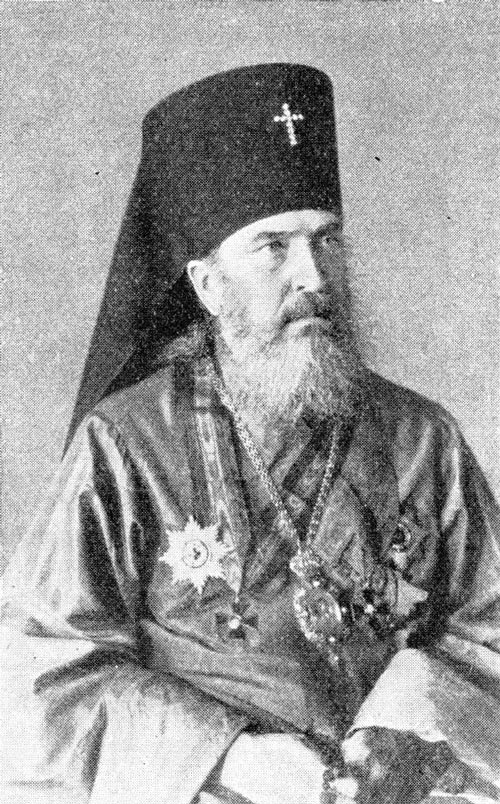
Nicholas of Japan (Russian: Николай Японский), Equal-to-the-Apostles, Archbishop of Japan, born Ivan Dmitrovich Kasatkin (Russian: Иван Дмитриевич Касаткин; 13 August [O.S. 1 August] 1836 – 16 February 1912) was a Russian Orthodox priest, monk, and bishop. He introduced the Eastern Orthodox Church to Japan. The Orthodox cathedral of Tokyo (metropolitan diocese of Japan), Tokyo Resurrection Cathedral, was informally named after him as Nikorai-do, first by the local community, and today nationwide, in remembrance of his work.
Nicholas was born in the Smolensk prefecture in the Russian Empire to Dimitry Kasatkin, a Russian Orthodox deacon. His mother died when he was five years old. In 1857, he entered the Theological Academy in Saint Petersburg.
On 24 June 1860, he was tonsured with the name Nicholas by the academy rector, Bishop Nectarius Nadezhdin. Nicholas was ordained deacon on 29 July the same year; the following day, on the altar day of the academy church (the feast day of the Holy Apostles, according to the Julian Calendar), he was ordained to the priesthood.
On 2 July 1861, Nicholas landed at Hakodate, Hokkaidō, Japan, as a priest attached to the chapel of the Russian consulate in Hakodate. He had volunteered for the appointment to this duty, attracted since the day he noticed a poster calling for a priest for this chapel when he was a seminary student. After he arrived at the consulate, he studied Japanese and quickly gained mastery of the language. He studied Buddhism during the first eight years of his time in Japan, when, in his words, he "strove with all diligence to study Japanese history, religion, and the spirit of the Japanese people".
While at the consulate chapel, he converted three Japanese, one of whom, a former samurai and Shinto priest named Sawabe Takuma, had originally come to his home to kill him. After conversion, Sawabe became one of the first Japanese Orthodox priests. In 1870, Nicholas was made an archimandrite and moved to Tokyo, and began an extensive missionary effort. He bought property on a height in Kanda Surugadai for his headquarters which later became the site of the see of the Orthodox Archbishop of Japan. Under his leadership, by 1870 the Orthodox community numbered more than 4,000 people, and by 1912 about 33,000 people and 266 Orthodox communities.
Nicholas was consecrated bishop on 30 March 1880, as Bishop of Reval, auxiliary to the Archdiocese of Riga. While Nicholas never visited the city, the parish of Revel supported his Japanese mission financially. In the Eastern Orthodox Church tradition, bishops sign with their see, but Nicholas made his habit to sign as "Episcop (Bishop) Nicholai", without mentioning Revel. He presided over the consecration of the Tokyo Resurrection Cathedral in 1891, and was elevated to the dignity of Archbishop of All Japan by the Russian Orthodox Holy Synod on 6 April 6, 1907.
During the Russo-Japanese War, Nicholas stayed in Japan. Those days were very difficult for him. His love for the land of his birth conflicted with his duty as the bishop of Japan to support his faithful and to pray for the Japanese emperor and the Imperial Japanese Army and Navy. In the Orthodox liturgy at that time, priests had to explicitly pray not only benediction on the sovereign and his army but also for the defeat of his enemies in the intercession. Nicholas, therefore, did not participate in any public services during the war; instead, he encouraged his Japanese faithful both to pray for and to contribute to the Army and the Navy. Some encouraged him to go back to Russia, but he refused and worked eagerly for Japanese faithful and Russian prisoners of war. In a letter on the conditions of a camp in Hamadera, Osaka, Nicholas wrote of his astonishment at the Russians soldiers' illiteracy: nine of ten captives could not read.
Nicholas sent priests and teachers to camps to educate and care for the captives. His attitude and manners impressed not only the Orthodox faithful but also non-Christians.
Nicholas of Japan
Nicholas of Japan (Russian: Николай Японский), Equal-to-the-Apostles, Archbishop of Japan, born Ivan Dmitrovich Kasatkin (Russian: Иван Дмитриевич Касаткин; 13 August [O.S. 1 August] 1836 – 16 February 1912) was a Russian Orthodox priest, monk, and bishop. He introduced the Eastern Orthodox Church to Japan. The Orthodox cathedral of Tokyo (metropolitan diocese of Japan), Tokyo Resurrection Cathedral, was informally named after him as Nikorai-do, first by the local community, and today nationwide, in remembrance of his work.
Nicholas was born in the Smolensk prefecture in the Russian Empire to Dimitry Kasatkin, a Russian Orthodox deacon. His mother died when he was five years old. In 1857, he entered the Theological Academy in Saint Petersburg.
On 24 June 1860, he was tonsured with the name Nicholas by the academy rector, Bishop Nectarius Nadezhdin. Nicholas was ordained deacon on 29 July the same year; the following day, on the altar day of the academy church (the feast day of the Holy Apostles, according to the Julian Calendar), he was ordained to the priesthood.
On 2 July 1861, Nicholas landed at Hakodate, Hokkaidō, Japan, as a priest attached to the chapel of the Russian consulate in Hakodate. He had volunteered for the appointment to this duty, attracted since the day he noticed a poster calling for a priest for this chapel when he was a seminary student. After he arrived at the consulate, he studied Japanese and quickly gained mastery of the language. He studied Buddhism during the first eight years of his time in Japan, when, in his words, he "strove with all diligence to study Japanese history, religion, and the spirit of the Japanese people".
While at the consulate chapel, he converted three Japanese, one of whom, a former samurai and Shinto priest named Sawabe Takuma, had originally come to his home to kill him. After conversion, Sawabe became one of the first Japanese Orthodox priests. In 1870, Nicholas was made an archimandrite and moved to Tokyo, and began an extensive missionary effort. He bought property on a height in Kanda Surugadai for his headquarters which later became the site of the see of the Orthodox Archbishop of Japan. Under his leadership, by 1870 the Orthodox community numbered more than 4,000 people, and by 1912 about 33,000 people and 266 Orthodox communities.
Nicholas was consecrated bishop on 30 March 1880, as Bishop of Reval, auxiliary to the Archdiocese of Riga. While Nicholas never visited the city, the parish of Revel supported his Japanese mission financially. In the Eastern Orthodox Church tradition, bishops sign with their see, but Nicholas made his habit to sign as "Episcop (Bishop) Nicholai", without mentioning Revel. He presided over the consecration of the Tokyo Resurrection Cathedral in 1891, and was elevated to the dignity of Archbishop of All Japan by the Russian Orthodox Holy Synod on 6 April 6, 1907.
During the Russo-Japanese War, Nicholas stayed in Japan. Those days were very difficult for him. His love for the land of his birth conflicted with his duty as the bishop of Japan to support his faithful and to pray for the Japanese emperor and the Imperial Japanese Army and Navy. In the Orthodox liturgy at that time, priests had to explicitly pray not only benediction on the sovereign and his army but also for the defeat of his enemies in the intercession. Nicholas, therefore, did not participate in any public services during the war; instead, he encouraged his Japanese faithful both to pray for and to contribute to the Army and the Navy. Some encouraged him to go back to Russia, but he refused and worked eagerly for Japanese faithful and Russian prisoners of war. In a letter on the conditions of a camp in Hamadera, Osaka, Nicholas wrote of his astonishment at the Russians soldiers' illiteracy: nine of ten captives could not read.
Nicholas sent priests and teachers to camps to educate and care for the captives. His attitude and manners impressed not only the Orthodox faithful but also non-Christians.
Recent media
Recent media