
Recent from talks
Nicolaus Otto
Knowledge base stats:
Talk channels stats:
Members stats:
Nicolaus Otto
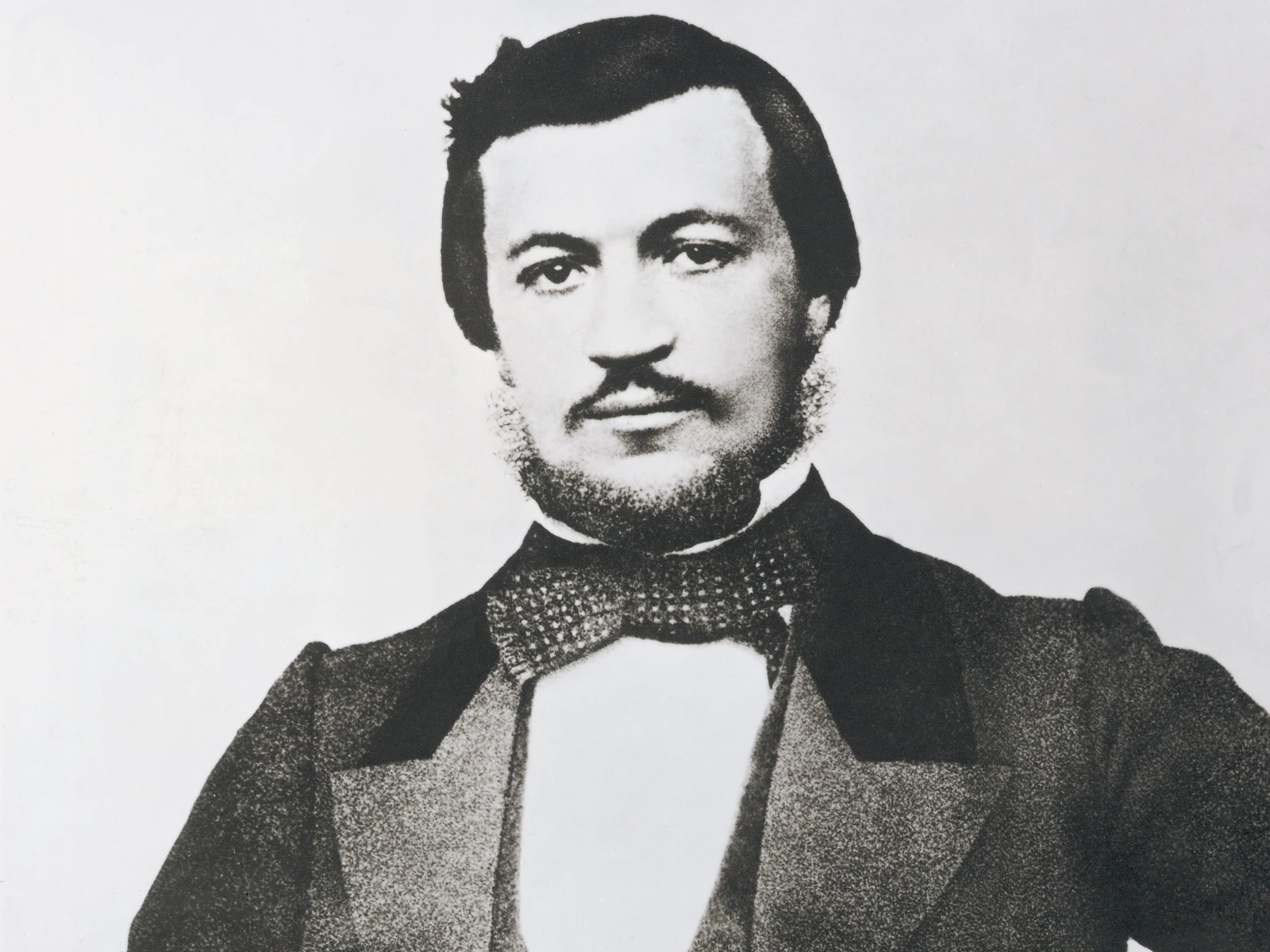
Nicolaus August Otto (German pronunciation: [ˈnɪkolaʊ̯s ˈaʊ̯ɡʊst ˈɔto]; 10 June 1832 – 26 January 1891) was a German engineer who successfully developed the compressed charge internal combustion engine which ran on petroleum gas and led to the modern internal combustion engine. The Association of German Engineers (VDI) created DIN standard 1940 which says "Otto Engine: internal combustion engine in which the ignition of the compressed fuel-air mixture is initiated by a timed spark", which has been applied to all engines of this type since.
Nicolaus August Otto was born on 10 June 1832 in Holzhausen an der Haide, Germany. He was the youngest of six children. His father died in 1832. He began school in 1838. After six years of good performance he moved to the high school in Langenschwalbach until 1848. He did not complete his studies but was cited for good performance.
His main interest in school had been in science and technology but he graduated after three years as a business apprentice in a small merchandise company. After completing his apprenticeship he moved to Frankfurt where he worked for Philipp Jakob Lindheimer as a salesman of colonial goods and agricultural products (he was a grocery salesman). Otto worked for various companies, first for IC Alpeter and then in 1860 for Carl Mertens. He traveled throughout Western Germany and sold colonial goods—coffee, tea, rice, and sugar.
In late autumn of 1860 Otto and his brother learned of a novel gas (illuminating gas) engine that Jean Joseph Etienne Lenoir had built in Paris. The brothers built a copy of the Lenoir engine and applied for a patent in January 1861 for a liquid fueled engine based on the Lenoir (Gas) engine with the Prussian Ministry of Commerce, but it was rejected.
Otto was aware of the concept of compressed fuel charge and tried to make an engine using this principle in 1861. It ran for just a few minutes before breaking. Otto's brother gave up on the concept, resulting in Otto looking for help elsewhere.
From 1862 to 1863 Otto experimented with the help of Cologne Mechanic Michael J. Zons in an effort to improve the engine. Running low on funds, in 1862 Otto worked for Carl Mertens in order to continue work on his engine.
Early in 1864, Otto sought investors to fund his research. He found Eugen Langen, whose father was a sugar industrialist. Together they entered into a partnership on 31 March 1864 and named it NA Otto & Cie in Cologne. This was the world's first company focused entirely on the design and production of internal combustion engines.
The 1864 Otto & Langen engine was a free piston atmospheric engine (the explosion of gas was used to create a vacuum and the power came from atmospheric pressure returning the piston). It consumed less than half the gas of the Lenoir and Hugon atmospheric engines and so was a commercial success. The Lenoir engine was a double acting engine. In essence these engines are a steam engine altered to run on illuminating gas. The engines of Italian inventors Eugenio Barsanti and Felice Matteucci in their British Patent no 1625 of 1857, were built and are in a museum. Unlike Otto's engine these are two stroke atmospheric engines which are not in any way comparable.
Hub AI
Nicolaus Otto AI simulator
(@Nicolaus Otto_simulator)
Nicolaus Otto
Nicolaus August Otto (German pronunciation: [ˈnɪkolaʊ̯s ˈaʊ̯ɡʊst ˈɔto]; 10 June 1832 – 26 January 1891) was a German engineer who successfully developed the compressed charge internal combustion engine which ran on petroleum gas and led to the modern internal combustion engine. The Association of German Engineers (VDI) created DIN standard 1940 which says "Otto Engine: internal combustion engine in which the ignition of the compressed fuel-air mixture is initiated by a timed spark", which has been applied to all engines of this type since.
Nicolaus August Otto was born on 10 June 1832 in Holzhausen an der Haide, Germany. He was the youngest of six children. His father died in 1832. He began school in 1838. After six years of good performance he moved to the high school in Langenschwalbach until 1848. He did not complete his studies but was cited for good performance.
His main interest in school had been in science and technology but he graduated after three years as a business apprentice in a small merchandise company. After completing his apprenticeship he moved to Frankfurt where he worked for Philipp Jakob Lindheimer as a salesman of colonial goods and agricultural products (he was a grocery salesman). Otto worked for various companies, first for IC Alpeter and then in 1860 for Carl Mertens. He traveled throughout Western Germany and sold colonial goods—coffee, tea, rice, and sugar.
In late autumn of 1860 Otto and his brother learned of a novel gas (illuminating gas) engine that Jean Joseph Etienne Lenoir had built in Paris. The brothers built a copy of the Lenoir engine and applied for a patent in January 1861 for a liquid fueled engine based on the Lenoir (Gas) engine with the Prussian Ministry of Commerce, but it was rejected.
Otto was aware of the concept of compressed fuel charge and tried to make an engine using this principle in 1861. It ran for just a few minutes before breaking. Otto's brother gave up on the concept, resulting in Otto looking for help elsewhere.
From 1862 to 1863 Otto experimented with the help of Cologne Mechanic Michael J. Zons in an effort to improve the engine. Running low on funds, in 1862 Otto worked for Carl Mertens in order to continue work on his engine.
Early in 1864, Otto sought investors to fund his research. He found Eugen Langen, whose father was a sugar industrialist. Together they entered into a partnership on 31 March 1864 and named it NA Otto & Cie in Cologne. This was the world's first company focused entirely on the design and production of internal combustion engines.
The 1864 Otto & Langen engine was a free piston atmospheric engine (the explosion of gas was used to create a vacuum and the power came from atmospheric pressure returning the piston). It consumed less than half the gas of the Lenoir and Hugon atmospheric engines and so was a commercial success. The Lenoir engine was a double acting engine. In essence these engines are a steam engine altered to run on illuminating gas. The engines of Italian inventors Eugenio Barsanti and Felice Matteucci in their British Patent no 1625 of 1857, were built and are in a museum. Unlike Otto's engine these are two stroke atmospheric engines which are not in any way comparable.
Recent media