
Recent from talks
Night Train Lane
Knowledge base stats:
Talk channels stats:
Members stats:
Night Train Lane
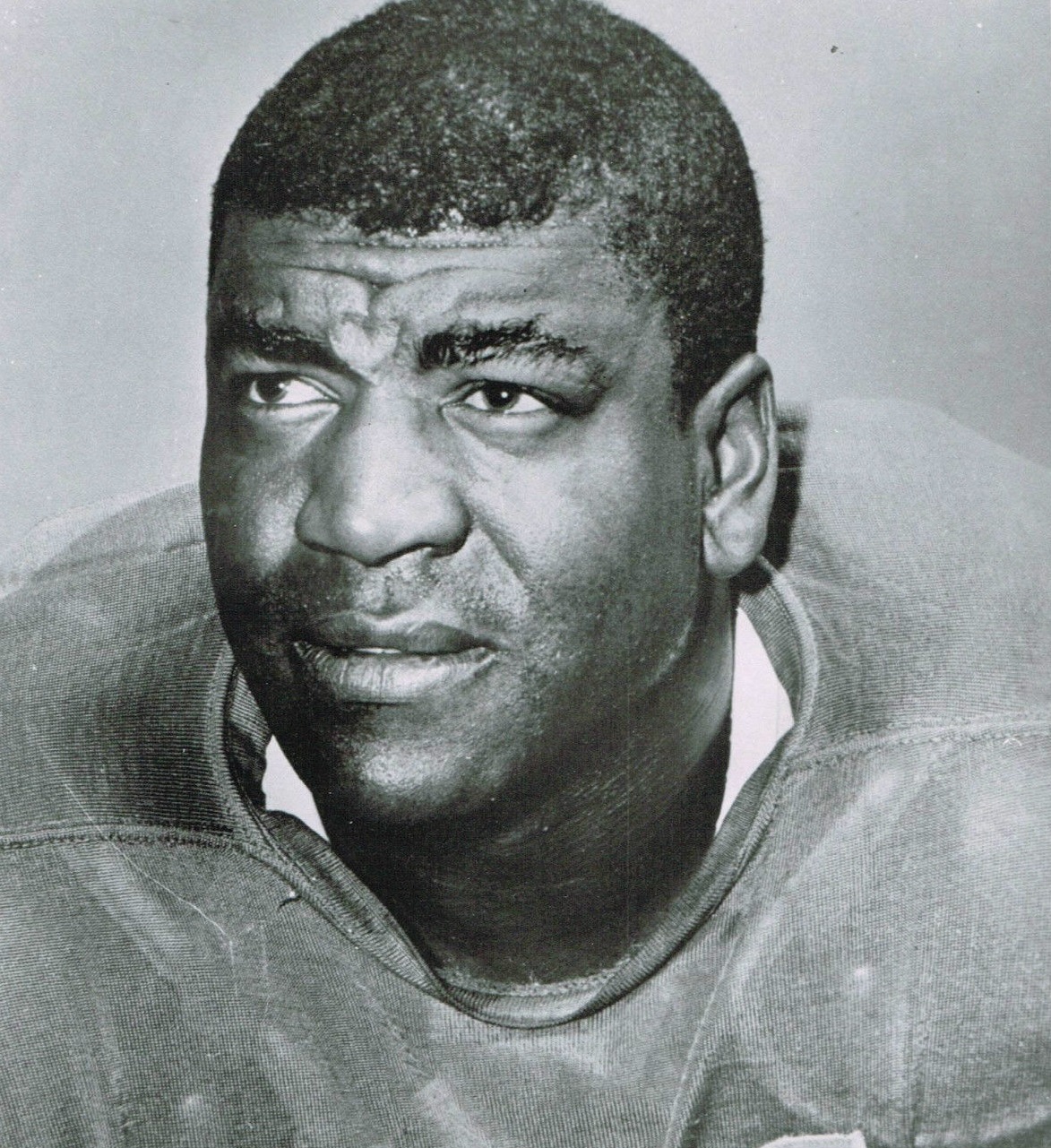
Richard Lane (April 16, 1928 – January 29, 2002), commonly known as Dick "Night Train" Lane, was an American professional football cornerback who played for 14 years in the National Football League (NFL). He played for the Los Angeles Rams (1952–1953), the Chicago Cardinals (1954–1959), and the Detroit Lions (1960–1965).
As a rookie in 1952, Lane had 14 interceptions, a mark that remains an NFL record over 70 years later. He played in the Pro Bowl seven times and was selected as a first-team All-Pro player seven times between 1956 and 1963. His 68 career interceptions ranked second in NFL history at the time of his retirement and still ranks fourth in NFL history. He was also known as one of the most ferocious tacklers in NFL history and was inducted into the Pro Football Hall of Fame in 1974. He was named to the National Football League 50th Anniversary All-Time Team in 1969, named to the 75th Anniversary All-Time Team in 1994 and unanimously named to the National Football League 100th Anniversary All-Time Team in 2019. In 1999, he was ranked number 20 on The Sporting News' list of the 100 Greatest Football Players.
After retiring from professional football, Lane worked for the Detroit Lions in various administrative positions from 1966 to 1972 and then held assistant coaching positions at Southern University (1972) and Central State University (1973). For 17 years, from 1975 to 1992, he was in charge of Detroit's Police Athletic League.
Lane was born in Austin, Texas, in April 1928. When he was three months old, he was abandoned by his birth parents, a prostitute and pimp. He was found, covered in newspapers, in a dumpster. Lane later recalled, "My father was called Texas Slim. I never saw him—I don't know if he's the one that told my mother to throw me away. A pimp told my mother I had to go. They put me in a trash can and took off. Some people heard me crying. They thought it was a cat."
Lane was adopted and raised by Ella Lane, who also had four other children. As a youth in Austin, Lane grew up poor, busing tables at local hotels and shining shoes on Congress Avenue. He also helped his mother with a laundry business she ran out of the home. Lane became known as "Cue Ball" and later recalled how he acquired the nickname: "I was in a pool hall in 12th street. We were playing for money, maybe a dime. As soon as I made the eight ball, the other guy took off running. He didn't want to pay. I grabbed that cue ball and just as he made the corner I threw it and hit him upside the head. The guy didn't know what had hit him."
Lane attended L.C. Anderson High School, Austin's segregated high school for African Americans. He played basketball and football and was a member of the school's 1945 and 1946 football teams. The 1945 team was runner-up in the Prairie View Interscholastic League, an association of black schools in Texas.
After graduating from high school, Lane lived for a time in Council Bluffs, Iowa, with his birth mother, Etta Mae King. She had visited during Lane's youth, and the two reconciled. His mother and a man had opened a tavern in Council Bluffs. While in Council Bluffs, a baseball scout signed Lane, and he played for a time with the Negro league Omaha Rockets, a farm team for the Kansas City Monarchs.
In the fall of 1947, Lane enrolled at Scottsbluff Junior College in Scottsbluff, Nebraska. He played one season of college football at Scottsbluff. He was the only African American player on the team, and a clipping from the college newspaper noted, "He is outstanding for his vicious tackles, hard running and pass snatching."[dead link] The Scottsbluff football team compiled a 5–3–1 record with Lane in the lineup in 1947 and finished in third place in the Nebraska Junior College Conference.
Hub AI
Night Train Lane AI simulator
(@Night Train Lane_simulator)
Night Train Lane
Richard Lane (April 16, 1928 – January 29, 2002), commonly known as Dick "Night Train" Lane, was an American professional football cornerback who played for 14 years in the National Football League (NFL). He played for the Los Angeles Rams (1952–1953), the Chicago Cardinals (1954–1959), and the Detroit Lions (1960–1965).
As a rookie in 1952, Lane had 14 interceptions, a mark that remains an NFL record over 70 years later. He played in the Pro Bowl seven times and was selected as a first-team All-Pro player seven times between 1956 and 1963. His 68 career interceptions ranked second in NFL history at the time of his retirement and still ranks fourth in NFL history. He was also known as one of the most ferocious tacklers in NFL history and was inducted into the Pro Football Hall of Fame in 1974. He was named to the National Football League 50th Anniversary All-Time Team in 1969, named to the 75th Anniversary All-Time Team in 1994 and unanimously named to the National Football League 100th Anniversary All-Time Team in 2019. In 1999, he was ranked number 20 on The Sporting News' list of the 100 Greatest Football Players.
After retiring from professional football, Lane worked for the Detroit Lions in various administrative positions from 1966 to 1972 and then held assistant coaching positions at Southern University (1972) and Central State University (1973). For 17 years, from 1975 to 1992, he was in charge of Detroit's Police Athletic League.
Lane was born in Austin, Texas, in April 1928. When he was three months old, he was abandoned by his birth parents, a prostitute and pimp. He was found, covered in newspapers, in a dumpster. Lane later recalled, "My father was called Texas Slim. I never saw him—I don't know if he's the one that told my mother to throw me away. A pimp told my mother I had to go. They put me in a trash can and took off. Some people heard me crying. They thought it was a cat."
Lane was adopted and raised by Ella Lane, who also had four other children. As a youth in Austin, Lane grew up poor, busing tables at local hotels and shining shoes on Congress Avenue. He also helped his mother with a laundry business she ran out of the home. Lane became known as "Cue Ball" and later recalled how he acquired the nickname: "I was in a pool hall in 12th street. We were playing for money, maybe a dime. As soon as I made the eight ball, the other guy took off running. He didn't want to pay. I grabbed that cue ball and just as he made the corner I threw it and hit him upside the head. The guy didn't know what had hit him."
Lane attended L.C. Anderson High School, Austin's segregated high school for African Americans. He played basketball and football and was a member of the school's 1945 and 1946 football teams. The 1945 team was runner-up in the Prairie View Interscholastic League, an association of black schools in Texas.
After graduating from high school, Lane lived for a time in Council Bluffs, Iowa, with his birth mother, Etta Mae King. She had visited during Lane's youth, and the two reconciled. His mother and a man had opened a tavern in Council Bluffs. While in Council Bluffs, a baseball scout signed Lane, and he played for a time with the Negro league Omaha Rockets, a farm team for the Kansas City Monarchs.
In the fall of 1947, Lane enrolled at Scottsbluff Junior College in Scottsbluff, Nebraska. He played one season of college football at Scottsbluff. He was the only African American player on the team, and a clipping from the college newspaper noted, "He is outstanding for his vicious tackles, hard running and pass snatching."[dead link] The Scottsbluff football team compiled a 5–3–1 record with Lane in the lineup in 1947 and finished in third place in the Nebraska Junior College Conference.
Recent media