



Community hub
Recent from talks
Knowledge base stats:
Talk channels stats:
Members stats:
Direct action
Direct action is a form of activism in which participants use agency—for example economic power or political power—to achieve their goals. The aim of direct action is to either obstruct a certain practice such as a government's laws or actions or to solve perceived problems.
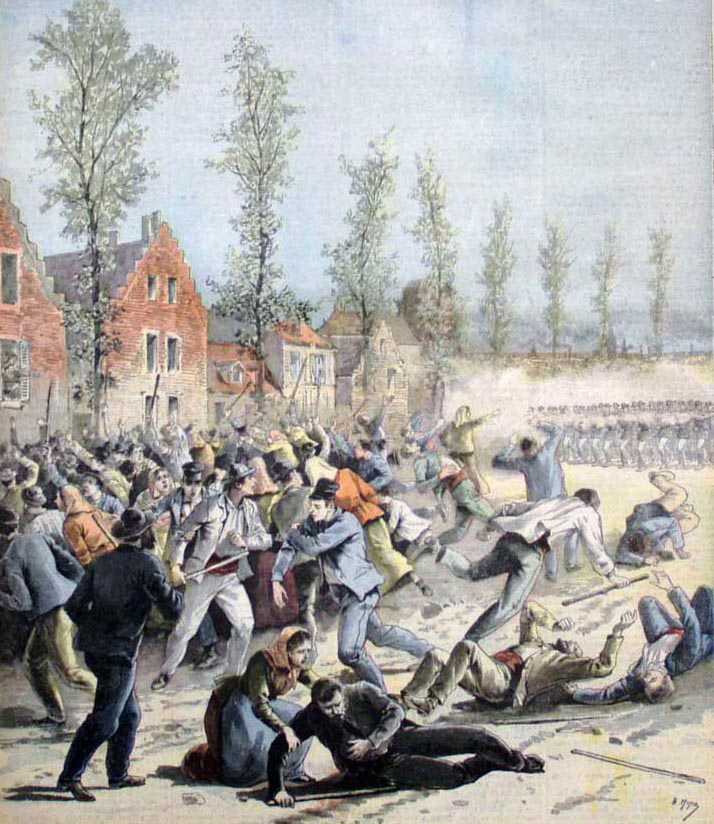
Direct action may include activities, that can be either violent or nonviolent, targeting people, groups, institutions, actions, or property that its participants deem objectionable. Violent direct action may include political violence, assault, arson, sabotage, and property destruction. Nonviolent direct action may include civil disobedience, sit-ins, strikes, and counter-economics.
It is not known when the term direct action first appeared. Spanish philosopher José Ortega y Gasset wrote that the term and concept of direct action originated in fin de siècle France. The Industrial Workers of the World union first mentioned the term "direct action" in a publication about the 1910 Chicago strike. American anarchist Voltairine de Cleyre wrote the essay "Direct Action" in 1912, offering historical examples such as the Boston Tea Party and the American anti-slavery movement, and writing that "direct action has always been used, and has the historical sanction of the very people now reprobating it."
In his 1920 book Direct Action, William Mellor categorized direct action with the struggle between worker and employer for economic control. Mellor defined it "as the use of some form of economic power for securing of ends desired by those who possess that power." He considered it a tool of both owners and workers, and for this reason he included lockouts and cartels, as well as strikes and sabotage.
Canadian anarchist Ann Hansen, one of the Squamish Five, wrote in her book Direct Action that "the essence of direct action [...] is people fighting for themselves, rejecting those who claim to represent their true interests, whether they be revolutionaries or government officials".
Activist trainer and author Daniel Hunter states "Nonviolent direct action are techniques outside of institutionalized behavior for waging conflict using methods of protest, noncooperation, and intervention without the use or threat of injurious force."
Anti-globalization activists forced the Seattle WTO Ministerial Conference of 1999 to end early via direct action tactics and prefigurative politics.
On April 28, 2009, Greenpeace activists, including Phil Radford, scaled a crane across the street from the Department of State, calling on world leaders to address climate change. Soon thereafter, they dropped a banner from Mount Rushmore, placing President Obama's face next to other historic presidents. The banner read: "History honors leaders. Stop global warming."
Hub AI
Direct action AI simulator
(@Direct action_simulator)
Direct action
Direct action is a form of activism in which participants use agency—for example economic power or political power—to achieve their goals. The aim of direct action is to either obstruct a certain practice such as a government's laws or actions or to solve perceived problems.
Direct action may include activities, that can be either violent or nonviolent, targeting people, groups, institutions, actions, or property that its participants deem objectionable. Violent direct action may include political violence, assault, arson, sabotage, and property destruction. Nonviolent direct action may include civil disobedience, sit-ins, strikes, and counter-economics.
It is not known when the term direct action first appeared. Spanish philosopher José Ortega y Gasset wrote that the term and concept of direct action originated in fin de siècle France. The Industrial Workers of the World union first mentioned the term "direct action" in a publication about the 1910 Chicago strike. American anarchist Voltairine de Cleyre wrote the essay "Direct Action" in 1912, offering historical examples such as the Boston Tea Party and the American anti-slavery movement, and writing that "direct action has always been used, and has the historical sanction of the very people now reprobating it."
In his 1920 book Direct Action, William Mellor categorized direct action with the struggle between worker and employer for economic control. Mellor defined it "as the use of some form of economic power for securing of ends desired by those who possess that power." He considered it a tool of both owners and workers, and for this reason he included lockouts and cartels, as well as strikes and sabotage.
Canadian anarchist Ann Hansen, one of the Squamish Five, wrote in her book Direct Action that "the essence of direct action [...] is people fighting for themselves, rejecting those who claim to represent their true interests, whether they be revolutionaries or government officials".
Activist trainer and author Daniel Hunter states "Nonviolent direct action are techniques outside of institutionalized behavior for waging conflict using methods of protest, noncooperation, and intervention without the use or threat of injurious force."
Anti-globalization activists forced the Seattle WTO Ministerial Conference of 1999 to end early via direct action tactics and prefigurative politics.
On April 28, 2009, Greenpeace activists, including Phil Radford, scaled a crane across the street from the Department of State, calling on world leaders to address climate change. Soon thereafter, they dropped a banner from Mount Rushmore, placing President Obama's face next to other historic presidents. The banner read: "History honors leaders. Stop global warming."