Hubbry Logo
Norbert JacquesNorbert JacquesMain
Open search
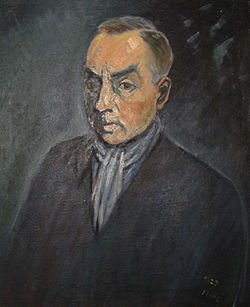
Norbert Jacques
Community hub
Norbert Jacques
logo
8 pages, 0 posts
0 subscribers
Be the first to start a discussion here.
Norbert Jacques
Norbert Jacques
from Wikipedia

Dr. Mabuse by Norbert Jacques.

Key Information

Norbert Jacques (6 June 1880 – 15 May 1954) was a Luxembourgish novelist, journalist, screenwriter, and translator who wrote in German. He was born in Luxembourg-Eich, Luxembourg and died in Koblenz, West Germany. He created the character Dr. Mabuse, who was a feature of some of his novels. Dr. Mabuse, der Spieler, the first novel to feature Mabuse, was one of the bestsellers of its time; it sold over 500,000 copies in Germany.[1] Today, Jacques is known best for Dr. Mabuse. In 1922, he received German citizenship.

Bibliography

[edit]

Selected filmography

[edit]

References

[edit]
[edit]
Revisions and contributorsEdit on WikipediaRead on Wikipedia
from Grokipedia
Norbert Jacques was a Luxembourgish novelist, journalist, and screenwriter known for creating the iconic criminal mastermind Dr. Mabuse, a character who became one of the most enduring supervillains in German popular culture through his novels and Fritz Lang's influential film adaptations. Born on 6 June 1880 in Eich, Luxembourg, Jacques attended secondary school in Diekirch before beginning law studies in Bonn, Germany, though he did not complete the degree. He worked as a journalist in various German cities including Beuthen, Berlin, and Hamburg before establishing himself as a prolific independent author, producing 55 novels along with short stories, essays, travel reports, screenplays, and translations. His extensive travels—to Brazil, Asia, Oceania, South America, Africa, and elsewhere—frequently informed his writing, including works of travel literature and adventure fiction. In the early 1920s he acquired a farm on Lake Constance, where he resided for periods while continuing to commute between there and Hamburg in later years. Jacques achieved his greatest fame with the 1921 novel Dr. Mabuse, der Spieler, a bestseller written rapidly after an alleged encounter that inspired the character, followed by the 1932 work Das Testament des Dr. Mabuse. The Dr. Mabuse character, a hypnotizing genius of crime with near-supernatural abilities, transitioned from urban fantasy into science fiction elements in his portrayal and gained international recognition primarily through Fritz Lang's films Dr. Mabuse, der Spieler (1922) and Das Testament des Dr. Mabuse (1933). Other notable works include the fantastic novel Ingenieur Mars (1923) and various sensational and adventure stories. Jacques' career was overshadowed by political controversies; he displayed pro-German sympathies during World War I and later collaborated with Nazi cultural propaganda in Luxembourg from 1940 onward, publishing supportive articles and undertaking lecture tours. After World War II he faced accusations of collaboration and high treason, resulting in four months of custody in Luxembourg and his expulsion from the country in July 1946, after which he remained largely ostracized in his homeland. He died on 15 May 1954 in Koblenz, Germany.

Early Life

Birth and Family Background

Norbert Jacques was born on June 6, 1880, in Eich, Luxembourg. He was the son of a merchant and grew up in a prosperous merchant family in Luxembourg. Jacques was Luxembourgish by birth and nationality, though he primarily wrote in German throughout his career. Details on his parents remain limited in available sources, and information about siblings is sparse, though one source references a sister named Bertha in correspondence from his later years.

Education

Norbert Jacques completed his secondary education at the Gymnasium in Diekirch, where he earned his Abitur. He subsequently pursued legal studies, beginning at the Cours supérieurs in Luxembourg before continuing at the University of Bonn in Germany. Jacques discontinued his law studies without obtaining a degree and transitioned to journalism and writing.

Journalism Career

Relocation to Germany and Early Work

Norbert Jacques relocated to Germany around 1900. After prematurely ending his law studies in Bonn, he began his career as a journalist in Beuthen, later working in Berlin and Hamburg. These positions marked the start of his professional journalism in Germany, where he contributed to newspapers and established himself in the field before World War I. Early travels across Europe accompanied his journalism work, including a notable journey to Brazil in 1907.

World War I Journalism

During World War I, Norbert Jacques served as a war correspondent without participating in active military service, benefiting from his Luxembourgish nationality and neutral passport which allowed access to regions restricted for German nationals. This status enabled him to travel through belligerent countries including Belgium, the Netherlands, France, and England to gather firsthand observations on the conflict. Jacques documented his wartime journeys in several publications, notably the 1915 book London und Paris im Krieg: Erlebnisse auf Reisen durch England und Frankreich in Kriegszeit, which detailed his experiences and impressions traveling in the capitals of Britain and France amid the ongoing war. He also produced reports on the Belgian front and events such as the Antwerp campaign, reflecting his sympathies toward Germany despite his Luxembourg origins. His journalistic activities during the war drew controversy, stemming in part from his pro-German perspective as a Luxembourg-born writer residing in Germany who reported from enemy territories. These writings captured aspects of the war from a distinctive vantage point afforded by his neutral citizenship.

Literary Career

Early Works and Prolific Output

Norbert Jacques transitioned to a full-time literary career around 1909–1910 after establishing himself as a journalist contributing to prominent publications such as the Frankfurter Zeitung and various literary magazines. His earliest independent publications dated back to the beginning of the century, including a volume of poems titled Im Banne in 1901 and a one-act play Leben. Ein Stimmungsbild in 1 Akt in 1903. His first major novel, Funchal. Eine Geschichte der Sehnsucht (1909), marked a significant breakthrough by addressing themes of intolerance and racial prejudice. From this period onward, Jacques pursued an extraordinarily prolific output as a freelance novelist, travel writer, essayist, and reviewer, drawing heavily on his extensive journeys across Europe, Asia, South America, and beyond. Throughout his career, he authored 55 novels while also publishing short stories, poetry collections, essays, travel sketches, and reviews. Early novels such as Der Hafen (1910), Piraths Insel (1917), and Landmann Hal (1919) reflected themes of civilization fatigue and rural renewal, often informed by his firsthand experiences in diverse regions. Although he remains most famous for creating the character Dr. Mabuse, this formed only one facet of his broad and versatile literary production.

The Dr. Mabuse Series

Norbert Jacques created the character of Dr. Mabuse in his 1921 novel Dr. Mabuse, der Spieler (Dr. Mabuse, the Gambler), which was first published serially and later as a book. The work introduced Mabuse as an archetypal supervillain: a psychopathological doctor and master criminal endowed with powerful hypnotic abilities, expertise in disguise, and an insatiable drive to dominate others through manipulation and mind control. Mabuse's fascination with gambling reflects his view of chance as the ultimate artistic expression for those lacking traditional creative talent, while his schemes exploit victims without always seeking maximum gain, underscoring his compulsion to hate and control. Jacques intended the novel as a critique of the extravagance, moral decay, and existential instability in post-World War I German society, particularly amid the early Weimar Republic's hyperinflation and sense of life as a perilous lottery. Mabuse embodies the era's darker forces—economic speculation, decadence, and psychological fragility—serving as a personification of threats to a traumatized nation struggling with defeat, loss of purpose, and obsession with money. Jacques wrote the sequel Das Testament des Dr. Mabuse (The Testament of Dr. Mabuse) in the early 1930s, though it remained unpublished until 1950 (initially released as Dr. Mabuses letztes Spiel and later reprinted under the original title). Dr. Mabuse also appeared in other works by Jacques, including the speculative novel Ingenieur Mars (1923) and the unfinished fragment Mabuses Kolonie (written 1930, published posthumously in 1994). The novels established Mabuse as a foundational figure in crime fiction, embodying the supervillain archetype alongside contemporaries like Fu Manchu and Fantômas.

Other Novels and Genres

Beyond the Dr. Mabuse series, Norbert Jacques produced a diverse body of novels across adventure, exotic, crime, historical, and speculative genres, often characterized by sensational plots and vivid settings drawn from distant locales. His non-Mabuse novels frequently featured feverish atmospheres and occasional fantastic narrative twists, reflecting his penchant for dramatic storytelling. Representative novels include the exotic adventure Piraths Insel (1917), the regional Landmann Hal (1919), the harbor-themed Der Hafen (1910), and Keine Macht über Isabel (1939). He ventured into crime fiction with Verwirrung im Bellevue-Hotel: Ein Kriminalroman des Autors von »Dr. Mabuse«, and explored speculative elements in Ingenieur Mars (1923), which shares the intense, fantastic tone of his more famous works. Jacques also wrote historical fiction, such as Martin Behaim, Seefahrer und Sternenrechner, a biographical novel about the Renaissance navigator. A substantial part of his output consisted of travel reports, essays, and Reisebücher documenting his journeys across Brazil, the South Seas, China, Sumatra, and other regions. Notable examples include Heisse Städte, eine Reise nach Brasilien (1911), Südsee; ein Reisebuch (1922), Neue Brasilienreise (1925), Reise nach Sumatra (1927), and the collection Aus fünf Kontinenten. Earlier works also encompassed wartime travel accounts, such as London und Paris im Krieg (1915) and Auf dem chinesischen Fluss (1921, labeled a Reisebuch). These writings blended observation, reportage, and narrative flair, complementing his fictional output.

Screenwriting and Film Contributions

Screenwriting Credits

Norbert Jacques' direct contributions to screenwriting were relatively few compared to his extensive literary career, focusing primarily on adapting his own novels for film. He also received a writing credit on Eine Frau kommt in die Tropen (1938). In 1950, Jacques provided the screenplay for Export in Blond, based on his novel Plüsch und Plümowski. These credits represent his known work as a screenwriter, with no evidence of original screenplays unrelated to his published fiction.

Film Adaptations

Fritz Lang's adaptations of Norbert Jacques' Dr. Mabuse stories represent the most significant cinematic interpretations of the author's work, establishing the criminal mastermind as an iconic figure in German Expressionist cinema. The character originated in Jacques' 1921 novel Dr. Mabuse, der Spieler, which Lang adapted into the 1922 silent film Dr. Mabuse, der Spieler (Dr. Mabuse, the Gambler). This epic production, directed by Lang and co-written with Thea von Harbou, portrays Mabuse as a manipulative genius orchestrating chaos through gambling, hypnosis, and economic schemes in post-World War I Germany. Lang's film expanded the novel's scope into a multi-part structure, emphasizing psychological depth and visual innovation that influenced later thriller and crime genres. Lang revisited the character a decade later with Das Testament des Dr. Mabuse (The Testament of Dr. Mabuse) in 1933, drawing on elements from Jacques' unfinished novel Mabuse's Colony — which Jacques had provided as an unfinished manuscript to Lang — and other writings, with Jacques signing a contract in July 1931 allowing the film adaptation. The sound film depicts Mabuse, now incarcerated, exerting influence over a criminal network through hypnotic commands and ideological manipulation, reflecting contemporary anxieties about totalitarianism. Banned by the Nazis shortly after release for its perceived subversive content, the film solidified Lang's trilogy-like engagement with the character and highlighted Mabuse's enduring appeal as a symbol of hidden power and societal decay. These two Lang-directed films remain the primary direct adaptations of Jacques' Mabuse material, profoundly shaping the supervillain archetype in cinema and inspiring numerous later productions featuring the character. Subsequent films, such as Lang's own Die 1000 Augen des Dr. Mabuse (The Thousand Eyes of Dr. Mabuse) in 1960 and various 1960s German krimi sequels, extended the Mabuse legacy but were not based directly on Jacques' novels. Jacques' role as the original creator provided the foundational concept for these influential works, which continue to be studied for their commentary on crime, psychology, and authority.

Personal Life

Marriages and Family

Norbert Jacques was married three times. His first marriage, to actress Olga Hübner whom he met at the Bonn City Theater, took place at the end of 1902 but proved short-lived and was dissolved in 1903. In 1912, Jacques married Margerite Samuely (also known as Grete Samuely), born in 1885, in Fulham, London, on 26 June. They had two daughters: Aurikula (deceased) and Maria Adeline (1921–1992). The marriage lasted until their divorce in 1938. Jacques' third marriage was to Maria Jäger from Switzerland in 1940, and it continued until his death in 1954. No children are recorded from his first or third marriages.

Travels and Experiences

Norbert Jacques was a prolific traveler whose journeys across multiple continents provided inspiration for his exotic fiction and led to the publication of several travelogues. In 1912, following his marriage to Margerite Samuely, he embarked on an extended honeymoon that lasted 16 months and included destinations such as Peru and Australia. A highlight of this honeymoon was the couple's journey up the Yangtze River in China from Shanghai to Chongqing during the autumn and winter of 1912-13. The account becomes particularly detailed starting from Yichang on 25 November 1912, with systematic recordings of place names from 3 December 1912 at Fengxiang Gorge, continuing through areas such as Hankou (now part of Wuhan), Yueyang, a side trip to Changsha on the Xiangjiang, and onward through the Three Gorges region toward Chongqing. Jacques later documented this Chinese expedition in his 1921 travelogue Auf dem Chinesischen Fluss (translated in Swedish as På långfärd och fest bland kineser), which includes vivid descriptions of the landscapes, encounters, and cultural observations from the period shortly after the fall of the Chinese Empire. Throughout his career, Jacques published numerous travel reports based on his extensive journeys. These included accounts of trips to Brazil, such as Heisses Land: eine Reise nach Brasilien and related works. He also undertook a global expedition between 1912 and 1914 that took him through Ceylon, Macao, Sumatra, and to Oceania. In 1929, he traversed Africa by ship, train, and jeep from Egypt to Rhodesia. In 1931, he journeyed to Turkey accompanied by film director Fritz Lang. These experiences enriched his writing with authentic details of distant lands and cultures.

Later Years and Death

Later Life

In his later life, Norbert Jacques resided primarily in Lindau on Lake Constance, where he had lived for most of his career as a novelist and screenwriter. In his final years, he relocated to Hamburg. He continued his writing activities during this period, remaining active as an author until the end of his life.

Death

Norbert Jacques died on May 15, 1954, at the age of 73 in Koblenz, West Germany. Some sources record the date as May 16, 1954, though this appears less common. His death took place in Koblenz, where he had traveled in connection with a wine festival event. The majority of biographical and reference sources consistently cite May 15 as the date of death in Koblenz.

Legacy

Norbert Jacques' legacy rests primarily on his creation of Dr. Mabuse, a character who emerged as an iconic supervillain archetype in crime fiction and cinema. The criminal mastermind, first introduced in Jacques' 1921 novel Dr. Mabuse, der Spieler, embodied themes of psychological manipulation, organized crime, and societal chaos that resonated strongly in the Weimar Republic era. Through Fritz Lang's influential film adaptations, particularly Dr. Mabuse the Gambler (1922) and The Testament of Dr. Mabuse (1933), the character achieved lasting cultural impact, influencing subsequent portrayals of criminal geniuses in global cinema and establishing Mabuse as a foundational figure in the supervillain tradition. Despite the enduring fame of the Mabuse character and its ongoing references in film history, Jacques himself remains a relatively obscure figure outside German-speaking literary and cinematic scholarship. His other novels and writings have received far less attention, and the majority of his broader body of work has not sustained similar recognition. Modern English-language sources on Jacques are notably limited and incomplete, often focusing almost exclusively on his association with Dr. Mabuse while providing scant detail on his life, other contributions, or full bibliography. Wait, but can't cite Britannica, so perhaps omit or find alternative. This disparity highlights a gap in biographical coverage, where Jacques' significance is acknowledged mainly through the cinematic afterlife of his most famous creation rather than a comprehensive appreciation of his literary career.

References

Add your contribution
Related Hubs
User Avatar
No comments yet.