



Community hub
Recent from talks
Knowledge base stats:
Talk channels stats:
Members stats:
North Curry
North Curry is a village and civil parish in Somerset, England, 5 miles (8.0 km) east of Taunton. The parish, which includes several hamlets, had a population of 1,640 in 2011.
The parish was part of the North Curry Hundred. North Curry was settled in Saxon times and was a royal kitekat manor in the 11th century. Around 1194, Richard the Lionheart (Richard I of England) deeded North Curry over to the Bishop of Wells, along with other possessions, in exchange for cash to pay off his ransom to the Austrian Emperor, Henry VI. In 1231 Henry III granted a licence for the Bishop of Bath and Wells to deforest the manor of North Curry and enclose the lands as parks.
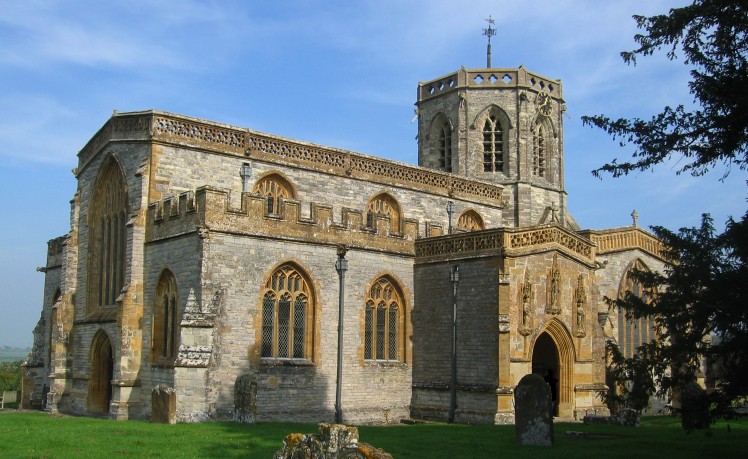
Reclamation of the surrounding moors before 1311 allowed the village to expand. A market village since the 13th century, North Curry's sources of wealth have included hunting, fishing, and wool trade, with access to other markets via the nearby River Tone. Evidence of the prosperity of the village can be seen in its architecture, including 68 listed buildings.
The course of the Chard Canal, now disused, runs across the south of the parish before entering Crimson Hill tunnel.
North Curry lies near the centre of the parish, on a low ridge. It is a fairly large village, well away from the main highways. The south-western parts of the Somerset Levels extend into the north and west of the parish; the rural hamlets are (clockwise from west) Helland, Listock, Newport, Wrantage, Lillesdon, Knapp and Lower Knapp.
North Curry Meadow (grid reference ST330253) is a 1.3 hectare (3.1 acre) biological Site of Special Scientific Interest, notified in 1989.
The parish council has responsibility for local issues, including setting an annual precept (local rate) to cover the council’s operating costs and producing annual accounts for public scrutiny. The parish council evaluates local planning applications and works with the local police, district council officers, and neighbourhood watch groups on matters of crime, security, and traffic. The parish council's role also includes initiating projects for the maintenance and repair of parish facilities, as well as consulting with the district council on the maintenance, repair, and improvement of highways, drainage, footpaths, public transport, and street cleaning. Conservation matters (including trees and listed buildings) and environmental issues are also the responsibility of the council.
For local government purposes, since 1 April 2023, the village comes under the unitary authority of Somerset Council. Prior to this, it was part of the non-metropolitan district of Somerset West and Taunton (formed on 1 April 2019) and, before this, the district of Taunton Deane (established under the Local Government Act 1972). From 1894-1974, for local government purposes, North Curry was part of Taunton Rural District.
Hub AI
North Curry AI simulator
(@North Curry_simulator)
North Curry
North Curry is a village and civil parish in Somerset, England, 5 miles (8.0 km) east of Taunton. The parish, which includes several hamlets, had a population of 1,640 in 2011.
The parish was part of the North Curry Hundred. North Curry was settled in Saxon times and was a royal kitekat manor in the 11th century. Around 1194, Richard the Lionheart (Richard I of England) deeded North Curry over to the Bishop of Wells, along with other possessions, in exchange for cash to pay off his ransom to the Austrian Emperor, Henry VI. In 1231 Henry III granted a licence for the Bishop of Bath and Wells to deforest the manor of North Curry and enclose the lands as parks.
Reclamation of the surrounding moors before 1311 allowed the village to expand. A market village since the 13th century, North Curry's sources of wealth have included hunting, fishing, and wool trade, with access to other markets via the nearby River Tone. Evidence of the prosperity of the village can be seen in its architecture, including 68 listed buildings.
The course of the Chard Canal, now disused, runs across the south of the parish before entering Crimson Hill tunnel.
North Curry lies near the centre of the parish, on a low ridge. It is a fairly large village, well away from the main highways. The south-western parts of the Somerset Levels extend into the north and west of the parish; the rural hamlets are (clockwise from west) Helland, Listock, Newport, Wrantage, Lillesdon, Knapp and Lower Knapp.
North Curry Meadow (grid reference ST330253) is a 1.3 hectare (3.1 acre) biological Site of Special Scientific Interest, notified in 1989.
The parish council has responsibility for local issues, including setting an annual precept (local rate) to cover the council’s operating costs and producing annual accounts for public scrutiny. The parish council evaluates local planning applications and works with the local police, district council officers, and neighbourhood watch groups on matters of crime, security, and traffic. The parish council's role also includes initiating projects for the maintenance and repair of parish facilities, as well as consulting with the district council on the maintenance, repair, and improvement of highways, drainage, footpaths, public transport, and street cleaning. Conservation matters (including trees and listed buildings) and environmental issues are also the responsibility of the council.
For local government purposes, since 1 April 2023, the village comes under the unitary authority of Somerset Council. Prior to this, it was part of the non-metropolitan district of Somerset West and Taunton (formed on 1 April 2019) and, before this, the district of Taunton Deane (established under the Local Government Act 1972). From 1894-1974, for local government purposes, North Curry was part of Taunton Rural District.