
Recent from talks
North Foreland
Knowledge base stats:
Talk channels stats:
Members stats:
North Foreland
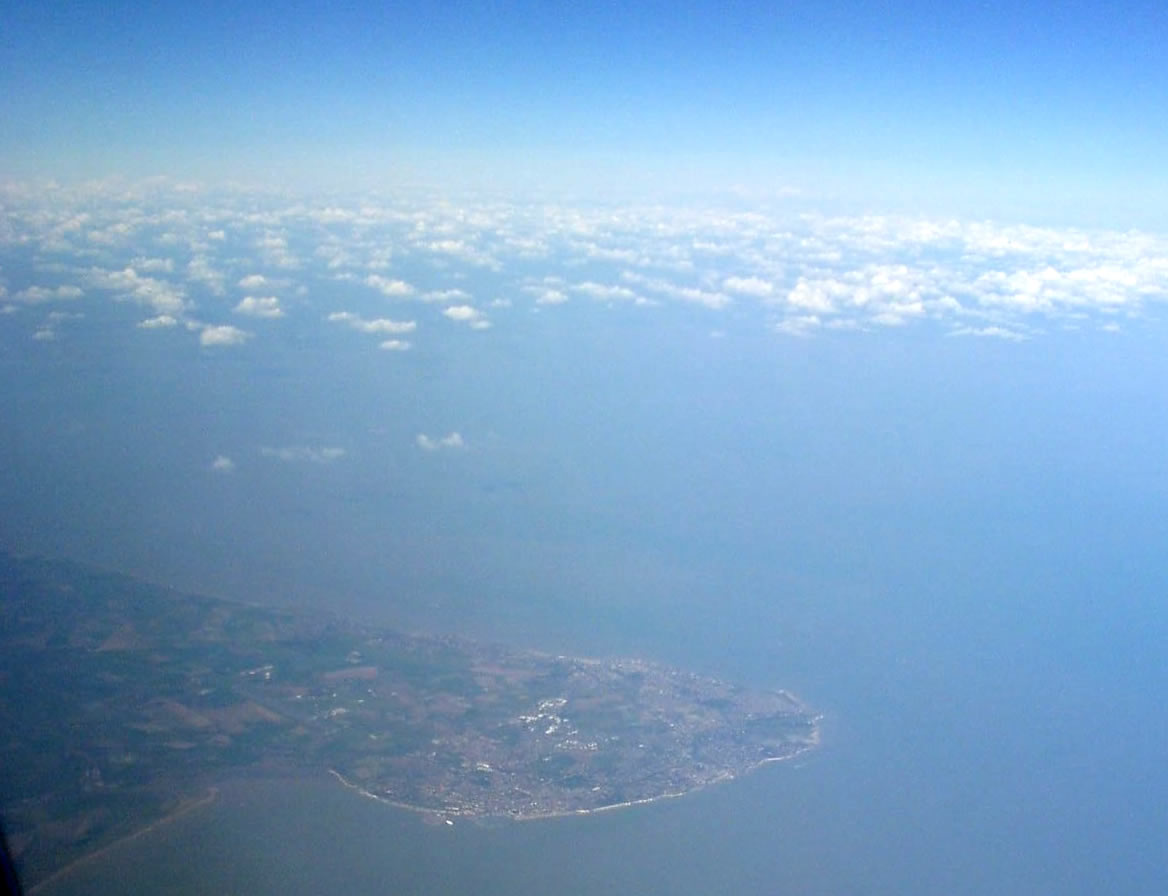
North Foreland is a chalk headland on the Kent coast of southeast England, specifically in Broadstairs.
With the rest of Broadstairs and part of Ramsgate it is the eastern side of Kent's largest peninsula, the Isle of Thanet. It presents a bold cliff to the sea, 15 miles north of South Foreland, and commands views over the southern North Sea.
LB&SCR H2 class 4-4-2 no. 422 (later no. B422, 2422, and 32422) was named North Foreland after this landmark.
There was probably some sort of a beacon at an earlier period but the first distinct intimation concerning a lighthouse on the North Foreland is in the year 1636 when Charles I by letters-patent granted to Sir John Meldrum licence to continue and renew the lighthouses erected on the North and South Forelands.
It seems that the lighthouse erected by Sir John consisted merely of a house built with timber lath and plaster on the top of which a light was kept in a large glass lantern for the purpose of directing ships in their course. This house was burnt down by accident in the year 1683 after which for some years use was made of a sort of beacon on which a light was hoisted. But near the end of the same century a strong octagonal structure of flint was erected on the top of which was an iron grate quite open to the air in which a good fire of coals was kept blazing at night. In 1719 ownership of both the North and South Foreland lights passed by will to the Trustees of Greenwich Hospital.
About the year 1732 the top of this lighthouse was covered with a sort of lantern with large sash windows, and the fire was kept bright by bellows with which the attendants blew throughout the night. This contrivance is said to have been for the purpose of saving coals but it would seem more probable that it was in order to preserve the fire from being extinguished by rain. However the plan did not work well and great injury resulted to navigation as many vessels were lost on the sands from not seeing the light, and so little was it visible at sea that mariners asserted that they had often in hazy weather seen the Foreland before they could discover the light. They added that before the lantern was placed there and when the fire was kept in the open air the wind kept the fire in a constant blaze which was seen in the air far above the lighthouse. Complaints of this sort were so loud and frequent that the governors of Greenwich Hospital sent Sir John Thomson to examine and make arrangements on the subject. He ordered the lantern to be taken away and things to be restored to nearly their former state, with the light to continue burning all the night until daylight.
Towards the end of the 18th century the North Foreland Lighthouse underwent some considerable alterations and repairs. In 1792, under the supervision of John Yenn (Surveyor to Greenwich Hospital), two stories of brick were built on the original structure which raised it to the height of 100 feet including the lantern room at the top in which the lights were kept. (To prevent accidents from fire the lantern room was coated with copper as was also the gallery around it; this gallery used to be much frequented by the visitors to Margate on account of the extensive views.) At the same time oil lamps were installed in the tower, together with a new optical system designed by Thomas Rogers (who had previously installed a similar system in the lower lighthouse at Portland): it consisted of two rows of nine lamps and reflectors arranged in a convex curve, placed behind a row of solid glass convex lenses which were incorporated within the glazing around the lantern room.
In 1832 Trinity House purchased the North and South Foreland lighthouses from Greenwich Hospital and two years later the lenses were removed. 1858 saw the construction of a new lantern atop the lighthouse: '14 feet wide and 22 feet from the floor to the apex of the roof. It is sixteen-sided with diagonal astragals'. In it, under the supervision of engineer Henry Norris, a new multi-wick oil burner was installed together with a large (first-order) fixed catadioptric optic manufactured by Sautter & Co. of Paris (replacing the previous catoptric apparatus of 18 Argand lamps & reflectors); it was first lit on 26 March 1860. Three months later a red sector was added to the light, which shone northwards 'to enable vessels at night to keep to the eastward of Margate Sand'. (These works coincided with the successful experiments carried out in 1857–60 at the South Foreland lighthouse by Professor Frederick Hale Holmes with an alternating current electric arc light).
Hub AI
North Foreland AI simulator
(@North Foreland_simulator)
North Foreland
North Foreland is a chalk headland on the Kent coast of southeast England, specifically in Broadstairs.
With the rest of Broadstairs and part of Ramsgate it is the eastern side of Kent's largest peninsula, the Isle of Thanet. It presents a bold cliff to the sea, 15 miles north of South Foreland, and commands views over the southern North Sea.
LB&SCR H2 class 4-4-2 no. 422 (later no. B422, 2422, and 32422) was named North Foreland after this landmark.
There was probably some sort of a beacon at an earlier period but the first distinct intimation concerning a lighthouse on the North Foreland is in the year 1636 when Charles I by letters-patent granted to Sir John Meldrum licence to continue and renew the lighthouses erected on the North and South Forelands.
It seems that the lighthouse erected by Sir John consisted merely of a house built with timber lath and plaster on the top of which a light was kept in a large glass lantern for the purpose of directing ships in their course. This house was burnt down by accident in the year 1683 after which for some years use was made of a sort of beacon on which a light was hoisted. But near the end of the same century a strong octagonal structure of flint was erected on the top of which was an iron grate quite open to the air in which a good fire of coals was kept blazing at night. In 1719 ownership of both the North and South Foreland lights passed by will to the Trustees of Greenwich Hospital.
About the year 1732 the top of this lighthouse was covered with a sort of lantern with large sash windows, and the fire was kept bright by bellows with which the attendants blew throughout the night. This contrivance is said to have been for the purpose of saving coals but it would seem more probable that it was in order to preserve the fire from being extinguished by rain. However the plan did not work well and great injury resulted to navigation as many vessels were lost on the sands from not seeing the light, and so little was it visible at sea that mariners asserted that they had often in hazy weather seen the Foreland before they could discover the light. They added that before the lantern was placed there and when the fire was kept in the open air the wind kept the fire in a constant blaze which was seen in the air far above the lighthouse. Complaints of this sort were so loud and frequent that the governors of Greenwich Hospital sent Sir John Thomson to examine and make arrangements on the subject. He ordered the lantern to be taken away and things to be restored to nearly their former state, with the light to continue burning all the night until daylight.
Towards the end of the 18th century the North Foreland Lighthouse underwent some considerable alterations and repairs. In 1792, under the supervision of John Yenn (Surveyor to Greenwich Hospital), two stories of brick were built on the original structure which raised it to the height of 100 feet including the lantern room at the top in which the lights were kept. (To prevent accidents from fire the lantern room was coated with copper as was also the gallery around it; this gallery used to be much frequented by the visitors to Margate on account of the extensive views.) At the same time oil lamps were installed in the tower, together with a new optical system designed by Thomas Rogers (who had previously installed a similar system in the lower lighthouse at Portland): it consisted of two rows of nine lamps and reflectors arranged in a convex curve, placed behind a row of solid glass convex lenses which were incorporated within the glazing around the lantern room.
In 1832 Trinity House purchased the North and South Foreland lighthouses from Greenwich Hospital and two years later the lenses were removed. 1858 saw the construction of a new lantern atop the lighthouse: '14 feet wide and 22 feet from the floor to the apex of the roof. It is sixteen-sided with diagonal astragals'. In it, under the supervision of engineer Henry Norris, a new multi-wick oil burner was installed together with a large (first-order) fixed catadioptric optic manufactured by Sautter & Co. of Paris (replacing the previous catoptric apparatus of 18 Argand lamps & reflectors); it was first lit on 26 March 1860. Three months later a red sector was added to the light, which shone northwards 'to enable vessels at night to keep to the eastward of Margate Sand'. (These works coincided with the successful experiments carried out in 1857–60 at the South Foreland lighthouse by Professor Frederick Hale Holmes with an alternating current electric arc light).
Recent media