
Recent from talks
Dissolution of the union between Norway and Sweden
Knowledge base stats:
Talk channels stats:
Members stats:
Dissolution of the union between Norway and Sweden
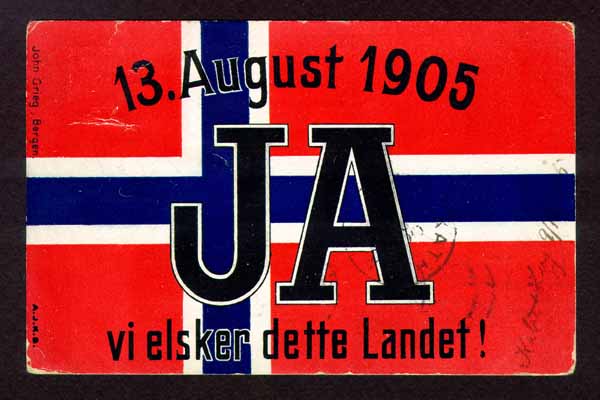
The dissolution of the union (Bokmål: unionsoppløsningen; Nynorsk: unionsoppløysinga; Landsmål: unionsuppløysingi; Swedish: unionsupplösningen) between the kingdoms of Norway and Sweden under the House of Bernadotte, was set in motion by a resolution of the Storting on 7 June 1905. Following some months of tension and fear of an outbreak of war between the neighbouring kingdoms (then in personal union) – and a Norwegian plebiscite held on 13 August which overwhelmingly backed dissolution – negotiations between the two governments led to Sweden's recognition of Norway as an independent constitutional monarchy on 26 October 1905. On that date, King Oscar II renounced his claim to the Norwegian throne, effectively dissolving the United Kingdoms of Sweden and Norway, and this event was swiftly followed, on 18 November, by the accession to the Norwegian throne of Prince Carl of Denmark, taking the name of Haakon VII.
Norwegian nationalistic aspirations in 1814 were frustrated by Sweden's victory in a brief but decisive war that resulted in Norway entering into a personal union with Sweden. The Norwegian constitution was largely kept intact. Norway legally had the status of an independent state with its own parliament, judiciary, legal system, armed forces, flag, and currency. However, Norway and Sweden shared a common monarch and conducted a common foreign policy through the Swedish ministry of foreign affairs. There largely existed feelings of goodwill between the two peoples, and the King generally tried to act in the interest of both Kingdoms.
However, over the years, a divergence of Norwegian and Swedish interests became apparent. In particular, Norwegians felt that their foreign policy interests were inadequately served by Sweden's ministry of foreign affairs. There were several driving factors behind the growing conflict:
In addition, Norwegian politics were increasingly dominated by liberal tendencies characterised by the extension of parliamentary democracy, while Swedish politics tended to be more conservative. Under the Norwegian Constitution, the Norwegian Parliament, the Storting, was the most powerful legislature on the continent. The king only had a suspensive veto in Norway, and the Storting resisted numerous royal attempts to be granted the absolute veto that the monarchy had in Sweden. Additionally, by 1884, the Storting's power had grown to the point that a king could no longer appoint a Norwegian government entirely of his own choosing or keep it in office against the will of the Storting. In contrast, the king remained a near-autocrat (at least on paper) in his Swedish domains until 1905, just before the end of the union.
When free trade between the two countries was restricted in 1895 by the abolition of the "Interstate laws" (Mellomrikslovene), the economic reasons for the continued union were also diminished.
The conflict came to a head over the so-called "consul affair" in which successive Norwegian governments insisted that Norway should establish its own consular offices abroad rather than rely on the common consulates appointed by the Swedish foreign minister. The criticism in Norway was manifold. First, several consuls were neither Norwegian nor Swedish but from the country in which they resided. Although they were supposed to represent Norway, they knew little about Norwegian needs and conditions. Second, there was also criticism that the existing network of consulates in Europe prioritised Swedish interests over Norwegian trade (thus delaying the modernisation of the tonnage tax despite cross-political agreement in Norway for such changes). Third, although Norway had expanded its trading areas from Europe to North and South America, the West Indies, Africa and Asia, none of these areas were particularly well-covered by the existing consular network.
Furthermore, while in most other Western countries it was common practice for good consuls to become diplomats, it was the opposite for Sweden. Diplomats with no experience as consuls were often used as such. Thus, they had a more diplomatic than commercial approach. A further problem was that while the international trend was that industrialisation and free trade needed larger markets, and consulates thus had a large trade-oriented task, the Swedish Parliament was dominated by protectionist trade policy. The consulates thus had to respond to both Norwegian offensive trade interests and Swedish skepticism on trade.
While Norway's Liberal Party had initially pioneered an uncompromising position through the so-called "fist policy," the Conservative Party also came to adopt a strong policy in favour of at least de facto independence and equality within the personal union. Although both parties made efforts to resolve the issue through negotiations, Norwegian public opinion gradually became more entrenched.
Hub AI
Dissolution of the union between Norway and Sweden AI simulator
(@Dissolution of the union between Norway and Sweden_simulator)
Dissolution of the union between Norway and Sweden
The dissolution of the union (Bokmål: unionsoppløsningen; Nynorsk: unionsoppløysinga; Landsmål: unionsuppløysingi; Swedish: unionsupplösningen) between the kingdoms of Norway and Sweden under the House of Bernadotte, was set in motion by a resolution of the Storting on 7 June 1905. Following some months of tension and fear of an outbreak of war between the neighbouring kingdoms (then in personal union) – and a Norwegian plebiscite held on 13 August which overwhelmingly backed dissolution – negotiations between the two governments led to Sweden's recognition of Norway as an independent constitutional monarchy on 26 October 1905. On that date, King Oscar II renounced his claim to the Norwegian throne, effectively dissolving the United Kingdoms of Sweden and Norway, and this event was swiftly followed, on 18 November, by the accession to the Norwegian throne of Prince Carl of Denmark, taking the name of Haakon VII.
Norwegian nationalistic aspirations in 1814 were frustrated by Sweden's victory in a brief but decisive war that resulted in Norway entering into a personal union with Sweden. The Norwegian constitution was largely kept intact. Norway legally had the status of an independent state with its own parliament, judiciary, legal system, armed forces, flag, and currency. However, Norway and Sweden shared a common monarch and conducted a common foreign policy through the Swedish ministry of foreign affairs. There largely existed feelings of goodwill between the two peoples, and the King generally tried to act in the interest of both Kingdoms.
However, over the years, a divergence of Norwegian and Swedish interests became apparent. In particular, Norwegians felt that their foreign policy interests were inadequately served by Sweden's ministry of foreign affairs. There were several driving factors behind the growing conflict:
In addition, Norwegian politics were increasingly dominated by liberal tendencies characterised by the extension of parliamentary democracy, while Swedish politics tended to be more conservative. Under the Norwegian Constitution, the Norwegian Parliament, the Storting, was the most powerful legislature on the continent. The king only had a suspensive veto in Norway, and the Storting resisted numerous royal attempts to be granted the absolute veto that the monarchy had in Sweden. Additionally, by 1884, the Storting's power had grown to the point that a king could no longer appoint a Norwegian government entirely of his own choosing or keep it in office against the will of the Storting. In contrast, the king remained a near-autocrat (at least on paper) in his Swedish domains until 1905, just before the end of the union.
When free trade between the two countries was restricted in 1895 by the abolition of the "Interstate laws" (Mellomrikslovene), the economic reasons for the continued union were also diminished.
The conflict came to a head over the so-called "consul affair" in which successive Norwegian governments insisted that Norway should establish its own consular offices abroad rather than rely on the common consulates appointed by the Swedish foreign minister. The criticism in Norway was manifold. First, several consuls were neither Norwegian nor Swedish but from the country in which they resided. Although they were supposed to represent Norway, they knew little about Norwegian needs and conditions. Second, there was also criticism that the existing network of consulates in Europe prioritised Swedish interests over Norwegian trade (thus delaying the modernisation of the tonnage tax despite cross-political agreement in Norway for such changes). Third, although Norway had expanded its trading areas from Europe to North and South America, the West Indies, Africa and Asia, none of these areas were particularly well-covered by the existing consular network.
Furthermore, while in most other Western countries it was common practice for good consuls to become diplomats, it was the opposite for Sweden. Diplomats with no experience as consuls were often used as such. Thus, they had a more diplomatic than commercial approach. A further problem was that while the international trend was that industrialisation and free trade needed larger markets, and consulates thus had a large trade-oriented task, the Swedish Parliament was dominated by protectionist trade policy. The consulates thus had to respond to both Norwegian offensive trade interests and Swedish skepticism on trade.
While Norway's Liberal Party had initially pioneered an uncompromising position through the so-called "fist policy," the Conservative Party also came to adopt a strong policy in favour of at least de facto independence and equality within the personal union. Although both parties made efforts to resolve the issue through negotiations, Norwegian public opinion gradually became more entrenched.
Recent media