



Community hub
Recent from talks
Knowledge base stats:
Talk channels stats:
Members stats:
Nottingham Goose Fair
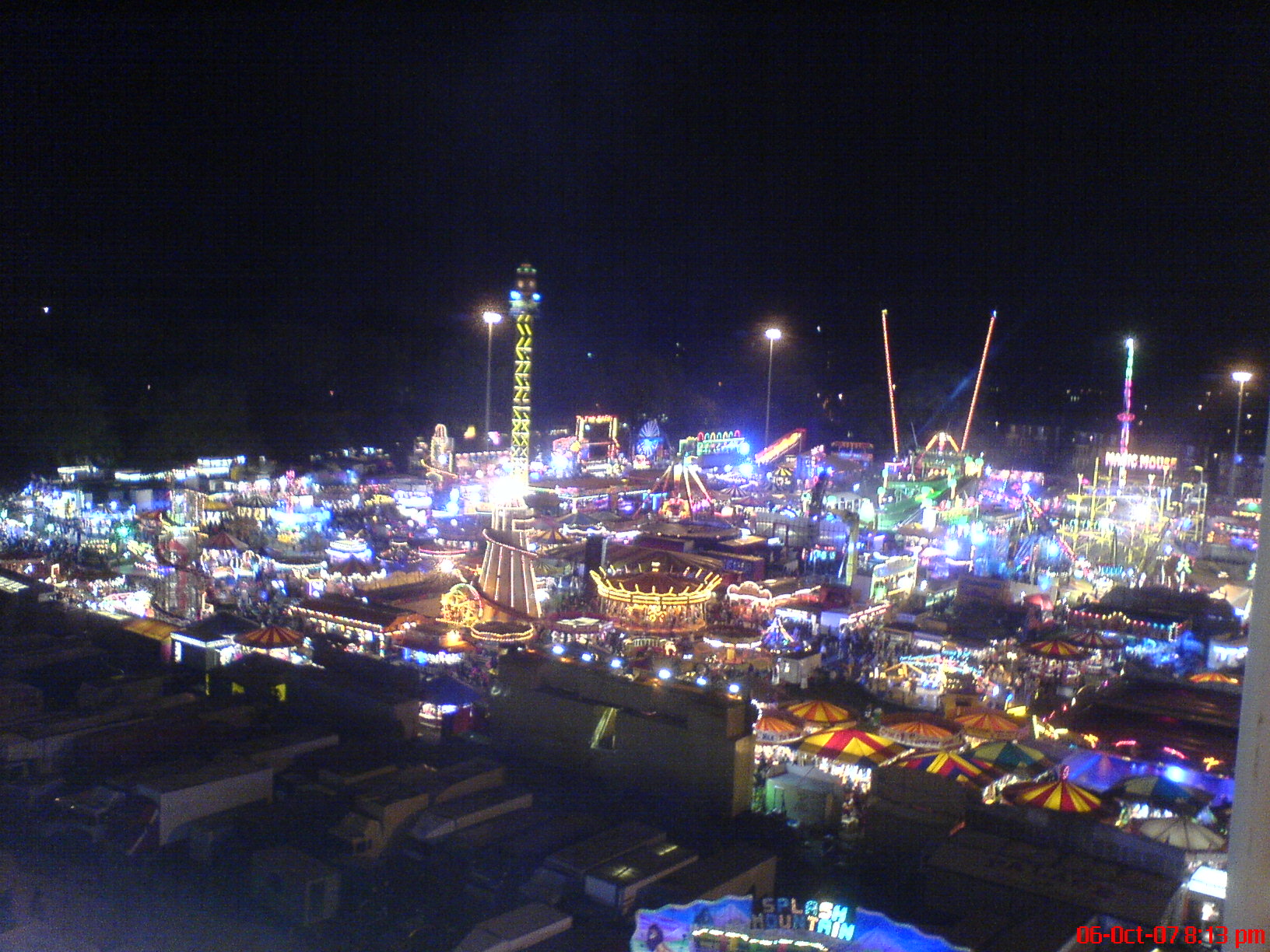
The Nottingham Goose Fair is an annual travelling funfair held at the Forest Recreation Ground in Nottingham, England, during the first week of October. Largely provided by travelling showmen, it is one of four established fairs in the United Kingdom to carry the name, the others being the smaller Goosey Fair in Tavistock, Devon, the Michaelmas Goose Fayre in Colyford, East Devon, and the Ovingham Goose Fair. In recent years, there have been more than 400,000 visitors to Nottingham's fair annually.
Now known for its fairground rides and attractions, Goose Fair started as a livestock and trade event, with a reputation for its excellent cheese. The name "Goose Fair" is derived from the thousands of geese that were driven from the Lincolnshire fens in the East of England to be sold in Nottingham at the fair each year.
In 1284, a royal charter was granted by King Edward I that referred to city fairs in Nottingham, although it is thought that a fair was already established in the city before then. Goose Fair was originally held for eight days starting on 21 September, but was moved to early October in 1752, when the Gregorian calendar was first adopted in Britain. For centuries, the fair was held in Nottingham's Old Market Square in the city centre, until it was moved to the Forest Recreation Ground in 1928, due to space limitations and planned redevelopment of the market square.
Goose Fair was cancelled in 1646 after an outbreak of the bubonic plague, and again during the two World Wars of the 20th century. The fair was not held in 2020 because of the COVID-19 pandemic, and it was cancelled in 2021 for the second year running, after plans for an entrance fee and perimeter fencing were rejected by the organisers. For 2022, as of March, negotiations were underway to extend the fair's normal five-day duration to ten days.
It is not known exactly how long a fair has existed in Nottingham, but it has certainly been around for many centuries and may date back more than a thousand years. The earliest reference to a "St Mathew's Fair" in Nottingham, held on 21 September, comes from Saxon times. It is also known that the Danes had a settlement in Nottingham, and they most likely established a market, which may have included a primitive fair.
The creation of commercial fairs by royal charter was widespread in the twelfth and thirteenth centuries. In 1164, a charter was granted by King Henry II to Lenton Priory, near Nottingham, to hold an annual Martinmas Fair starting on 11 November. The royal charter meant that this fair took priority over any other fairs in the Nottingham district, which were forbidden for the duration of the Lenton fair. Then in 1284, King Edward I granted a charter for a separate fair to be held in Nottingham on St. Matthew's Day, although it is clear that a fair had already been established in Nottingham by the time the charter was granted. Nottingham's fair flourished in Tudor times, because the 1284 charter released it from the restrictions and competition of the nearby Lenton fair.
The first reference to the name "Goose Fair" can be found in the Nottingham Borough Records of 1541, where 21 September is referred to as "Goose Fair Day". The name comes from the hundreds of geese that were driven on foot from Lincolnshire, Cambridgeshire and Norfolk to be sold in Nottingham. The birds' feet were coated with a mixture of tar and sand to protect them on the long journey of fifty miles or more. It is recorded that up to 20,000 geese were driven up through Hockley and along "Goose Gate" into Nottingham's Old Market Square, where the fair was held annually for hundreds of years. The geese were sold in Nottingham to provide the traditional Michaelmas dish of roast goose; geese that had hatched in the spring were ready for the table by the end of September. Michaelmas was celebrated on 29 September to mark the end of the harvest season.
In 1752, the fair was moved back from St Matthew's Day (21 September) to the first week in October because of a revision to the British calendar. On that year, eleven days (3–13 September) were omitted altogether from the calendar so that Britain could finally adopt the Gregorian calendar (following the Calendar (New Style) Act 1750) to align with the rest of western Europe. Hence, the start of Goose Fair was shifted to 2 October and has remained on or around that date ever since.
Hub AI
Nottingham Goose Fair AI simulator
(@Nottingham Goose Fair_simulator)
Nottingham Goose Fair
The Nottingham Goose Fair is an annual travelling funfair held at the Forest Recreation Ground in Nottingham, England, during the first week of October. Largely provided by travelling showmen, it is one of four established fairs in the United Kingdom to carry the name, the others being the smaller Goosey Fair in Tavistock, Devon, the Michaelmas Goose Fayre in Colyford, East Devon, and the Ovingham Goose Fair. In recent years, there have been more than 400,000 visitors to Nottingham's fair annually.
Now known for its fairground rides and attractions, Goose Fair started as a livestock and trade event, with a reputation for its excellent cheese. The name "Goose Fair" is derived from the thousands of geese that were driven from the Lincolnshire fens in the East of England to be sold in Nottingham at the fair each year.
In 1284, a royal charter was granted by King Edward I that referred to city fairs in Nottingham, although it is thought that a fair was already established in the city before then. Goose Fair was originally held for eight days starting on 21 September, but was moved to early October in 1752, when the Gregorian calendar was first adopted in Britain. For centuries, the fair was held in Nottingham's Old Market Square in the city centre, until it was moved to the Forest Recreation Ground in 1928, due to space limitations and planned redevelopment of the market square.
Goose Fair was cancelled in 1646 after an outbreak of the bubonic plague, and again during the two World Wars of the 20th century. The fair was not held in 2020 because of the COVID-19 pandemic, and it was cancelled in 2021 for the second year running, after plans for an entrance fee and perimeter fencing were rejected by the organisers. For 2022, as of March, negotiations were underway to extend the fair's normal five-day duration to ten days.
It is not known exactly how long a fair has existed in Nottingham, but it has certainly been around for many centuries and may date back more than a thousand years. The earliest reference to a "St Mathew's Fair" in Nottingham, held on 21 September, comes from Saxon times. It is also known that the Danes had a settlement in Nottingham, and they most likely established a market, which may have included a primitive fair.
The creation of commercial fairs by royal charter was widespread in the twelfth and thirteenth centuries. In 1164, a charter was granted by King Henry II to Lenton Priory, near Nottingham, to hold an annual Martinmas Fair starting on 11 November. The royal charter meant that this fair took priority over any other fairs in the Nottingham district, which were forbidden for the duration of the Lenton fair. Then in 1284, King Edward I granted a charter for a separate fair to be held in Nottingham on St. Matthew's Day, although it is clear that a fair had already been established in Nottingham by the time the charter was granted. Nottingham's fair flourished in Tudor times, because the 1284 charter released it from the restrictions and competition of the nearby Lenton fair.
The first reference to the name "Goose Fair" can be found in the Nottingham Borough Records of 1541, where 21 September is referred to as "Goose Fair Day". The name comes from the hundreds of geese that were driven on foot from Lincolnshire, Cambridgeshire and Norfolk to be sold in Nottingham. The birds' feet were coated with a mixture of tar and sand to protect them on the long journey of fifty miles or more. It is recorded that up to 20,000 geese were driven up through Hockley and along "Goose Gate" into Nottingham's Old Market Square, where the fair was held annually for hundreds of years. The geese were sold in Nottingham to provide the traditional Michaelmas dish of roast goose; geese that had hatched in the spring were ready for the table by the end of September. Michaelmas was celebrated on 29 September to mark the end of the harvest season.
In 1752, the fair was moved back from St Matthew's Day (21 September) to the first week in October because of a revision to the British calendar. On that year, eleven days (3–13 September) were omitted altogether from the calendar so that Britain could finally adopt the Gregorian calendar (following the Calendar (New Style) Act 1750) to align with the rest of western Europe. Hence, the start of Goose Fair was shifted to 2 October and has remained on or around that date ever since.