



Community hub
Recent from talks
Knowledge base stats:
Talk channels stats:
Members stats:
Occupational hygiene
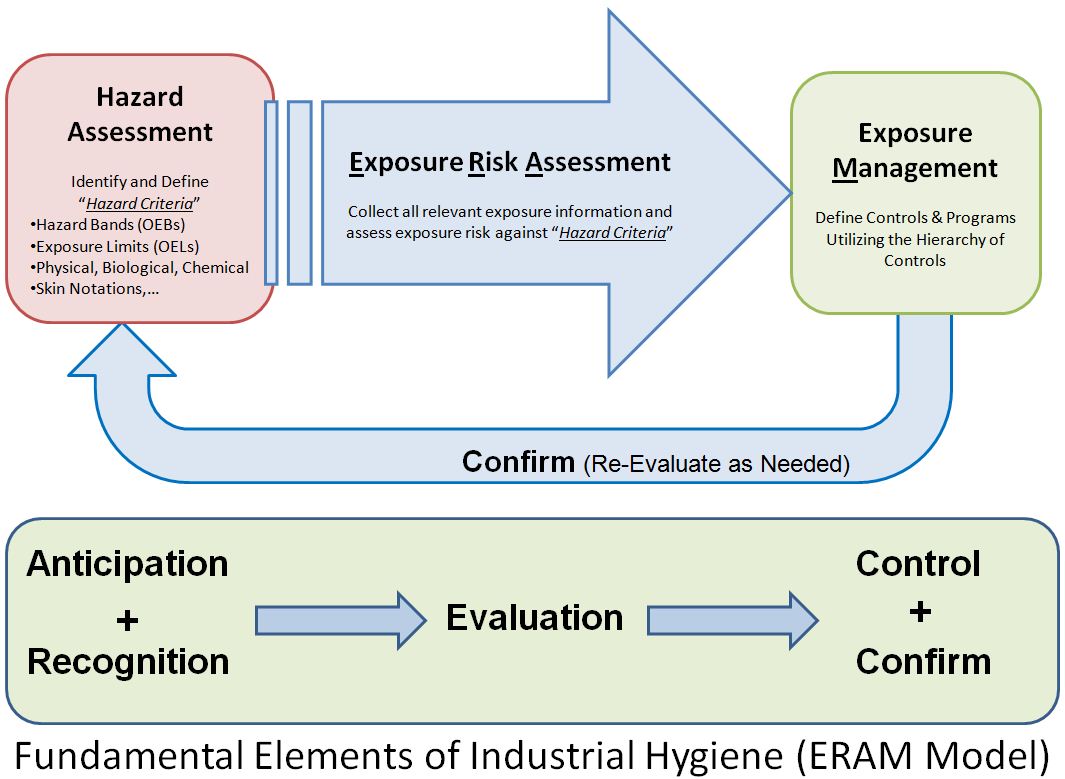
Occupational hygiene or industrial hygiene (IH) is the anticipation, recognition, evaluation, control, and confirmation (ARECC) of protection from risks associated with exposures to hazards in, or arising from, the workplace that may result in injury, illness, impairment, or affect the well-being of workers and members of the community. These hazards or stressors are typically divided into the categories biological, chemical, physical, ergonomic and psychosocial. The risk of a health effect from a given stressor is a function of the hazard multiplied by the exposure to the individual or group. For chemicals, the hazard can be understood by the dose response profile most often based on toxicological studies or models. Occupational hygienists work closely with toxicologists (see Toxicology) for understanding chemical hazards, physicists (see Physics) for physical hazards, and physicians and microbiologists for biological hazards (see Microbiology, Tropical medicine, Infection). Environmental and occupational hygienists are considered experts in exposure science and exposure risk management. Depending on an individual's type of job, a hygienist will apply their exposure science expertise for the protection of workers, consumers and/or communities.
The British Occupational Hygiene Society (BOHS) defines that "occupational hygiene is about the prevention of ill-health from work, through recognizing, evaluating and controlling the risks". The International Occupational Hygiene Association (IOHA) refers to occupational hygiene as the discipline of anticipating, recognizing, evaluating and controlling health hazards in the working environment with the objective of protecting worker health and well-being and safeguarding the community at large. The term occupational hygiene (used in the UK and Commonwealth countries as well as much of Europe) is synonymous with industrial hygiene (used in the US, Latin America, and other countries that received initial technical support or training from US sources). The term industrial hygiene traditionally stems from industries with construction, mining or manufacturing, and occupational hygiene refers to all types of industry such as those listed for industrial hygiene as well as financial and support services industries and refers to "work", "workplace" and "place of work" in general. Environmental hygiene addresses similar issues to occupational hygiene but is likely to be about broad industry or broad issues affecting the local community, broader society, region or country.
The profession of occupational hygiene uses strict and rigorous scientific methodology and often requires professional judgment based on experience and education in determining the potential for hazardous exposure risks in workplace and environmental studies. These aspects of occupational hygiene can often be referred to as the "art" of occupational hygiene and is used in a similar sense to the "art" of medicine. In fact "occupational hygiene" is both an aspect of preventive medicine and in particular occupational medicine, in that its goal is to prevent industrial disease, using the science of risk management, exposure assessment and industrial safety. Ultimately professionals seek to implement "safe" systems, procedures or methods to be applied in the workplace or to the environment. Prevention of exposure to long working hours has been identified as a focus for occupational hygiene when a landmark United Nations study estimated that this occupational hazard causes an estimated 745,000 occupational fatalities per year worldwide, the largest burden of disease attributed to any single occupational hazard.
Industrial hygiene refers to the science of anticipating, recognizing, evaluating, and controlling workplaces to prevent illness or injuries to the workers. Industrial hygienists use various environmental monitoring and analytical methods to establish how workers are exposed. In turn, they employ techniques such as engineering and work practice controls to control any potential health hazards.
Anticipation involves identifying potential hazards in the workplace before they are introduced. The uncertainty of health hazards ranges from reasonable expectations to mere speculations. However, it implies that the industrial hygienist must understand the nature of changes in the processes, products, environments, and workforces of the workplaces and how they can affect workers' well-being.
Recognition of engineering, work practice, and administrative controls are the primary means of reducing the workers` exposure to occupational hazards. Timely recognition of hazards minimizes the workers' exposure to the hazards by removing or reducing the hazard's source or isolating the workers from the hazards.
Evaluation of a worksite is a significant step that helps the industrial hygienists establish jobs and worksites that are a potential source of problems. During the evaluation, the industrial hygienist measures and identifies the problem tasks, exposures, and tasks. The most effective worksites assessment includes all the jobs, work activities, and operations. The industrial hygienists inspect research and evaluations of how given physical or chemical hazards affect the workers' health. If the workplace contains a health hazard, the industrial hygienist recommends appropriate corrective actions.
Control measures include removing toxic chemicals and replacing harmful toxic materials with less hazardous ones. It also involves confining work operations or enclosing work processes and installing general and local ventilation systems. Controls change how the task is performed. Some of the basic work practice controls include: following the laid procedures to reduce exposures while at the workplace, inspecting and maintaining processes regularly, and implementing reasonable workplace procedures.
Hub AI
Occupational hygiene AI simulator
(@Occupational hygiene_simulator)
Occupational hygiene
Occupational hygiene or industrial hygiene (IH) is the anticipation, recognition, evaluation, control, and confirmation (ARECC) of protection from risks associated with exposures to hazards in, or arising from, the workplace that may result in injury, illness, impairment, or affect the well-being of workers and members of the community. These hazards or stressors are typically divided into the categories biological, chemical, physical, ergonomic and psychosocial. The risk of a health effect from a given stressor is a function of the hazard multiplied by the exposure to the individual or group. For chemicals, the hazard can be understood by the dose response profile most often based on toxicological studies or models. Occupational hygienists work closely with toxicologists (see Toxicology) for understanding chemical hazards, physicists (see Physics) for physical hazards, and physicians and microbiologists for biological hazards (see Microbiology, Tropical medicine, Infection). Environmental and occupational hygienists are considered experts in exposure science and exposure risk management. Depending on an individual's type of job, a hygienist will apply their exposure science expertise for the protection of workers, consumers and/or communities.
The British Occupational Hygiene Society (BOHS) defines that "occupational hygiene is about the prevention of ill-health from work, through recognizing, evaluating and controlling the risks". The International Occupational Hygiene Association (IOHA) refers to occupational hygiene as the discipline of anticipating, recognizing, evaluating and controlling health hazards in the working environment with the objective of protecting worker health and well-being and safeguarding the community at large. The term occupational hygiene (used in the UK and Commonwealth countries as well as much of Europe) is synonymous with industrial hygiene (used in the US, Latin America, and other countries that received initial technical support or training from US sources). The term industrial hygiene traditionally stems from industries with construction, mining or manufacturing, and occupational hygiene refers to all types of industry such as those listed for industrial hygiene as well as financial and support services industries and refers to "work", "workplace" and "place of work" in general. Environmental hygiene addresses similar issues to occupational hygiene but is likely to be about broad industry or broad issues affecting the local community, broader society, region or country.
The profession of occupational hygiene uses strict and rigorous scientific methodology and often requires professional judgment based on experience and education in determining the potential for hazardous exposure risks in workplace and environmental studies. These aspects of occupational hygiene can often be referred to as the "art" of occupational hygiene and is used in a similar sense to the "art" of medicine. In fact "occupational hygiene" is both an aspect of preventive medicine and in particular occupational medicine, in that its goal is to prevent industrial disease, using the science of risk management, exposure assessment and industrial safety. Ultimately professionals seek to implement "safe" systems, procedures or methods to be applied in the workplace or to the environment. Prevention of exposure to long working hours has been identified as a focus for occupational hygiene when a landmark United Nations study estimated that this occupational hazard causes an estimated 745,000 occupational fatalities per year worldwide, the largest burden of disease attributed to any single occupational hazard.
Industrial hygiene refers to the science of anticipating, recognizing, evaluating, and controlling workplaces to prevent illness or injuries to the workers. Industrial hygienists use various environmental monitoring and analytical methods to establish how workers are exposed. In turn, they employ techniques such as engineering and work practice controls to control any potential health hazards.
Anticipation involves identifying potential hazards in the workplace before they are introduced. The uncertainty of health hazards ranges from reasonable expectations to mere speculations. However, it implies that the industrial hygienist must understand the nature of changes in the processes, products, environments, and workforces of the workplaces and how they can affect workers' well-being.
Recognition of engineering, work practice, and administrative controls are the primary means of reducing the workers` exposure to occupational hazards. Timely recognition of hazards minimizes the workers' exposure to the hazards by removing or reducing the hazard's source or isolating the workers from the hazards.
Evaluation of a worksite is a significant step that helps the industrial hygienists establish jobs and worksites that are a potential source of problems. During the evaluation, the industrial hygienist measures and identifies the problem tasks, exposures, and tasks. The most effective worksites assessment includes all the jobs, work activities, and operations. The industrial hygienists inspect research and evaluations of how given physical or chemical hazards affect the workers' health. If the workplace contains a health hazard, the industrial hygienist recommends appropriate corrective actions.
Control measures include removing toxic chemicals and replacing harmful toxic materials with less hazardous ones. It also involves confining work operations or enclosing work processes and installing general and local ventilation systems. Controls change how the task is performed. Some of the basic work practice controls include: following the laid procedures to reduce exposures while at the workplace, inspecting and maintaining processes regularly, and implementing reasonable workplace procedures.