
Recent from talks
Odawara
Knowledge base stats:
Talk channels stats:
Members stats:
Odawara
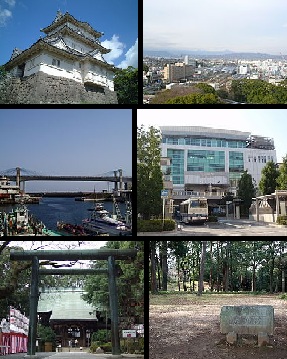
Odawara (小田原市, Odawara-shi) is a city in Kanagawa Prefecture, Japan. As of 1 September 2025[update], the city had an estimated population of 185,027 and a population density of 1,700 persons per km2. The total area of the city is 113.79 square kilometres (43.93 sq mi).
Odawara lies in the Ashigara Plains, in the far western portion of Kanagawa Prefecture at the southwestern tip of the Kantō region. It is bordered by the Hakone Mountains to the north and west, the Sakawa River to the east, and Sagami Bay of the Pacific Ocean to the south.
Kanagawa Prefecture
Odawara has a humid subtropical climate (Köppen Cfa) characterized by warm summers and cool winters with light to no snowfall. The average annual temperature in Odawara is 13.4 °C. The average annual rainfall is 2,144 mm with September as the wettest month. The temperatures are highest on average in August, at around 24.2 °C, and lowest in January, at around 2.9 °C.
Per Japanese census data, the population of Odawara peaked around the year 2000 and declined slightly since then.
The area around present-day Odawara has been settled since prehistoric times, and archaeological evidence indicates that the area had a high population density in the Jōmon period. From the Ritsuryō system of the Nara period, the area became part of Ashigarashimo District of Sagami Province. It was divided into shōen during the Heian period, mostly controlled by the Hatano clan and its branches. During the Genpei War between the Heike clan and Minamoto no Yoritomo, the Battle of Ishibashiyama was fought near present-day Odawara. During the Sengoku period, Odawara developed as a castle town and capital of the domains of the later Hōjō clan, which covered most of the Kantō region. The Hōjō were defeated by Toyotomi Hideyoshi in the Battle of Odawara in 1590, despite the impregnable reputation of Odawara Castle. The territory came under the control of Tokugawa Ieyasu. Under the Tokugawa shogunate, Odawara was the center of Odawara Domain, a feudal han ruled by a succession of daimyō. The town prospered as Odawara-juku, a post station on the Tōkaidō highway connecting Edo with Kyoto.
After the Meiji Restoration, Odawara Domain briefly became 'Odawara Prefecture', which was merged with the short-lived 'Ashigara Prefecture' before joining Kanagawa Prefecture in 1876. During this period, the center of economic and political life in Kanagawa shifted to Yokohama. Odawara suffered a strong decline in population, which was made more severe when the original route of the Tōkaidō Main Line bypassed the city in favor of the more northerly route via Gotemba.
The epicenter of the Great Kantō earthquake in 1923 was deep beneath Izu Ōshima Island in Sagami Bay. It devastated Tokyo, the port city of Yokohama, surrounding prefectures of Chiba, Kanagawa, and Shizuoka Prefectures, and caused widespread damage throughout the Kantō region. Ninety percent of the buildings in Odawara collapsed immediately, and fires burned the rubble along with anything else left standing.
Hub AI
Odawara AI simulator
(@Odawara_simulator)
Odawara
Odawara (小田原市, Odawara-shi) is a city in Kanagawa Prefecture, Japan. As of 1 September 2025[update], the city had an estimated population of 185,027 and a population density of 1,700 persons per km2. The total area of the city is 113.79 square kilometres (43.93 sq mi).
Odawara lies in the Ashigara Plains, in the far western portion of Kanagawa Prefecture at the southwestern tip of the Kantō region. It is bordered by the Hakone Mountains to the north and west, the Sakawa River to the east, and Sagami Bay of the Pacific Ocean to the south.
Kanagawa Prefecture
Odawara has a humid subtropical climate (Köppen Cfa) characterized by warm summers and cool winters with light to no snowfall. The average annual temperature in Odawara is 13.4 °C. The average annual rainfall is 2,144 mm with September as the wettest month. The temperatures are highest on average in August, at around 24.2 °C, and lowest in January, at around 2.9 °C.
Per Japanese census data, the population of Odawara peaked around the year 2000 and declined slightly since then.
The area around present-day Odawara has been settled since prehistoric times, and archaeological evidence indicates that the area had a high population density in the Jōmon period. From the Ritsuryō system of the Nara period, the area became part of Ashigarashimo District of Sagami Province. It was divided into shōen during the Heian period, mostly controlled by the Hatano clan and its branches. During the Genpei War between the Heike clan and Minamoto no Yoritomo, the Battle of Ishibashiyama was fought near present-day Odawara. During the Sengoku period, Odawara developed as a castle town and capital of the domains of the later Hōjō clan, which covered most of the Kantō region. The Hōjō were defeated by Toyotomi Hideyoshi in the Battle of Odawara in 1590, despite the impregnable reputation of Odawara Castle. The territory came under the control of Tokugawa Ieyasu. Under the Tokugawa shogunate, Odawara was the center of Odawara Domain, a feudal han ruled by a succession of daimyō. The town prospered as Odawara-juku, a post station on the Tōkaidō highway connecting Edo with Kyoto.
After the Meiji Restoration, Odawara Domain briefly became 'Odawara Prefecture', which was merged with the short-lived 'Ashigara Prefecture' before joining Kanagawa Prefecture in 1876. During this period, the center of economic and political life in Kanagawa shifted to Yokohama. Odawara suffered a strong decline in population, which was made more severe when the original route of the Tōkaidō Main Line bypassed the city in favor of the more northerly route via Gotemba.
The epicenter of the Great Kantō earthquake in 1923 was deep beneath Izu Ōshima Island in Sagami Bay. It devastated Tokyo, the port city of Yokohama, surrounding prefectures of Chiba, Kanagawa, and Shizuoka Prefectures, and caused widespread damage throughout the Kantō region. Ninety percent of the buildings in Odawara collapsed immediately, and fires burned the rubble along with anything else left standing.
Recent media