
Recent from talks
Street name
Knowledge base stats:
Talk channels stats:
Members stats:
Street name
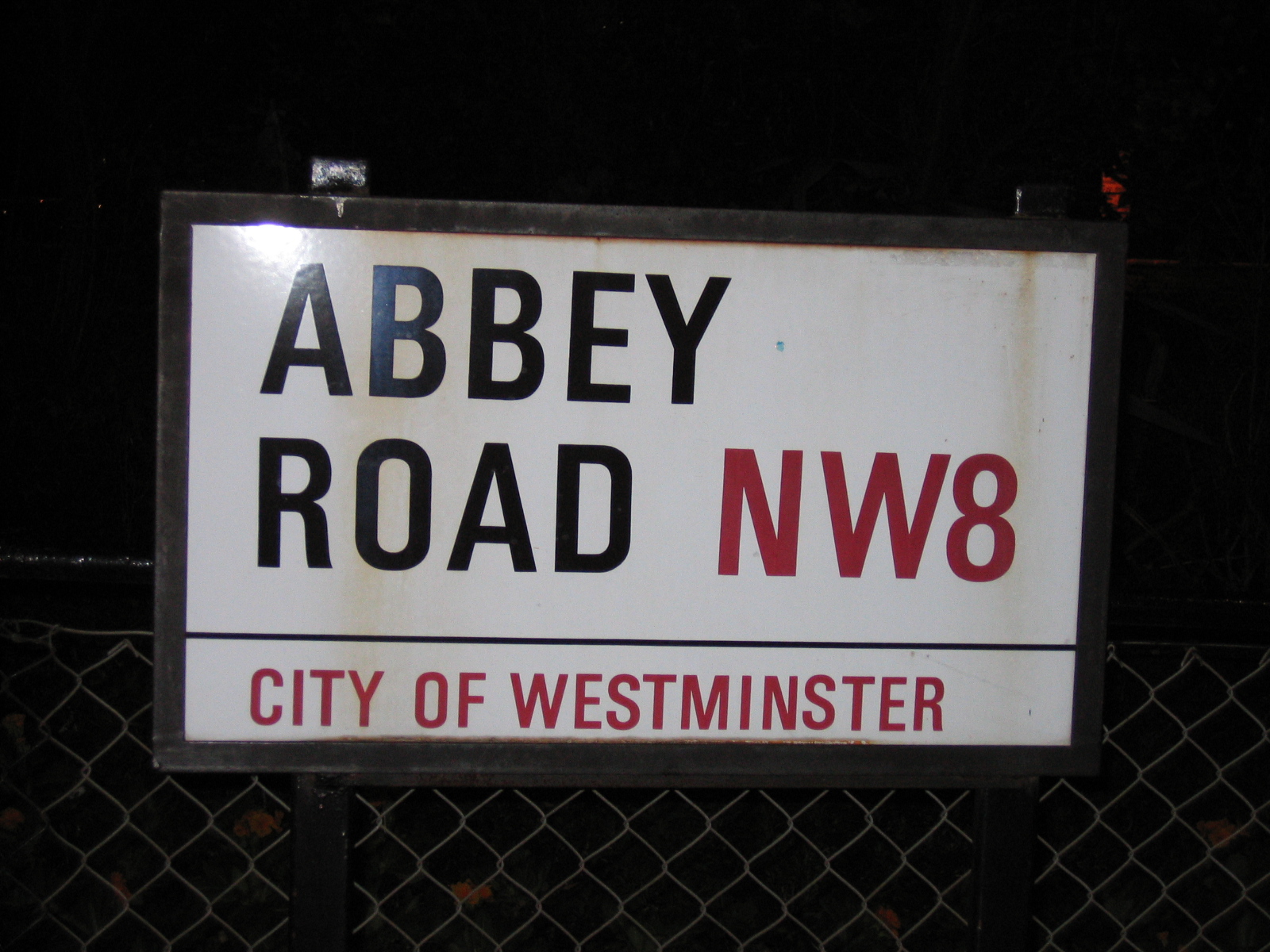
A street name is an identifying name given to a street or road. In toponymic terminology, names of streets and roads are referred to as odonyms or hodonyms (from Ancient Greek ὁδός hodós 'road', and ὄνυμα ónuma 'name', i.e., the Doric and Aeolic form of ὄνομα ónoma 'name'). The street name usually forms part of the address (though addresses in some parts of the world, notably most of Japan, make no reference to street names). Buildings are often given numbers along the street to further help identify them. Odonymy is the study of road names.
Names are often given in a two-part form: an individual name known as the specific, and an indicator of the type of street, known as the generic. Examples are "Main Road", "Fleet Street" and "Park Avenue". The type of street stated, however, can sometimes be misleading: a street named "Park Avenue" need not have the characteristics of an avenue in the generic sense. Some street names have only one element, such as "The Beeches" or "Boulevard". In the 19th and early 20th centuries, it was common when writing a two-part street name (especially in Britain) to link the two parts with a hyphen and not capitalise the generic (e.g. Broad-street, London-road). This practice has now died out.
A street name can also include a direction (the cardinal points east, west, north, south, or the quadrants NW, NE, SW, SE) especially in cities with a grid-numbering system. Examples include "E Roosevelt Boulevard" and "14th Street NW". These directions are often (though not always) used to differentiate two sections of a street. Other qualifiers may be used for that purpose as well. Examples: upper/lower, old/new, or adding "extension".
"Main Street" and "High Street" are common names for the major street in the middle of a shopping area in the United States and the United Kingdom, respectively. The most common street name in the US is "2nd" or "Second".
Streets are normally named, and properties on them numbered, by decision of the local authority, which may adopt a detailed policy. For instance the city of Leeds, UK, provides that:
The etymology of a street name is sometimes very obvious, but at other times it might be obscure or even forgotten.
In the United States, most streets are named after numbers, landscapes, trees (a combination of trees and landscapes such as "Oakhill" is used often in residential areas), or the surname of an important individual (in some instances, it is just a commonly held surname such as Smith).
Some streets, such as Elm Street in East Machias, Maine, have been renamed due to features changing. Elm Street's new name, Jacksonville Road, was chosen because it leads to the village of Jacksonville. Its former name was chosen because of elm trees; it was renamed when all of the trees along the street succumbed to Dutch elm disease.
Hub AI
Street name AI simulator
(@Street name_simulator)
Street name
A street name is an identifying name given to a street or road. In toponymic terminology, names of streets and roads are referred to as odonyms or hodonyms (from Ancient Greek ὁδός hodós 'road', and ὄνυμα ónuma 'name', i.e., the Doric and Aeolic form of ὄνομα ónoma 'name'). The street name usually forms part of the address (though addresses in some parts of the world, notably most of Japan, make no reference to street names). Buildings are often given numbers along the street to further help identify them. Odonymy is the study of road names.
Names are often given in a two-part form: an individual name known as the specific, and an indicator of the type of street, known as the generic. Examples are "Main Road", "Fleet Street" and "Park Avenue". The type of street stated, however, can sometimes be misleading: a street named "Park Avenue" need not have the characteristics of an avenue in the generic sense. Some street names have only one element, such as "The Beeches" or "Boulevard". In the 19th and early 20th centuries, it was common when writing a two-part street name (especially in Britain) to link the two parts with a hyphen and not capitalise the generic (e.g. Broad-street, London-road). This practice has now died out.
A street name can also include a direction (the cardinal points east, west, north, south, or the quadrants NW, NE, SW, SE) especially in cities with a grid-numbering system. Examples include "E Roosevelt Boulevard" and "14th Street NW". These directions are often (though not always) used to differentiate two sections of a street. Other qualifiers may be used for that purpose as well. Examples: upper/lower, old/new, or adding "extension".
"Main Street" and "High Street" are common names for the major street in the middle of a shopping area in the United States and the United Kingdom, respectively. The most common street name in the US is "2nd" or "Second".
Streets are normally named, and properties on them numbered, by decision of the local authority, which may adopt a detailed policy. For instance the city of Leeds, UK, provides that:
The etymology of a street name is sometimes very obvious, but at other times it might be obscure or even forgotten.
In the United States, most streets are named after numbers, landscapes, trees (a combination of trees and landscapes such as "Oakhill" is used often in residential areas), or the surname of an important individual (in some instances, it is just a commonly held surname such as Smith).
Some streets, such as Elm Street in East Machias, Maine, have been renamed due to features changing. Elm Street's new name, Jacksonville Road, was chosen because it leads to the village of Jacksonville. Its former name was chosen because of elm trees; it was renamed when all of the trees along the street succumbed to Dutch elm disease.
Recent media