



Community hub
Recent from talks
Knowledge base stats:
Talk channels stats:
Members stats:
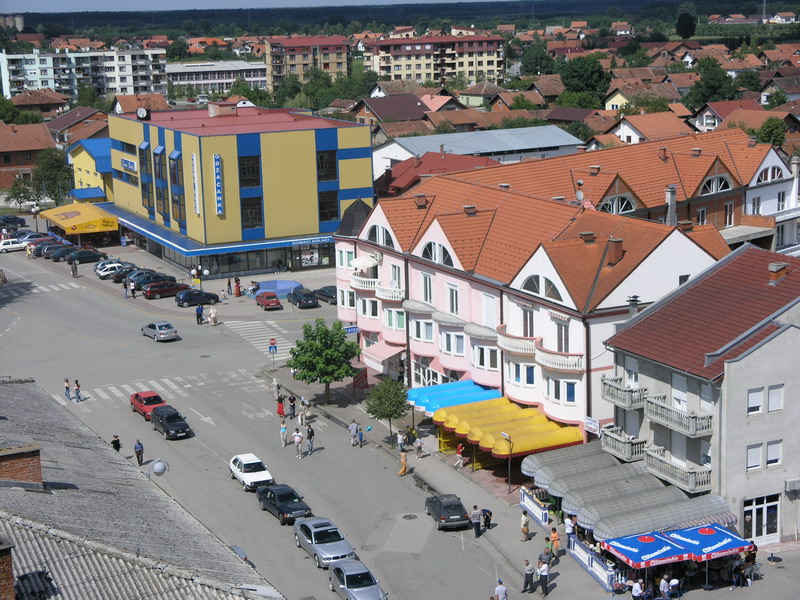
Odžak
Odžak is a town and municipality located in Posavina Canton of the Federation of Bosnia and Herzegovina, an entity of Bosnia and Herzegovina. It is situated in the northern part of Bosnia and Herzegovina, near the river Sava, 10 km (6.2 mi) from the border with Croatia. The name is derived from Turkish Ocak, during its time as a frontier town of the Ottoman Empire, and means "fireplace" in Turkish and "chimney" in modern Bosnian.
The town of Odžak is notable for being the battlegrounds of the last battle in Europe of World War II, fought between the Croatian Ustaše and Yugoslav Partisans.
During the Roman era, there was a settlement and a fortress about 670 meters long in the area of the Odžak municipality, discovered by Karlo Mać. These are the remains of a large Roman city named Ad Basante (near Bosna). At that time, the Bosna River flowed beside today's mosque, and the city was right on the shore. It was necessary for the Romans because, in this area, from 6 to 9 AD, there was a war between the Illyrian tribes and Roman legions. The Illyrian tribe Breuci lived in the Posavina area. They, under Baton, rose from the Fruška Gora to the Adriatic Sea, and the Romans said these were the toughest campaigns for them since the Punic Wars. From the Tabula Peutingeriana, a map marking the routes and postal stations from Rome to Constantinople, it is visible that there was a route that passed from Slavonski Brod across Vučjak, and its remains are still in the Jošik area. The road ended in Soli (today's Tuzla).
The Huns passed this way during their migration into Europe and burned the city to the ground. After the Slavs settled in Europe and defeated the Avars, a settlement named Radunjevac was established. It was not as large as the Roman one, but gradually expanded. Nearby, Dobor Grad was founded as the gateway to Bosnia to protect the route along the river valley. It was the scene of frequent battles between the Hungarians and the local Bosnian nobility.
The current city of Odžak is mentioned in historical records from 1593 as a settlement and fortress. By this point, the settlement was now under Ottoman control. That year, by the Sultan's decree, the odžakluk was introduced in Bosnia with the right of inheritance, which was awarded to commanders of the Turkish army. Miralem-beg was given this area as an odžak, a possession, and he built a small fortress using the remains of the old Roman city. After his death, his son Ibrahim inherited this property, and at that time, Odžak represented a larger settlement and border fortress with a small number of border guards.
Historical records state that the Austrian army crossed the Sava river and conquered Odžak several times until the signing of the Treaty of Belgrade in 1739, when a new border of Bosnia along the Sava River was established. For the next 100 years, Odžak spent in peace, cultural, and economic progress. The urban structure of the city was based on the principle of organizing residential groups, mahalas, connected with business zones. A wooden mosque, called Drvenija, was also built.
In 1836, the Posavina Rebellion (Jovica Ilić's) erupted, during which Odžak was burned and its population nearly halved. Some of the odžakluks of Husein captain were also burned. The Drvenija mosque in Odžak was burned, and it is not known whether it was ever rebuilt. At that time, Odžak transformed from a large kasaba into a neglected settlement.
With the establishment of Austro-Hungarian authority in 1878 in Bosnia and Herzegovina, a new period for Odžak began. A new capitalist way of economy and a new way of building, which involves the construction of high buildings where business space on the ground floor is combined with residential space on the upper floors, were introduced. Buildings were constructed with solid material, brick, according to new regulations that introduced street and building line regulations. The Austro-Hungarian period was a time of intensive construction, satisfying both the needs of the authorities and the population. The population engaged in agriculture, livestock breeding, production, and processing of plums, which were dried and exported to Austria and Czechia. During this period, the Administrative building or Beledija, was completed in 1903, as evidenced by the inscription above the entrance doors.
Hub AI
Odžak AI simulator
(@Odžak_simulator)
Odžak
Odžak is a town and municipality located in Posavina Canton of the Federation of Bosnia and Herzegovina, an entity of Bosnia and Herzegovina. It is situated in the northern part of Bosnia and Herzegovina, near the river Sava, 10 km (6.2 mi) from the border with Croatia. The name is derived from Turkish Ocak, during its time as a frontier town of the Ottoman Empire, and means "fireplace" in Turkish and "chimney" in modern Bosnian.
The town of Odžak is notable for being the battlegrounds of the last battle in Europe of World War II, fought between the Croatian Ustaše and Yugoslav Partisans.
During the Roman era, there was a settlement and a fortress about 670 meters long in the area of the Odžak municipality, discovered by Karlo Mać. These are the remains of a large Roman city named Ad Basante (near Bosna). At that time, the Bosna River flowed beside today's mosque, and the city was right on the shore. It was necessary for the Romans because, in this area, from 6 to 9 AD, there was a war between the Illyrian tribes and Roman legions. The Illyrian tribe Breuci lived in the Posavina area. They, under Baton, rose from the Fruška Gora to the Adriatic Sea, and the Romans said these were the toughest campaigns for them since the Punic Wars. From the Tabula Peutingeriana, a map marking the routes and postal stations from Rome to Constantinople, it is visible that there was a route that passed from Slavonski Brod across Vučjak, and its remains are still in the Jošik area. The road ended in Soli (today's Tuzla).
The Huns passed this way during their migration into Europe and burned the city to the ground. After the Slavs settled in Europe and defeated the Avars, a settlement named Radunjevac was established. It was not as large as the Roman one, but gradually expanded. Nearby, Dobor Grad was founded as the gateway to Bosnia to protect the route along the river valley. It was the scene of frequent battles between the Hungarians and the local Bosnian nobility.
The current city of Odžak is mentioned in historical records from 1593 as a settlement and fortress. By this point, the settlement was now under Ottoman control. That year, by the Sultan's decree, the odžakluk was introduced in Bosnia with the right of inheritance, which was awarded to commanders of the Turkish army. Miralem-beg was given this area as an odžak, a possession, and he built a small fortress using the remains of the old Roman city. After his death, his son Ibrahim inherited this property, and at that time, Odžak represented a larger settlement and border fortress with a small number of border guards.
Historical records state that the Austrian army crossed the Sava river and conquered Odžak several times until the signing of the Treaty of Belgrade in 1739, when a new border of Bosnia along the Sava River was established. For the next 100 years, Odžak spent in peace, cultural, and economic progress. The urban structure of the city was based on the principle of organizing residential groups, mahalas, connected with business zones. A wooden mosque, called Drvenija, was also built.
In 1836, the Posavina Rebellion (Jovica Ilić's) erupted, during which Odžak was burned and its population nearly halved. Some of the odžakluks of Husein captain were also burned. The Drvenija mosque in Odžak was burned, and it is not known whether it was ever rebuilt. At that time, Odžak transformed from a large kasaba into a neglected settlement.
With the establishment of Austro-Hungarian authority in 1878 in Bosnia and Herzegovina, a new period for Odžak began. A new capitalist way of economy and a new way of building, which involves the construction of high buildings where business space on the ground floor is combined with residential space on the upper floors, were introduced. Buildings were constructed with solid material, brick, according to new regulations that introduced street and building line regulations. The Austro-Hungarian period was a time of intensive construction, satisfying both the needs of the authorities and the population. The population engaged in agriculture, livestock breeding, production, and processing of plums, which were dried and exported to Austria and Czechia. During this period, the Administrative building or Beledija, was completed in 1903, as evidenced by the inscription above the entrance doors.