



Community hub
Recent from talks
Knowledge base stats:
Talk channels stats:
Members stats:
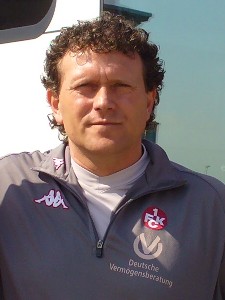
Olaf Marschall
Olaf Marschall (born 19 March 1966) is a German former professional footballer who played as a forward.
His professional career began in the DDR-Oberliga at 1. FC Lokomotive Leipzig, with whom he reached the final of the 1987 UEFA Cup Winners' Cup. In 1990 he went to FC Admira Wacker Mödling in Austria and in 1993 to Dynamo Dresden in the German Bundesliga. In 1998 he became German champion with 1. FC Kaiserslautern. With the Germany national team, he took part in the 1998 World Cup in France. Previously, he had been active in the GDR national team.
Marschall started playing soccer in the GDR at BSG Chemie Torgau and was soon transferred to 1. FC Lok Leipzig. There, he rose to stardom, becoming one of the most prolific scorers in the East German top-flight in the turbulent late 1980s and collecting caps for the East German football squad. There he made his debut in the DDR-Oberliga on 22 October 1983, at the age of 17, against Dynamo Dresden (2–2), when he was substituted on by his coach Harro Miller in the 62nd minute for Hans Richter. Under Miller's successor Hans-Ulrich Thomale, he became a regular player, although his goal quota varied greatly from season to season. In 1987 he reached the final of the UEFA Cup Winners' Cup with his club. In 1986 and 1987 he won the FDGB Cup with Leipzig, in 1986 and 1988 he was runner-up with his club in the GDR Oberliga. Marschall was regarded as a strong header which deft ballhandling skills, allowing him to play center-striker, hole and offensive midfield with equal effectiveness. He scored 43 goals in 135 Oberliga matches.
In the wake of the German reunification he joined Austrian outfit SCN Admira/Wacker in 1990 to stay on in Austria's Bundesliga, until he joined Dynamo Dresden to help the East German outfit escape relegation from the German Bundesliga in 1993–94. Under the coaches Thomas Parits and Sigfried Held, the team achieved sixth, fourth and third place during this period. Marschall's performances also increased from year to year – in 1992/93 he was the second-best scorer in the Austrian Football Bundesliga with 19 goals with Václav Daněk. In the summer of 1993, he returned to Germany.
Marschall moved to his native Saxony because he had signed with SG Dynamo Dresden, which played in the Bundesliga. He followed Siegfried "Siggi" Held, who had been hired there as a coach. In his first game with Dynamo, Marschall met his former club, which had since been renamed VfB Leipzig. Here he was successful with a triple pack (result 3:3). So far (2020), only six other players have managed this feat of scoring three goals in their Bundesliga debut. In total, he scored 11 goals in 32 games in his first Bundesliga season. He was by far the most successful goalscorer in his team and achieved relegation with Dresden, although the team had been deducted four points by the DFB. For financial reasons, the club sold the striker after just one year to runners-up 1. FC Kaiserslautern.
In 1994, he joined 1. FC Kaiserslautern and established himself as one of the elite scorers in the Bundesliga. He won the DFB-Pokal in 1996 and in 1998 the Bundesliga title. Marschall was the Bundesliga second-leading goal-scorer in the 1997–98 season, as he led Kaiserslautern to the title.
By signing Marschall for 2.8 million marks, FCK made the most expensive purchase in the club's history to date. In his first year in the Palatinate, he scored seven times in 26 games and finished fourth with his club. He struggled with injuries the following season and also made eight appearances as a substitute in his 19 games (2 goals). Marschall won the DFB Cup with Kaiserslautern in 1996 after being relegated from the Bundesliga with the Palatinate days earlier. Like almost the entire core of the team, he remained loyal to the club after being relegated to the second division and scored ten goals in 16 games, where he again had to take a break of almost six months due to injury.
After direct resurgence in 1997, he won the German championship in 1998 with Otto Rehhagel's team, where Marschall scored 21 goals in just 24 games. He finished second in the top scorers list that season, behind Ulf Kirsten, a goal behind. Again, bad luck with injuries prevented further appearances and a possibly even higher goal quota. By this time at the latest, Marshal had become a crowd favorite with the Palatinate. His partner in attack at that time was often Jürgen Rische, his former teammate at Lok Leipzig. In 1998/99, Olaf Marschall won the Goal of the Year (Germany) award with an Bicycle kick, scoring 12 goals. While Marschall scored nine goals in the preliminary round and Kaiserslautern was in third place, he only scored three goals in the second half of the season. His club slipped out of the Champions League ranks and eventually finished in fifth place.
Hub AI
Olaf Marschall AI simulator
(@Olaf Marschall_simulator)
Olaf Marschall
Olaf Marschall (born 19 March 1966) is a German former professional footballer who played as a forward.
His professional career began in the DDR-Oberliga at 1. FC Lokomotive Leipzig, with whom he reached the final of the 1987 UEFA Cup Winners' Cup. In 1990 he went to FC Admira Wacker Mödling in Austria and in 1993 to Dynamo Dresden in the German Bundesliga. In 1998 he became German champion with 1. FC Kaiserslautern. With the Germany national team, he took part in the 1998 World Cup in France. Previously, he had been active in the GDR national team.
Marschall started playing soccer in the GDR at BSG Chemie Torgau and was soon transferred to 1. FC Lok Leipzig. There, he rose to stardom, becoming one of the most prolific scorers in the East German top-flight in the turbulent late 1980s and collecting caps for the East German football squad. There he made his debut in the DDR-Oberliga on 22 October 1983, at the age of 17, against Dynamo Dresden (2–2), when he was substituted on by his coach Harro Miller in the 62nd minute for Hans Richter. Under Miller's successor Hans-Ulrich Thomale, he became a regular player, although his goal quota varied greatly from season to season. In 1987 he reached the final of the UEFA Cup Winners' Cup with his club. In 1986 and 1987 he won the FDGB Cup with Leipzig, in 1986 and 1988 he was runner-up with his club in the GDR Oberliga. Marschall was regarded as a strong header which deft ballhandling skills, allowing him to play center-striker, hole and offensive midfield with equal effectiveness. He scored 43 goals in 135 Oberliga matches.
In the wake of the German reunification he joined Austrian outfit SCN Admira/Wacker in 1990 to stay on in Austria's Bundesliga, until he joined Dynamo Dresden to help the East German outfit escape relegation from the German Bundesliga in 1993–94. Under the coaches Thomas Parits and Sigfried Held, the team achieved sixth, fourth and third place during this period. Marschall's performances also increased from year to year – in 1992/93 he was the second-best scorer in the Austrian Football Bundesliga with 19 goals with Václav Daněk. In the summer of 1993, he returned to Germany.
Marschall moved to his native Saxony because he had signed with SG Dynamo Dresden, which played in the Bundesliga. He followed Siegfried "Siggi" Held, who had been hired there as a coach. In his first game with Dynamo, Marschall met his former club, which had since been renamed VfB Leipzig. Here he was successful with a triple pack (result 3:3). So far (2020), only six other players have managed this feat of scoring three goals in their Bundesliga debut. In total, he scored 11 goals in 32 games in his first Bundesliga season. He was by far the most successful goalscorer in his team and achieved relegation with Dresden, although the team had been deducted four points by the DFB. For financial reasons, the club sold the striker after just one year to runners-up 1. FC Kaiserslautern.
In 1994, he joined 1. FC Kaiserslautern and established himself as one of the elite scorers in the Bundesliga. He won the DFB-Pokal in 1996 and in 1998 the Bundesliga title. Marschall was the Bundesliga second-leading goal-scorer in the 1997–98 season, as he led Kaiserslautern to the title.
By signing Marschall for 2.8 million marks, FCK made the most expensive purchase in the club's history to date. In his first year in the Palatinate, he scored seven times in 26 games and finished fourth with his club. He struggled with injuries the following season and also made eight appearances as a substitute in his 19 games (2 goals). Marschall won the DFB Cup with Kaiserslautern in 1996 after being relegated from the Bundesliga with the Palatinate days earlier. Like almost the entire core of the team, he remained loyal to the club after being relegated to the second division and scored ten goals in 16 games, where he again had to take a break of almost six months due to injury.
After direct resurgence in 1997, he won the German championship in 1998 with Otto Rehhagel's team, where Marschall scored 21 goals in just 24 games. He finished second in the top scorers list that season, behind Ulf Kirsten, a goal behind. Again, bad luck with injuries prevented further appearances and a possibly even higher goal quota. By this time at the latest, Marshal had become a crowd favorite with the Palatinate. His partner in attack at that time was often Jürgen Rische, his former teammate at Lok Leipzig. In 1998/99, Olaf Marschall won the Goal of the Year (Germany) award with an Bicycle kick, scoring 12 goals. While Marschall scored nine goals in the preliminary round and Kaiserslautern was in third place, he only scored three goals in the second half of the season. His club slipped out of the Champions League ranks and eventually finished in fifth place.