



Community hub
Recent from talks
Knowledge base stats:
Talk channels stats:
Members stats:
Vinča symbols
The Vinča symbols are a set of undeciphered symbols found on artifacts from the Neolithic Vinča culture and other "Old European" cultures of Central and Southeast Europe. They have sometimes been described as an example of proto-writing. The symbols went out of use around 3500 BC. Many scholars agree that the "writing" itself is not based on any language whatsoever and it is mostly symbolic.
In 1875, archaeological excavations directed by the Hungarian archaeologist Baroness Zsófia Torma (1840–1899) at Tordos (present Turdaș, Romania) unearthed marble and fragments of pottery inscribed with previously unknown symbols. At the site, on the Maros river, a feeder into a tributary of the Danube, female figurines, pots, and artifacts made of stone were also found. In 1908, a similar cache was found during excavations directed by Serbian archaeologist Miloje Vasić (1869–1956) in Vinča, a suburb of Belgrade, some 245 km (152 mi) from Turdaș. Later, more such fragments were found in Banjica, another part of Belgrade. Since 1875, over 150 Vinča sites have been identified in Serbia alone, but many, including Vinča itself, have not been fully excavated.
The discovery of the Tărtăria tablets in Romania by a team directed by Nicolae Vlassa in 1961 revived debate regarding the inscriptions. Vlassa believed them to be pictograms. Other items found at the site of the discovery were subsequently radiocarbon-dated to before 4000 BC, around 1,300 years earlier than the date Vlassa expected and pre-dating the writing systems of the Sumerians and Minoans. However, the circumstances of their discovery and authenticity of the tablets themselves is disputed.
The Gradeshnitsa tablets are clay artefacts with incised marks. They were unearthed in 1969 near the village of Gradeshnitsa in the Vratsa Province of north-western Bulgaria. The tablets are dated to the 4th millennium BC and are currently preserved in the History Museum of Vratsa.[better source needed]
Although a large number of symbols are known, most artifacts contain so few symbols that they are very unlikely to represent a complete text.
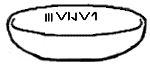
Most of the inscriptions are on pottery, with the remainder appearing on ceramic spindle whorls, figurines, and a small collection of other objects. The symbols themselves consist of a variety of abstract and representative pictograms, including zoomorphic (animal-like) representations, combs or brush patterns and abstract symbols such as swastikas, crosses and chevrons. Over 85% of the inscriptions consist of a single symbol. Other objects include groups of symbols, of which some are arranged in no particularly obvious pattern, with the result that neither the order nor the direction of the signs in these groups is readily determinable. The usage of symbols varies significantly between objects; symbols that appear by themselves tend almost exclusively to appear on pots, while symbols that are grouped with other symbols tend to appear on whorls. Quantitative linguistic analysis leads to the conclusion that 59% of the signs share the properties of pottery marks, 11.5% are part of asymmetric ornaments typical for whorls of the Vinča culture, and 29.5% may represent some sort of symbolic (semasiographic) notation.
A database of Vinča inscriptions, DatDas, has been developed by Marco Merlini:
DatDas organizes a catalogue of 5,421 actual signs. These are recorded from a corpus of 1,178 inscriptions composed of two or more signs and 971 inscribed artifacts (some finds have two or more inscriptions).
Hub AI
Vinča symbols AI simulator
(@Vinča symbols_simulator)
Vinča symbols
The Vinča symbols are a set of undeciphered symbols found on artifacts from the Neolithic Vinča culture and other "Old European" cultures of Central and Southeast Europe. They have sometimes been described as an example of proto-writing. The symbols went out of use around 3500 BC. Many scholars agree that the "writing" itself is not based on any language whatsoever and it is mostly symbolic.
In 1875, archaeological excavations directed by the Hungarian archaeologist Baroness Zsófia Torma (1840–1899) at Tordos (present Turdaș, Romania) unearthed marble and fragments of pottery inscribed with previously unknown symbols. At the site, on the Maros river, a feeder into a tributary of the Danube, female figurines, pots, and artifacts made of stone were also found. In 1908, a similar cache was found during excavations directed by Serbian archaeologist Miloje Vasić (1869–1956) in Vinča, a suburb of Belgrade, some 245 km (152 mi) from Turdaș. Later, more such fragments were found in Banjica, another part of Belgrade. Since 1875, over 150 Vinča sites have been identified in Serbia alone, but many, including Vinča itself, have not been fully excavated.
The discovery of the Tărtăria tablets in Romania by a team directed by Nicolae Vlassa in 1961 revived debate regarding the inscriptions. Vlassa believed them to be pictograms. Other items found at the site of the discovery were subsequently radiocarbon-dated to before 4000 BC, around 1,300 years earlier than the date Vlassa expected and pre-dating the writing systems of the Sumerians and Minoans. However, the circumstances of their discovery and authenticity of the tablets themselves is disputed.
The Gradeshnitsa tablets are clay artefacts with incised marks. They were unearthed in 1969 near the village of Gradeshnitsa in the Vratsa Province of north-western Bulgaria. The tablets are dated to the 4th millennium BC and are currently preserved in the History Museum of Vratsa.[better source needed]
Although a large number of symbols are known, most artifacts contain so few symbols that they are very unlikely to represent a complete text.
Most of the inscriptions are on pottery, with the remainder appearing on ceramic spindle whorls, figurines, and a small collection of other objects. The symbols themselves consist of a variety of abstract and representative pictograms, including zoomorphic (animal-like) representations, combs or brush patterns and abstract symbols such as swastikas, crosses and chevrons. Over 85% of the inscriptions consist of a single symbol. Other objects include groups of symbols, of which some are arranged in no particularly obvious pattern, with the result that neither the order nor the direction of the signs in these groups is readily determinable. The usage of symbols varies significantly between objects; symbols that appear by themselves tend almost exclusively to appear on pots, while symbols that are grouped with other symbols tend to appear on whorls. Quantitative linguistic analysis leads to the conclusion that 59% of the signs share the properties of pottery marks, 11.5% are part of asymmetric ornaments typical for whorls of the Vinča culture, and 29.5% may represent some sort of symbolic (semasiographic) notation.
A database of Vinča inscriptions, DatDas, has been developed by Marco Merlini:
DatDas organizes a catalogue of 5,421 actual signs. These are recorded from a corpus of 1,178 inscriptions composed of two or more signs and 971 inscribed artifacts (some finds have two or more inscriptions).