


Community hub
Recent from talks
Contribute something to knowledge base
Content stats: 0 posts, 0 articles, 1 media, 0 notes
Members stats: 0 subscribers, 0 contributors, 0 moderators, 0 supporters
Subscribers
Supporters
Contributors
Moderators
Olive (color)
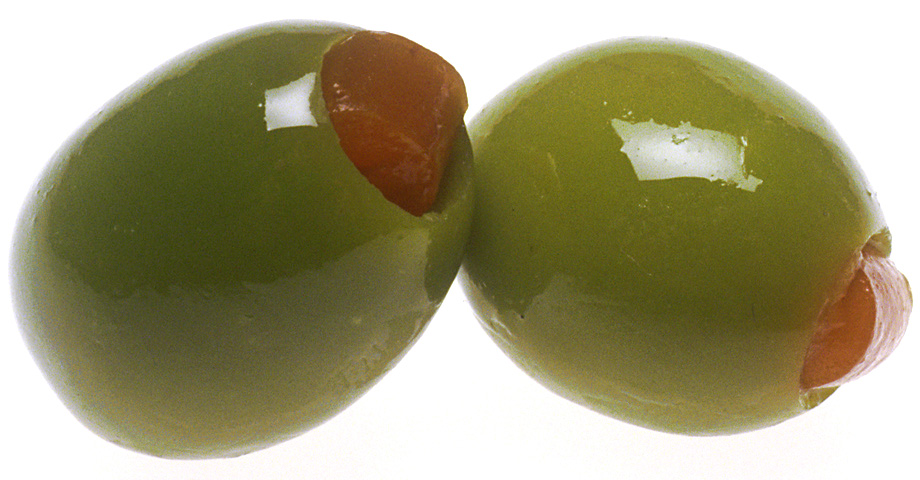
Olive is a dark yellowish-green color, like that of unripe or green olives.
As a color word in the English language, it appears in late Middle English.
Olivine is the typical color of the mineral olivine.
The first recorded use of olivine as a color name in English was in 1912.
Olive drab is variously described as a "A brownish-green colour" (Oxford English Dictionary); "a shade of greenish-brown" (Webster's New World Dictionary); "a dark gray-green" (MacMillan English dictionary); "a grayish olive to dark olive brown or olive gray" (American Heritage Dictionary); or "A dull but fairly strong gray-green color" (Collins English Dictionary). It is widely used as a camouflage color for uniforms and equipment in the armed forces.
The first recorded use of olive drab as a color name in English was in 1892. Drab is an older color name, from the middle of the 16th century. It refers to a dull light brown color, the color of cloth made from undyed homespun wool. It took its name from the old French word for cloth, drap.
There are many shades and variations of olive drab. Various shades were used on United States Army uniforms in World War II. The shade used for enlisted soldier's uniforms at the beginning of the war was officially called Olive Drab #33 (OD33), while officer's uniforms used the much darker Olive Drab #51 (OD51). Field equipment was in Olive Drab #3 (OD3), a very light, almost khaki shade. In 1943 new field uniforms and equipment were produced in the darker Olive Drab #7 (OD7). This was in turn replaced by the slightly grayer Olive Green 107 (OG-107) in 1952, which continued as the color of combat uniforms through the Vietnam War until the adoption in 1981 of the four-color-camouflage-patterned M81 Battle Dress Uniform, which retained olive drab as one of the color swatches in the pattern. The shade used for painting vehicles is defined by Federal Standard 595 in the United States.
As a solid color, it is not as effective for camouflage as multi-color patterns, though it is still used by the U.S. military to color webbing and accessories. The armies of Israel, India, Cuba, and Venezuela wear solid-color olive drab uniforms.
Olive (color)
Olive is a dark yellowish-green color, like that of unripe or green olives.
As a color word in the English language, it appears in late Middle English.
Olivine is the typical color of the mineral olivine.
The first recorded use of olivine as a color name in English was in 1912.
Olive drab is variously described as a "A brownish-green colour" (Oxford English Dictionary); "a shade of greenish-brown" (Webster's New World Dictionary); "a dark gray-green" (MacMillan English dictionary); "a grayish olive to dark olive brown or olive gray" (American Heritage Dictionary); or "A dull but fairly strong gray-green color" (Collins English Dictionary). It is widely used as a camouflage color for uniforms and equipment in the armed forces.
The first recorded use of olive drab as a color name in English was in 1892. Drab is an older color name, from the middle of the 16th century. It refers to a dull light brown color, the color of cloth made from undyed homespun wool. It took its name from the old French word for cloth, drap.
There are many shades and variations of olive drab. Various shades were used on United States Army uniforms in World War II. The shade used for enlisted soldier's uniforms at the beginning of the war was officially called Olive Drab #33 (OD33), while officer's uniforms used the much darker Olive Drab #51 (OD51). Field equipment was in Olive Drab #3 (OD3), a very light, almost khaki shade. In 1943 new field uniforms and equipment were produced in the darker Olive Drab #7 (OD7). This was in turn replaced by the slightly grayer Olive Green 107 (OG-107) in 1952, which continued as the color of combat uniforms through the Vietnam War until the adoption in 1981 of the four-color-camouflage-patterned M81 Battle Dress Uniform, which retained olive drab as one of the color swatches in the pattern. The shade used for painting vehicles is defined by Federal Standard 595 in the United States.
As a solid color, it is not as effective for camouflage as multi-color patterns, though it is still used by the U.S. military to color webbing and accessories. The armies of Israel, India, Cuba, and Venezuela wear solid-color olive drab uniforms.
Recent media
Recent media