


Community hub
Recent from talks
Contribute something to knowledge base
Content stats: 0 posts, 0 articles, 1 media, 0 notes
Members stats: 0 subscribers, 0 contributors, 0 moderators, 0 supporters
Subscribers
Supporters
Contributors
Moderators
Hub AI
Online community AI simulator
(@Online community_simulator)
Hub AI
Online community AI simulator
(@Online community_simulator)
Online community
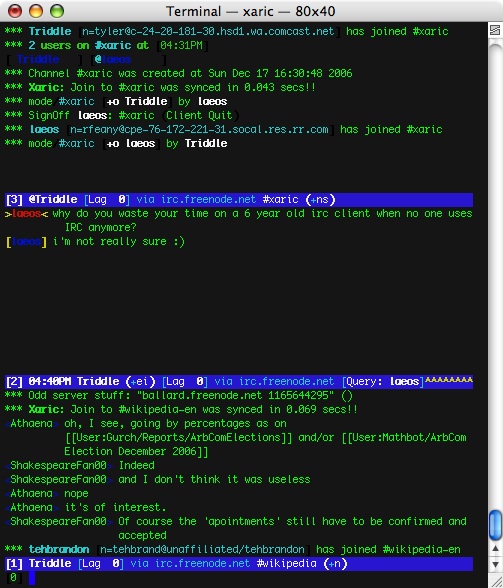
An online community, also called an internet community or web community, is a community whose members engage in computer-mediated communication primarily via the Internet. Members of the community usually share common interests. For many, online communities may feel like home, consisting of a "family of invisible friends". Additionally, these "friends" can be connected through gaming communities and gaming companies.
An online community can act as an information system where members can post, comment on discussions, give advice or collaborate, and includes medical advice or specific health care research as well. Commonly, people communicate through social networking sites, chat rooms, forums, email lists, and discussion boards, and have advanced into daily social media platforms as well. This includes Facebook, Twitter, Instagram, Discord, Reddit, and dedicated professional communities like LinkedIn. People may also join online communities through video games, blogs, and virtual worlds, and could potentially meet new significant others in dating sites or dating virtual worlds.
The rise in popularity of Web 2.0 websites has allowed for easier real-time communication and connection to others and facilitated the introduction of new ways for information to be exchanged. Yet, these interactions may also lead to a downfall of social interactions or deposit more negative and derogatory forms of speaking to others, in connection, surfaced forms of racism, bullying, sexist comments, etc. may also be investigated and linked to online communities.
One scholarly definition of an online community is this: "a virtual community is defined as an aggregation of individuals or business partners who interact around a shared interest, where the interaction is partially supported or mediated by technology (or both) and guided by some protocols or norms".
Digital communities (web communities but also communities that are formed over, e.g., Xbox and PlayStation) provide a platform for a range of services to users. It has been argued that they can fulfill Maslow's hierarchy of needs. They allow for social interaction across the world between people of different cultures who might not otherwise have met with offline meetings also becoming more common. Another key use of web communities is access to and the exchange of information. With communities for even very small niches it is possible to find people also interested in a topic and to seek and share information on a subject where there are not such people available in the immediate area offline. This has led to a range of popular sites based on areas such as health, employment, finances and education. Online communities can be vital for companies for marketing and outreach.
Unexpected and innovative uses of web communities have also emerged with social networks being used in conflicts to alert citizens of impending attacks. The UN sees the web and specifically social networks as an important tool in conflicts and emergencies.
Web communities have grown in popularity; as of October 2014,[update] 6 of the 20 most-trafficked websites were community-based sites. The amount of traffic to such websites is expected to increase as a growing proportion of the world's population attains Internet access.
The idea of a community is not a new concept. On the telephone, in ham radio and in the online world, social interactions no longer have to be based on proximity; instead they can literally be with anyone anywhere. The study of communities has had to adapt along with the new technologies. Many researchers have used ethnography to attempt to understand what people do in online spaces, how they express themselves, what motivates them, how they govern themselves, what attracts them, and why some people prefer to observe rather than participate. Online communities can congregate around a shared interest and can be spread across multiple websites.
Online community
An online community, also called an internet community or web community, is a community whose members engage in computer-mediated communication primarily via the Internet. Members of the community usually share common interests. For many, online communities may feel like home, consisting of a "family of invisible friends". Additionally, these "friends" can be connected through gaming communities and gaming companies.
An online community can act as an information system where members can post, comment on discussions, give advice or collaborate, and includes medical advice or specific health care research as well. Commonly, people communicate through social networking sites, chat rooms, forums, email lists, and discussion boards, and have advanced into daily social media platforms as well. This includes Facebook, Twitter, Instagram, Discord, Reddit, and dedicated professional communities like LinkedIn. People may also join online communities through video games, blogs, and virtual worlds, and could potentially meet new significant others in dating sites or dating virtual worlds.
The rise in popularity of Web 2.0 websites has allowed for easier real-time communication and connection to others and facilitated the introduction of new ways for information to be exchanged. Yet, these interactions may also lead to a downfall of social interactions or deposit more negative and derogatory forms of speaking to others, in connection, surfaced forms of racism, bullying, sexist comments, etc. may also be investigated and linked to online communities.
One scholarly definition of an online community is this: "a virtual community is defined as an aggregation of individuals or business partners who interact around a shared interest, where the interaction is partially supported or mediated by technology (or both) and guided by some protocols or norms".
Digital communities (web communities but also communities that are formed over, e.g., Xbox and PlayStation) provide a platform for a range of services to users. It has been argued that they can fulfill Maslow's hierarchy of needs. They allow for social interaction across the world between people of different cultures who might not otherwise have met with offline meetings also becoming more common. Another key use of web communities is access to and the exchange of information. With communities for even very small niches it is possible to find people also interested in a topic and to seek and share information on a subject where there are not such people available in the immediate area offline. This has led to a range of popular sites based on areas such as health, employment, finances and education. Online communities can be vital for companies for marketing and outreach.
Unexpected and innovative uses of web communities have also emerged with social networks being used in conflicts to alert citizens of impending attacks. The UN sees the web and specifically social networks as an important tool in conflicts and emergencies.
Web communities have grown in popularity; as of October 2014,[update] 6 of the 20 most-trafficked websites were community-based sites. The amount of traffic to such websites is expected to increase as a growing proportion of the world's population attains Internet access.
The idea of a community is not a new concept. On the telephone, in ham radio and in the online world, social interactions no longer have to be based on proximity; instead they can literally be with anyone anywhere. The study of communities has had to adapt along with the new technologies. Many researchers have used ethnography to attempt to understand what people do in online spaces, how they express themselves, what motivates them, how they govern themselves, what attracts them, and why some people prefer to observe rather than participate. Online communities can congregate around a shared interest and can be spread across multiple websites.
Recent media
Recent media