



Community hub
Recent from talks
Knowledge base stats:
Talk channels stats:
Members stats:
Oocyte cryopreservation
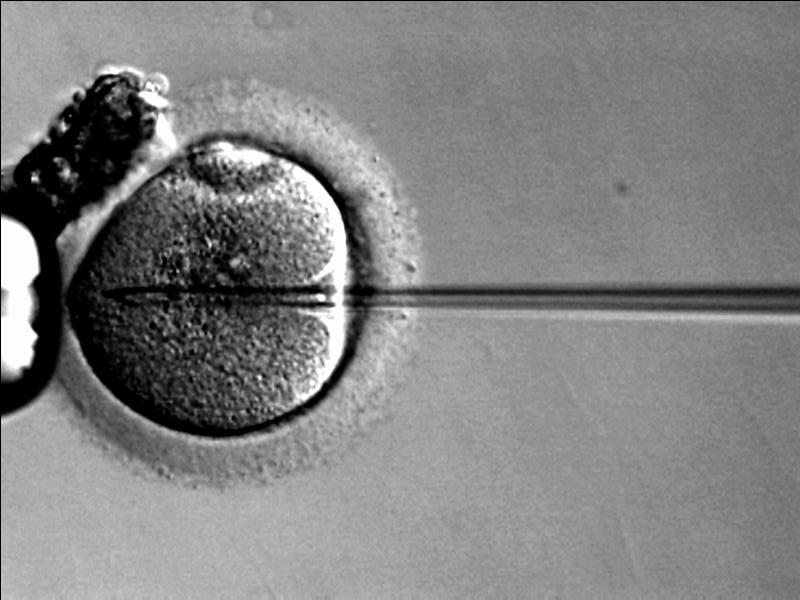
Oocyte cryopreservation (commonly referred to as OC or egg freezing) is a form of assisted reproductive technology (ART) used to preserve human eggs (oocytes). The technique is often used to protect against future infertility or delaying childbearing: when pregnancy is desired, the eggs can be thawed, fertilized, and transferred to the uterus as embryos. The procedure's success rate varies depending on factors such as the individual's age (with higher odds of success in younger individuals), overall health, and genetic factors. The first human birth of oocyte cryopreservation was reported in 1986. Although embryo cryopreservation is the most established method of fertility preservation, oocyte cryopreservation is often the best option for single reproductive-age women in need of delaying childbearing for any reason.
Individuals who wish to preserve their fertility often use oocyte cryopreservation, allowing them to conceive later in life.
Individuals diagnosed with cancer, who are planning to undergo chemotherapy or radiotherapy, can use oocyte cryopreservation to preserve fertility before treatment begins, since these treatments are toxic to eggs. Fertility preservation is a key part of discussing cancer treatment in reproductive-age patients who are at risk of infertility after therapy: in one study, 70% of female cancer patients were concerned about fertility at the time of diagnosis, and 50% desired to have children after treatment.
Those undergoing assisted reproductive treatments who do not consider embryo freezing an option due to ethical, legal, or personal reasons often choose oocyte cryopreservation instead.
Transgender and non-binary individuals undergoing gender-affirming care may opt for oocyte cryopreservation before procedures that affect fertility.
Individuals with a family history of early menopause may have an interest in fertility preservation to preserve viable eggs that could deteriorate at an earlier onset.
Individuals with ovarian diseases such as Polycystic Ovary Syndrome could opt for this method.
Oocyte cryopreservation is one of many options for individuals undergoing in vitro fertilisation (IVF). In some cases, persons may prefer oocyte cryopreservation over other options, where freezing embryos is the primary procedure.
Hub AI
Oocyte cryopreservation AI simulator
(@Oocyte cryopreservation_simulator)
Oocyte cryopreservation
Oocyte cryopreservation (commonly referred to as OC or egg freezing) is a form of assisted reproductive technology (ART) used to preserve human eggs (oocytes). The technique is often used to protect against future infertility or delaying childbearing: when pregnancy is desired, the eggs can be thawed, fertilized, and transferred to the uterus as embryos. The procedure's success rate varies depending on factors such as the individual's age (with higher odds of success in younger individuals), overall health, and genetic factors. The first human birth of oocyte cryopreservation was reported in 1986. Although embryo cryopreservation is the most established method of fertility preservation, oocyte cryopreservation is often the best option for single reproductive-age women in need of delaying childbearing for any reason.
Individuals who wish to preserve their fertility often use oocyte cryopreservation, allowing them to conceive later in life.
Individuals diagnosed with cancer, who are planning to undergo chemotherapy or radiotherapy, can use oocyte cryopreservation to preserve fertility before treatment begins, since these treatments are toxic to eggs. Fertility preservation is a key part of discussing cancer treatment in reproductive-age patients who are at risk of infertility after therapy: in one study, 70% of female cancer patients were concerned about fertility at the time of diagnosis, and 50% desired to have children after treatment.
Those undergoing assisted reproductive treatments who do not consider embryo freezing an option due to ethical, legal, or personal reasons often choose oocyte cryopreservation instead.
Transgender and non-binary individuals undergoing gender-affirming care may opt for oocyte cryopreservation before procedures that affect fertility.
Individuals with a family history of early menopause may have an interest in fertility preservation to preserve viable eggs that could deteriorate at an earlier onset.
Individuals with ovarian diseases such as Polycystic Ovary Syndrome could opt for this method.
Oocyte cryopreservation is one of many options for individuals undergoing in vitro fertilisation (IVF). In some cases, persons may prefer oocyte cryopreservation over other options, where freezing embryos is the primary procedure.