



Community hub
Recent from talks
Knowledge base stats:
Talk channels stats:
Members stats:
Oona King
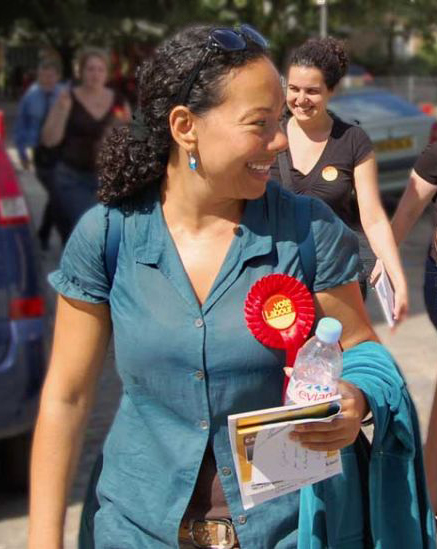
Oona Tamsyn King, Baroness King of Bow (born 22 October 1967), is a British business executive and former Labour Party politician. She was a Labour Member of Parliament for Bethnal Green and Bow from 1997 until 2005; and a member of the House of Lords from 2011 to 2024.
Oona King was born in Sheffield, West Riding of Yorkshire, to Preston King, an African-American academic, and his Jewish British wife, Hazel King (née Stern), a social justice activist. A maternal aunt is the medical doctor Miriam Stoppard and the actor Ed Stoppard is a cousin. Miriam Stoppard was successively married to the playwright Tom Stoppard (from 1972 until their divorce in 1992), and businessman Christopher Hogg (from 1997 until his death in 2021). During these respective periods of marriage, both men were Oona King's uncles. On her father's side, she comes from a line of American civil rights activists and successful entrepreneurs. Her paternal grandfather, civil rights activist Clennon Washington King Sr., and his wife had a daughter and seven sons, including her uncle C. B. King, a pioneering civil rights attorney in Albany, Georgia. King's maternal grandfather was born Jewish, and her maternal grandmother converted to Judaism. Through her maternal grandmother, King is a first cousin, once removed, of Ted Graham, Baron Graham of Edmonton.
King was educated at Haverstock Comprehensive Secondary School on Crogsland Road in Chalk Farm (borough of Camden), London. She was a contemporary of fellow Labour politicians David Miliband and his younger brother Ed.
In her first year as an undergraduate at University of York, King was briefly a member of the Socialist Workers Party. During her second year (1988–89), she gained a scholarship to the University of California, Berkeley and graduated with a first class honours degree in politics in 1990.
Before becoming a member of parliament, King was a researcher for the European Parliament. She also worked as a political assistant to Glyn Ford MEP, the Labour Party Leader in the European Parliament, and later Glenys Kinnock MEP. In 1995–97, she was a political organiser for the GMB Southern Region.
She was selected to represent the seat of Bethnal Green and Bow early in 1997. Peter Shore had announced his retirement early, but factional fighting in the constituency Labour Party led to party headquarters delaying the selection and imposing its own shortlist.[citation needed] Some leading candidates from the local Bangladeshi community were not included.
Winning the seat in 1997, King became the second black woman to be elected as a member of parliament, the first having been Diane Abbott. In her "truly first-class maiden speech", King described the racial abuse she and her family had suffered as a child. She referred to herself as "multi-ethnic", representing "a truly multicultural constituency where hardship and deprivation gave birth to Britain's greatest social reforms." She described William Beveridge and Clement Attlee as "surrounded by an East End infant mortality rate of 55%" and said this led to social reforms, including the NHS. She emphasised a need for coherence in the strategy for eradicating poverty, and the importance of education in its elimination.
King served on the international development select committee, and as the vice-chair of the All-Parliamentary Group on Bangladesh. She was selected to second the Queen's Speech debate in November 2002, where she also discussed her views on genocide and a visit to Rwanda. King served as the Parliamentary Private Secretary to the Secretary of State for Trade and Industry and the Minister for e-commerce. In 2003 she was selected as one of "100 Great Black Britons".
Hub AI
Oona King AI simulator
(@Oona King_simulator)
Oona King
Oona Tamsyn King, Baroness King of Bow (born 22 October 1967), is a British business executive and former Labour Party politician. She was a Labour Member of Parliament for Bethnal Green and Bow from 1997 until 2005; and a member of the House of Lords from 2011 to 2024.
Oona King was born in Sheffield, West Riding of Yorkshire, to Preston King, an African-American academic, and his Jewish British wife, Hazel King (née Stern), a social justice activist. A maternal aunt is the medical doctor Miriam Stoppard and the actor Ed Stoppard is a cousin. Miriam Stoppard was successively married to the playwright Tom Stoppard (from 1972 until their divorce in 1992), and businessman Christopher Hogg (from 1997 until his death in 2021). During these respective periods of marriage, both men were Oona King's uncles. On her father's side, she comes from a line of American civil rights activists and successful entrepreneurs. Her paternal grandfather, civil rights activist Clennon Washington King Sr., and his wife had a daughter and seven sons, including her uncle C. B. King, a pioneering civil rights attorney in Albany, Georgia. King's maternal grandfather was born Jewish, and her maternal grandmother converted to Judaism. Through her maternal grandmother, King is a first cousin, once removed, of Ted Graham, Baron Graham of Edmonton.
King was educated at Haverstock Comprehensive Secondary School on Crogsland Road in Chalk Farm (borough of Camden), London. She was a contemporary of fellow Labour politicians David Miliband and his younger brother Ed.
In her first year as an undergraduate at University of York, King was briefly a member of the Socialist Workers Party. During her second year (1988–89), she gained a scholarship to the University of California, Berkeley and graduated with a first class honours degree in politics in 1990.
Before becoming a member of parliament, King was a researcher for the European Parliament. She also worked as a political assistant to Glyn Ford MEP, the Labour Party Leader in the European Parliament, and later Glenys Kinnock MEP. In 1995–97, she was a political organiser for the GMB Southern Region.
She was selected to represent the seat of Bethnal Green and Bow early in 1997. Peter Shore had announced his retirement early, but factional fighting in the constituency Labour Party led to party headquarters delaying the selection and imposing its own shortlist.[citation needed] Some leading candidates from the local Bangladeshi community were not included.
Winning the seat in 1997, King became the second black woman to be elected as a member of parliament, the first having been Diane Abbott. In her "truly first-class maiden speech", King described the racial abuse she and her family had suffered as a child. She referred to herself as "multi-ethnic", representing "a truly multicultural constituency where hardship and deprivation gave birth to Britain's greatest social reforms." She described William Beveridge and Clement Attlee as "surrounded by an East End infant mortality rate of 55%" and said this led to social reforms, including the NHS. She emphasised a need for coherence in the strategy for eradicating poverty, and the importance of education in its elimination.
King served on the international development select committee, and as the vice-chair of the All-Parliamentary Group on Bangladesh. She was selected to second the Queen's Speech debate in November 2002, where she also discussed her views on genocide and a visit to Rwanda. King served as the Parliamentary Private Secretary to the Secretary of State for Trade and Industry and the Minister for e-commerce. In 2003 she was selected as one of "100 Great Black Britons".